
Best ≤50mK NETD Thermal Module Guide: OEM Cores for High-Sensitivity Imaging
2026年8月28日
Best 25Hz Thermal Camera Module Guide: High-Frame-Rate Cores for Drones & Edge AI
2026年8月31日

High Sensitivity Thermal Imaging Modules: The Engineer's Guide to Low NETD & AI Vision
In high-stakes optoelectronic builds—whether you are putting together tactical UAV payloads, perimeter sentry rigs, or Advanced Driver Assistance Systems (ADAS) that have to cut through pitch-black freezing rain—the operational ceiling of your entire optical payload boils down to one fundamental parameter: high sensitivity. In modern uncooled Long-Wave Infrared (LWIR) engineering, chasing raw pixel counts without looking at the noise floor is a rookie mistake. Out in the field, technological dominance comes down to whether your detector can resolve razor-thin thermal gradients (ΔT) when the target and the background are sitting at virtually the same temperature. Hitting true high sensitivity demands a balanced trifecta: ultra-low Noise Equivalent Temperature Difference (NETD ≤ 35–40 mK), sub-12μm Vanadium Oxide (VOx) focal plane arrays, and hardware-accelerated edge Image Signal Processing (ISP) pipelines that clean up the signal before it ever touches your compute stack.
When you push sensor sensitivity to its physical limits, downstream computer vision frameworks stop hallucinating. Let's be honest: modern Convolutional Neural Networks (CNNs) and Vision Transformers (ViT) choke when fed muddy, low-contrast radiometric arrays washed out by thermal blur and fixed-pattern noise. By pairing sub-40mK NETD cores with deterministic, on-die ISP filtering, systems engineers can pull clean edge contours, eliminate false-positive bounding boxes, and keep tracking locks rock-solid 24/7 across harsh industrial, aerial, and border security environments.
Table of Contents
- 👉 1. Fundamentals of High Sensitivity in Long-Wave Infrared (LWIR)
- 👉 2. The Physics of NETD: Deciphering Noise Equivalent Temperature Difference & Pixel Pitch
- 👉 3. Edge AI Vision Integration: Why High Sensitivity Eliminates False Positives
- 👉 4. Signal Processing & ISP Pipeline: Overcoming Fixed-Pattern Noise & Shutter Drift
- 👉 5. Industrial Product Lineup: High Sensitivity LWIR Modules
- 👉 6. Integration Blueprints: UAVs, ADAS, & Embedded Linux Platforms
- 👉 7. Deep-Dive Technical FAQ
1. Fundamentals of High Sensitivity in Long-Wave Infrared (LWIR)
In passive thermographic systems, high sensitivity represents the raw optoelectronic capability of an infrared detector to pull meaningful thermal signals out of the background clutter. Operating within the 8–14 μm atmospheric transmission window, uncooled thermal cores do not rely on active illumination; they capture ambient photon emissions across a scene, converting subtle changes in radiative heat into measurable electrical resistance deltas without needing bulky, power-hungry cryogenic coolers.
Standard industrial detectors fall apart when the thermal contrast drops. If you are operating in heavy maritime fog, high humidity, or dense tree cover where the target and ambient background are within fractions of a degree of each other, an ordinary sensor delivers a washed-out, gray mess. High-sensitivity modules solve this by maximizing the Signal-to-Noise Ratio (SNR) directly at the detector membrane. For engineers looking to refresh their foundational math on emissive radiation, the physical relationships are well-documented in Wikipedia Thermal Imaging, which breaks down Planck's Law, the Stefan-Boltzmann Law, and Wien's Displacement Law.
The core operating mechanism of an uncooled LWIR sensor centers on an array of microbolometers suspended over a silicon Read-Out Integrated Circuit (ROIC). Each pixel is essentially a microscopic, heat-sensitive resistor suspended above the silicon floor via micro-machined bridge legs that act as thermal isolators. When incoming photons within the 8–14 μm band strike the absorbing layer, the temperature of that isolated membrane ticks up by a fraction of a millikelvin. This microscopic thermal swing shifts the electrical resistance of the material, which the ROIC samples frame-by-frame via an integrated bias voltage.
Here's the deal with detector materials: you will run into Amorphous Silicon (a-Si) and Vanadium Oxide (VOx). While a-Si is cheap to manufacture on standard CMOS lines, Vanadium Oxide is the uncontested king for industrial and tactical hardware. VOx delivers a significantly higher Temperature Coefficient of Resistance (TCR)—typically clocking in between 2% and 3% per Kelvin. That high TCR means a VOx pixel undergoes a much larger resistance swing for the exact same photon flux, pulling clean signals out of noise floors that leave a-Si sensors blind. Achieving repeatable sensitivity at this scale requires relentless micro-electromechanical systems (MEMS) process control, ensuring structural uniformity, zero bridge collapse, and permanent wafer-level vacuum packaging that lasts across years of thermal cycling.
Out in the field, atmospheric physics will fight you every inch of the way. While the 8–14 μm LWIR band avoids the brutal absorption bands of carbon dioxide and ozone found in shorter wavelengths, high absolute humidity still acts as a severe thermal dampener over long optical paths. High-sensitivity thermal cores overcome this atmospheric attenuation by picking up low-amplitude photon flux variations that lesser sensors drop entirely. This capability is why low-NETD cores remain irreplaceable for long-range target identification, tactical defense reconnaissance, and precision industrial process monitoring.
2. The Physics of NETD: Deciphering Noise Equivalent Temperature Difference & Pixel Pitch
Noise Equivalent Temperature Difference (NETD) is the primary figure of merit for thermal sensitivity. Expressed in millikelvins (mK), NETD defines the precise target-to-background temperature delta required to generate an electrical signal equal to the system's internal noise floor (SNR = 1) at the output of the ROIC. In mathematical terms, the relationship is:
NETD = Vn / (∂V / ∂T) = Vn / S
Where Vn is the root-mean-square (RMS) system noise voltage, and S represents the temperature responsivity (∂V / ∂T) of the microbolometer. Put simply: a lower numerical NETD rating means a quieter sensor with higher sensitivity, allowing your system to cleanly resolve fine thermal contours without choking on background static.
To design reliable systems around low-NETD cores, you need to understand the physical noise contributors acting inside the silicon package. The total noise voltage Vn is an aggregate of several distinct physical mechanisms added in quadrature:
- ⚙️ Johnson-Nyquist (Thermal) Noise: The baseline white noise generated by the random thermal agitation of charge carriers inside the resistive membrane. It scales directly with absolute operating temperature and the electrical resistance across the pixel suspension bridges.
- ⚙️ 1/f (Flicker) Noise: Low-frequency noise caused by micro-scale material defects, grain boundaries, and carrier traps inside the thin-film VOx matrix. High-end foundry fabrication relies on specialized material annealing to suppress 1/f noise and maintain baseline radiometric stability.
- ⚙️ Thermal Fluctuation Noise: The physical thermodynamic limit caused by microscopic heat exchanges between the suspended bolometer membrane and the underlying substrate via radiative transfer and conduction along the support arms.
- ⚙️ ROIC Readout & Quantization Noise: Electronic noise generated by the on-chip preamplifiers, column-parallel Analog-to-Digital Converters (ADCs), and high-speed multiplexing circuits embedded in the silicon backplane.
Look at the progression of pixel pitch over the last decade: the industry moved from 17 μm down to 12 μm, with high-density designs pushing into 10 μm territory. Shrinking the pixel pitch is great for Size, Weight, and Power (SWaP) because it lets you use smaller Germanium lenses and compact enclosures. But there is a serious physical penalty: dropping from 17 μm to 12 μm cuts the physical surface area of the photon absorption membrane by roughly 50%.
Because incident optical energy collected per pixel scales linearly with membrane area (Ad), smaller pixels collect fewer photons per frame. If you just shrink the geometry without changing the architecture, your NETD degrades dramatically. To preserve high sensitivity (NETD ≤ 35–40 mK) on a 12 μm pitch, top-tier sensor manufacturers deploy high-fill-factor umbrella membrane geometries, multi-layer resonant absorption coatings, and structural micro-legs engineered to minimize thermal conductance (Gth) without sacrificing mechanical rigidity under heavy shock and vibration.
| NETD Rating Tier | Sensitivity Performance | Typical Applications & Limitations |
|---|---|---|
| > 50 mK | Standard / Legacy Grade | Basic building inspection, consumer thermal attachments, high-contrast electrical hot-spot tracking. Struggles heavily in low-contrast outdoor environments. |
| 35 mK – 40 mK | High Sensitivity Grade | Autonomous vehicle vision (ADAS), tactical UAV gimbals, smart factory edge AI, perimeter security. Delivers sharp structural contours and low noise floors. |
| < 30 mK | Scientific / Defense Grade | Airborne tactical targeting, long-range defense ISR, gas plume tracking, laboratory-grade radiometric thermography. |
3. Edge AI Vision Integration: Why High Sensitivity Eliminates False Positives
Deploying edge AI networks—whether you are executing YOLOv8 object detection, Faster R-CNN, or lightweight Vision Transformers (ViT) on embedded SoCs—places heavy demands on upstream image fidelity. Deep neural networks rely on spatial gradients: crisp object edges, surface textures, and radiometric contrast steps. If your thermal core has poor sensitivity, it generates grainy, low-contrast frames where object silhouettes blur into the background noise, causing your AI models to miss targets or trigger persistent false alarms.
Every field engineer knows the nightmare of "diurnal thermal crossover." It happens twice a day—at sunrise and sunset—when the thermal signatures of the environment, asphalt, structures, and living targets converge toward the same temperature. During crossover, the thermal delta (ΔT) between a pedestrian or vehicle and the background can sink below 0.1°C (100 mK). On an entry-level sensor rated at >50 mK NETD, the target's signal disappears directly into the noise floor, causing severe bounding-box flicker and missed detections. A high-sensitivity sensor rated at NETD ≤ 35–40 mK keeps target contours sharp, ensuring your edge inference pipeline stays locked onto targets through crossover transitions.
In the shop, we also see how high sensitivity slashes computational overhead. When a camera module feeds noisy raw thermal frames, software engineers are forced to run compute-intensive spatial filtering, bilateral blur, and temporal averaging on the host SoC just to get a usable image. That burns CPU/GPU cycles and adds pipeline latency. When working with resource-constrained embedded systems where small microcontrollers like an Arduino or compact ARM chips handle critical telemetry, motor control, or trigger routines, getting clean radiometric streams directly off the camera's on-board ISP frees up compute bandwidth for mission-critical autonomy tasks.
- ✅ Extended DRI Ranges: Clean radiometric edge detection expands real-world Detection, Recognition, and Identification (DRI) distances for aerial and ground robots.
- ✅ Zero-Lux Computer Vision: Provides dependable edge classification in complete darkness, thick industrial smoke, blowing dust, and maritime fog where standard RGB-D cameras fail.
- ✅ Rock-Solid Sensor Fusion: Prevents edge smear when projecting thermal contours onto RGB frames and LiDAR point clouds using spatial homography matrices.
4. Signal Processing & ISP Pipeline: Overcoming Fixed-Pattern Noise & Shutter Drift
A high-grade microbolometer array is only half the battle. Without a deterministic Image Signal Processing (ISP) pipeline operating right next to the sensor, raw microbolometer outputs are unusable. Every individual microbolometer pixel exhibits slight variations in nominal resistance, thermal isolation, and ROIC channel gain. Left unchecked, this hardware non-uniformity manifests as Fixed-Pattern Noise (FPN) that ruins image clarity.
A production-ready thermal ISP pipeline processes high-sensitivity frames sequentially through dedicated hardware logic blocks:
- ⚙️ Non-Uniformity Correction (NUC): Every microbolometer pixel responds uniquely to heat. The ISP uses factory-calibrated two-point Look-Up Tables (LUTs) stored in on-board EEPROM/Flash to correct gain and offset variations on raw 14-bit data in real time at full frame rates (50/60 Hz).
- ⚙️ Bad Pixel Replacement (BPR): Pixels that are dead, saturated, or exhibiting excessive noise are dynamically mapped out. The ISP detects anomalous behavior and interpolates replacement pixel values from adjacent valid pixels without dropping frame cadence.
- ⚙️ Mechanical & Shutterless Drift Compensation: As the camera housing heats up during field operation, internal chassis emissions radiate onto the detector array. Mechanical shutters recalibrate offsets periodically. In weight-sensitive applications where a moving mechanical shutter is unacceptable, advanced shutterless algorithms use internal thermistor networks and dynamic thermal modeling to correct drift on the fly without interrupting the video stream.
- ⚙️ Adaptive 3D Spatial-Temporal Noise Filtering (3D-DNR): Preserving high sensitivity requires cleaning up random thermal noise without introducing ghosting artifacts. Modern 3D-DNR evaluates motion vectors across sequential frames, applying aggressive temporal smoothing to static background elements while instantly falling back to spatial filtering on fast-moving targets.
- ⚙️ Digital Detail Enhancement (DDE) & Dynamic Range Compression: Raw LWIR data carries 14-bit to 16-bit dynamic depth across wide temperature scenes. To pipe this feed into an 8-bit monitor or an edge AI detector without clipping, DDE algorithms split the image into a low-frequency base layer (scene-wide thermal profile) and a high-frequency detail layer (radiometric contours and textures), boosting micro-contrast while protecting against highlight burnout.
5. Industrial Product Lineup: High Sensitivity LWIR Modules
To help engineers pick the right hardware for defense payloads, airborne robotics, and smart infrastructure, Purpleriver provides high-sensitivity uncooled LWIR camera modules built around low-NETD VOx detectors and robust on-board ISP architectures.
High Resolution Uncooled Infrared 1280*1024 Thermal Imaging LWIR Camera
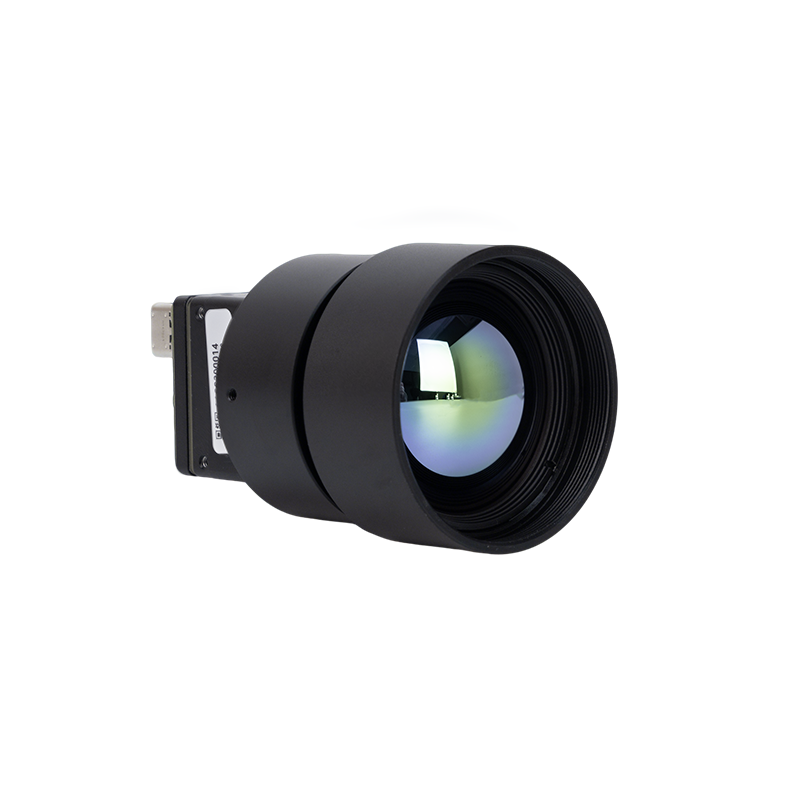
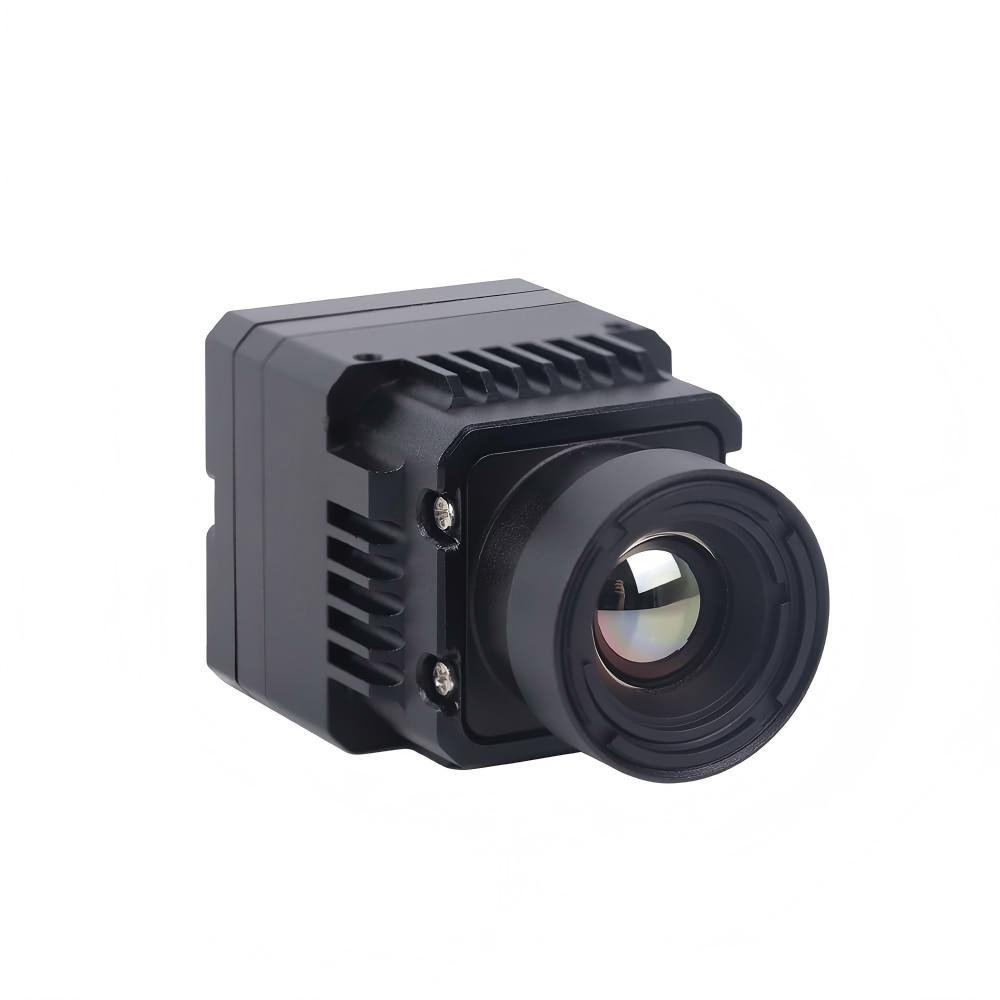
The PRSE5-1280 is an industrial-grade uncooled LWIR thermal imaging camera module designed for applications demanding maximum spatial resolution and high sensitivity. Featuring an HD 1280×1024 pixel array with a 12 μm pixel pitch and an optical configuration built around a 25mm lens, this module delivers radiometric precision and long-range situational awareness.
Equipped with an advanced VOx microbolometer achieving an NETD ≤ 35–40 mK, the module captures minute thermal gradients across challenging environments. Its robust digital output supports seamless integration into high-definition multi-sensor optical gimbals, wide-area perimeter defense systems, and scientific research instrumentation.
| Array Resolution | 1280 × 1024 pixels (HD Radiometric) |
| Pixel Pitch & Material | 12 μm Vanadium Oxide (VOx) Microbolometer |
| Optical Configuration | Wholesale 25mm high-transmission Germanium lens |
| Thermal Sensitivity (NETD) | ≤ 35–40 mK @ f/1.0 |
| Target Application | Tactical ISR, long-range border security, optical payloads, precision thermography |
Uncooled LWIR USB Mini 640*512 Thermal Imaging Camera Core Module For Drones Similar To DJI
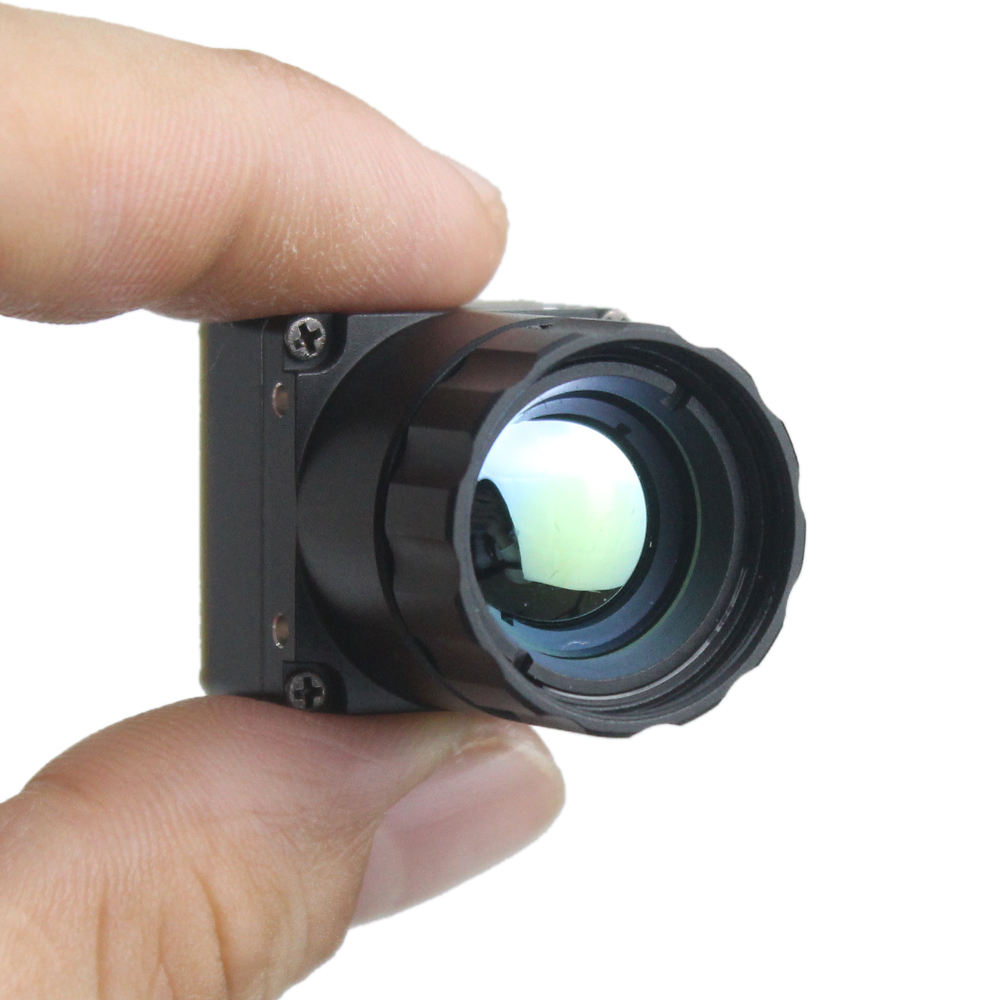
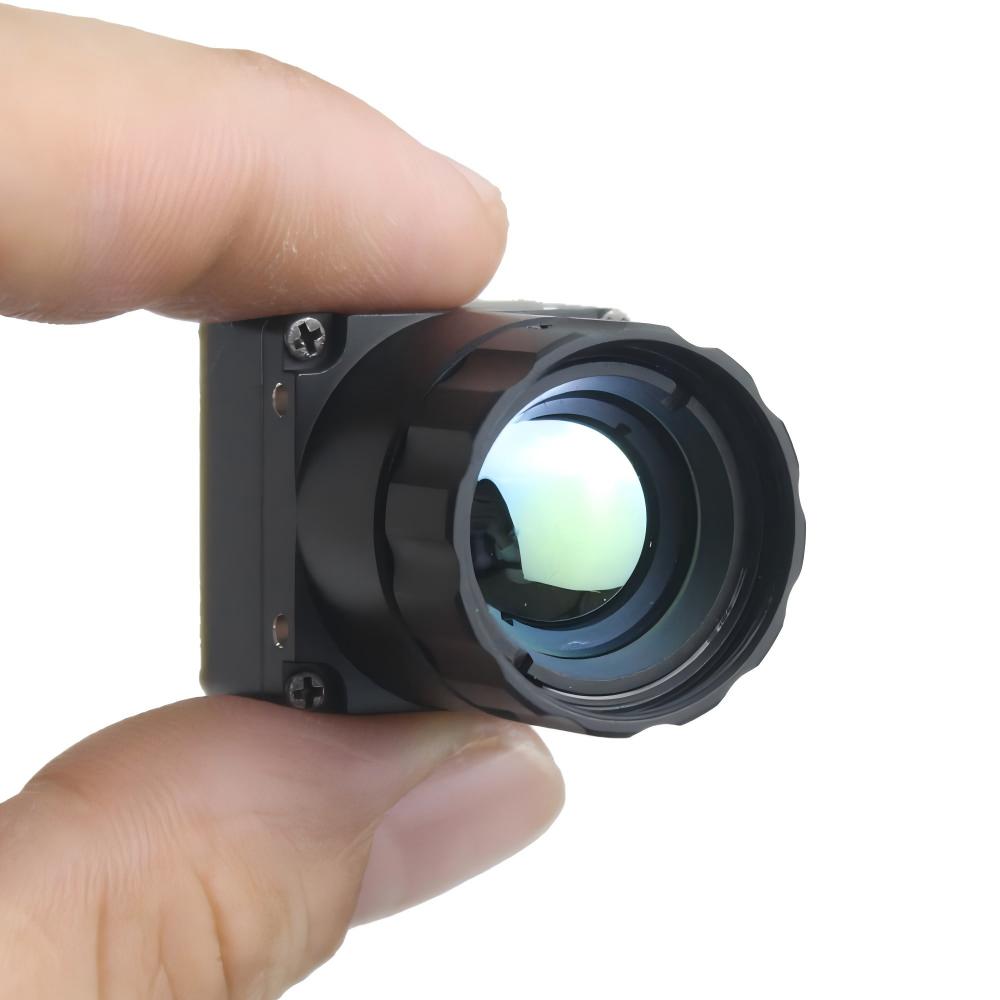
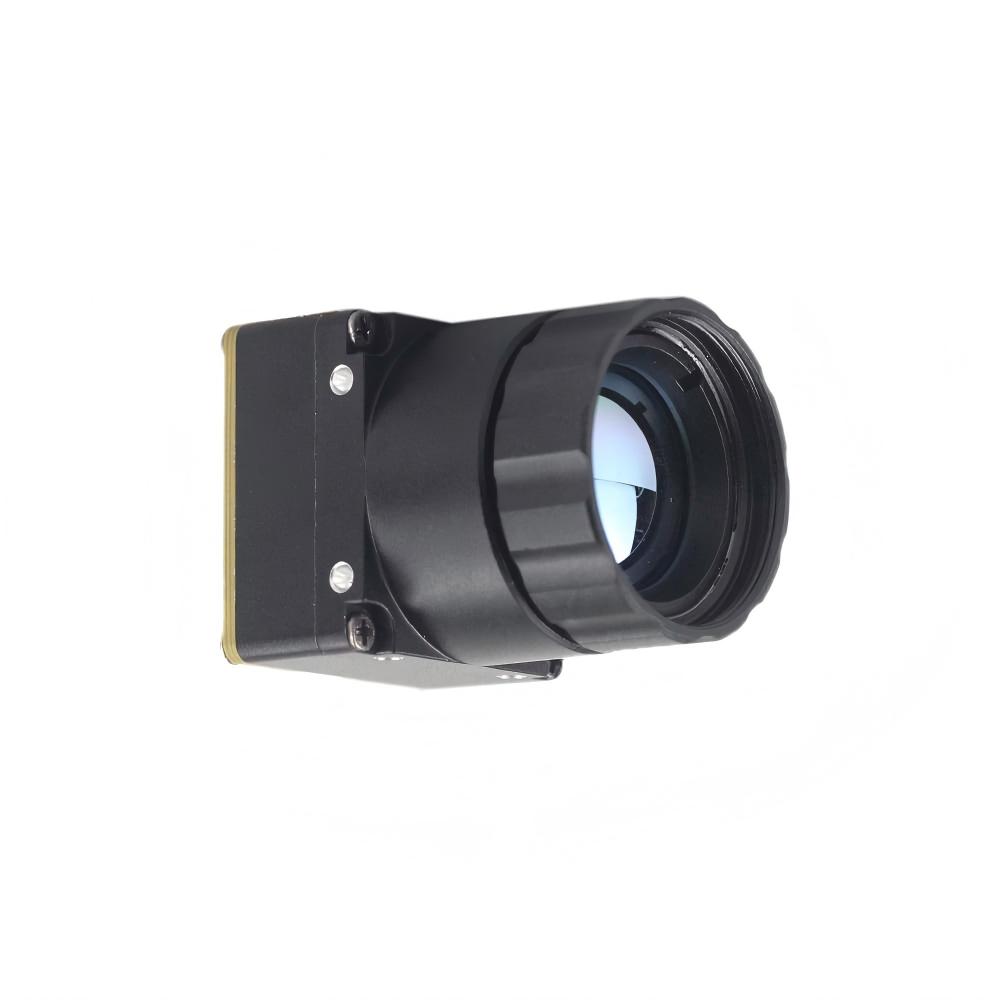
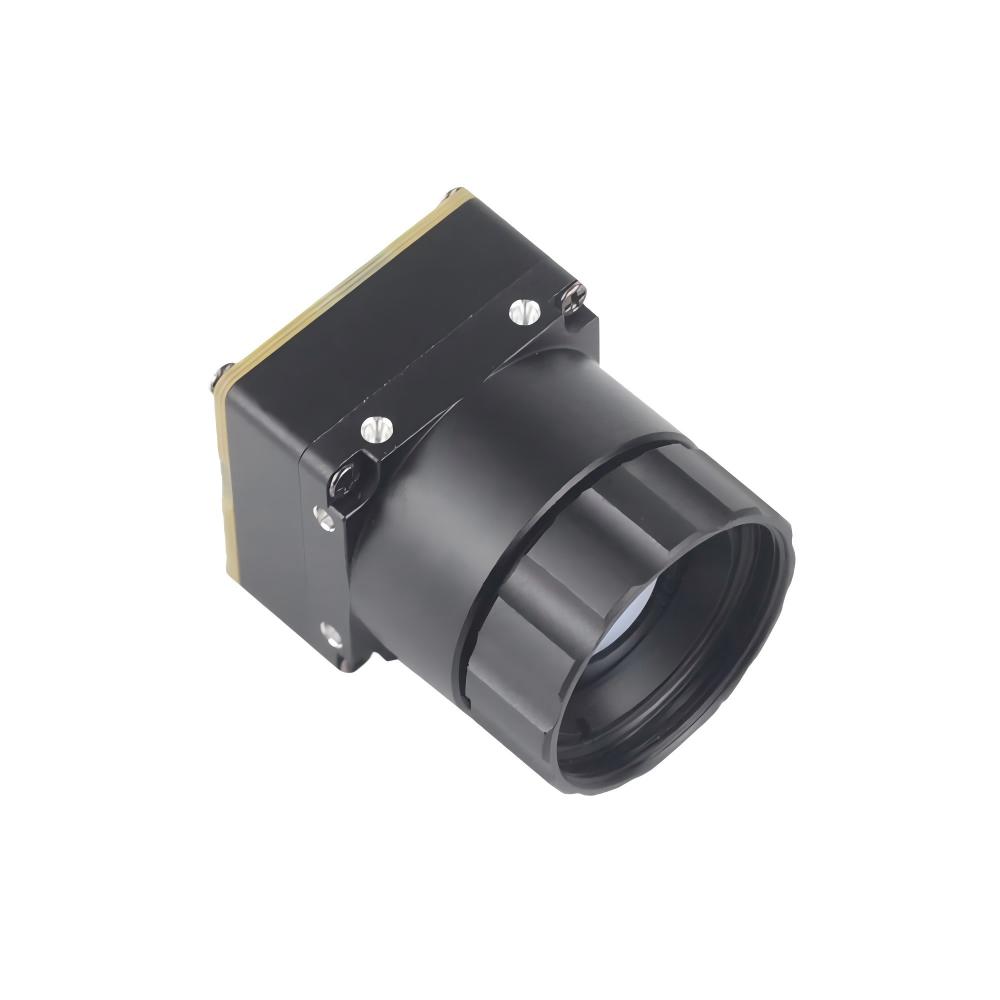
The Mini 640 Uncooled LWIR USB Module is an ultra-compact, lightweight thermal camera core specifically optimized for integration into small Unmanned Aerial Vehicles (drones similar to DJI platforms), handheld monoculars, and space-constrained machine vision systems. It combines sharp image presentation with a low-cost, SWaP-optimized architecture.
Boasting an ultra-compact footprint of just 21mm × 21mm, this module supports 640×512 resolution (with 640×480 optional) and offers comprehensive optical versatility through a wide selection of focal lengths: 5mm, 9mm, 13mm, 18mm, 35mm, 50mm, 75mm, 100mm, and 150mm. Its high environmental adaptability ensures stable radiometric performance across rugged field operations.
| Dimensions & Form Factor | Ultra-Miniature 21mm × 21mm footprint |
| Resolution Options | 640 × 512 pixels standard (640 × 480 optional) |
| Focal Length Lens Selection | 5mm / 9mm / 13mm / 18mm / 35mm / 50mm / 75mm / 100mm / 150mm |
| System Features | Sharp image presentation, low cost, USB connectivity, strong environmental adaptability |
| Target Application | Miniature drone gimbals (DJI-class), mobile robotics, compact machine vision inspection |
6. Integration Blueprints: UAVs, ADAS, & Embedded Linux Platforms
Getting a high-sensitivity thermal core working in the lab is one thing; ruggedizing it for field deployment is a completely different challenge. System engineers must handle mechanical thermal coupling, electromagnetic interference (EMI), and kernel-level data serialization carefully to avoid compromising the sensor's sub-40mK noise floor.
1. Embedded Linux Driver Configuration & Kernel V4L2 Pipeline
When interfacing these modules with embedded Linux systems (like NVIDIA Jetson, NXP i.MX8, or Raspberry Pi Compute Modules), video streaming is routed through the Video4Linux2 (V4L2) driver framework. Here's a crucial integration rule: your kernel driver must clearly separate 8-bit visual streams (YUV/RGB) from raw 14-bit radiometric buffers (containing real thermal pixel values). Configure your frame queues with Direct Memory Access (DMA) and multi-buffer ring pipelines (`V4L2_MEMORY_MMAP`) to avoid memory copies that stall CPU cores during high-speed 50/60 Hz data ingestion.
For complete kernel module compilation steps, register maps, and direct V4L2 debugging procedures, check out our technical guide: RS300 V4L2 Linux Driver Architecture Guide.
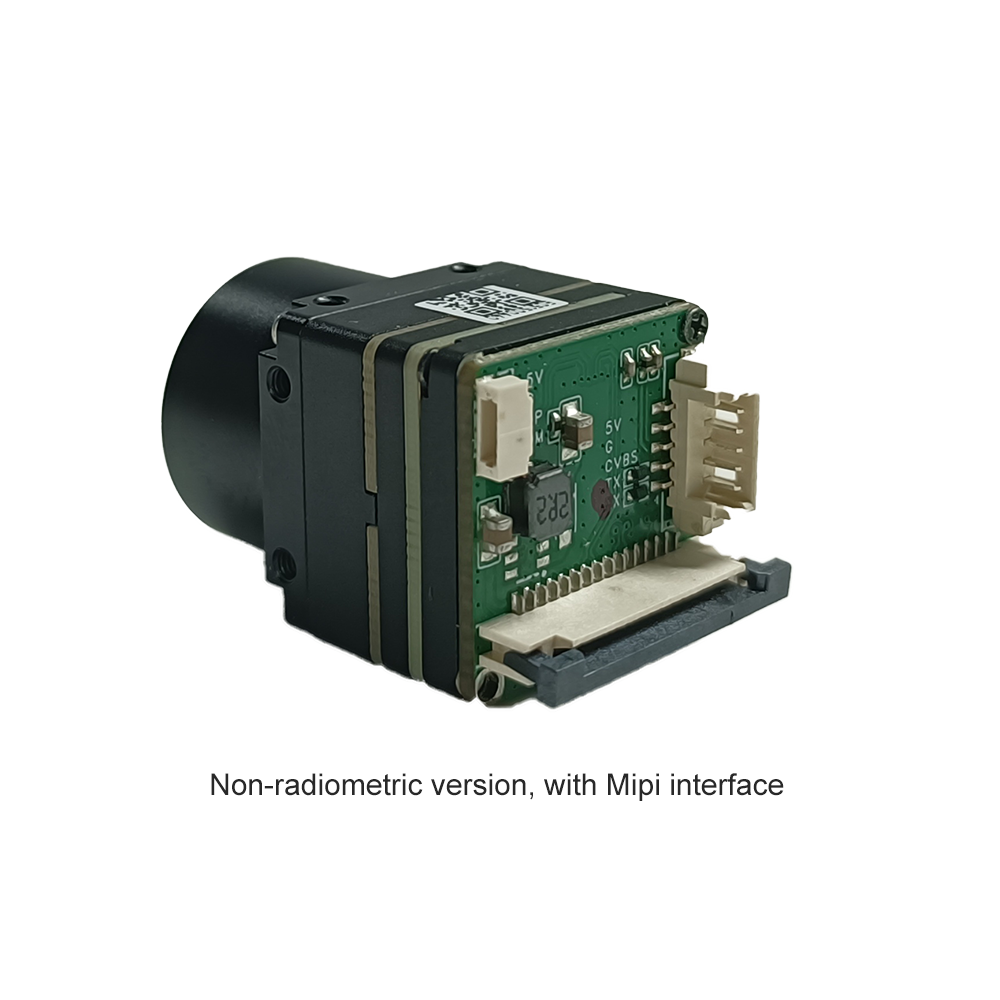
2. High-Speed MIPI-CSI2 to Raspberry Pi & Jetson Workflows
For weight-critical drone gimbals, dropping USB bridge chips cuts payload mass and eliminates serialization latency. Routing high-sensitivity sensor frames over native MIPI-CSI2 or parallel Digital Video Port (DVP) links sends raw pixel data directly into the host SoC's hardware image pipeline. In your PCB layout, maintain tightly controlled differential trace impedance (100 Ω ±10%), match clock-to-data trace lengths within ±0.1 mm, and isolate the high-speed differential pairs from power switching converters to prevent digital noise from degrading the microbolometer's analog readout.
To access reference schematics, pinout layouts, and low-latency ARM SDK bindings, refer to our detailed integration blueprint: MIPI Thermal Module Integration on Embedded Platforms.
3. Automotive ADAS Night Vision Architecture
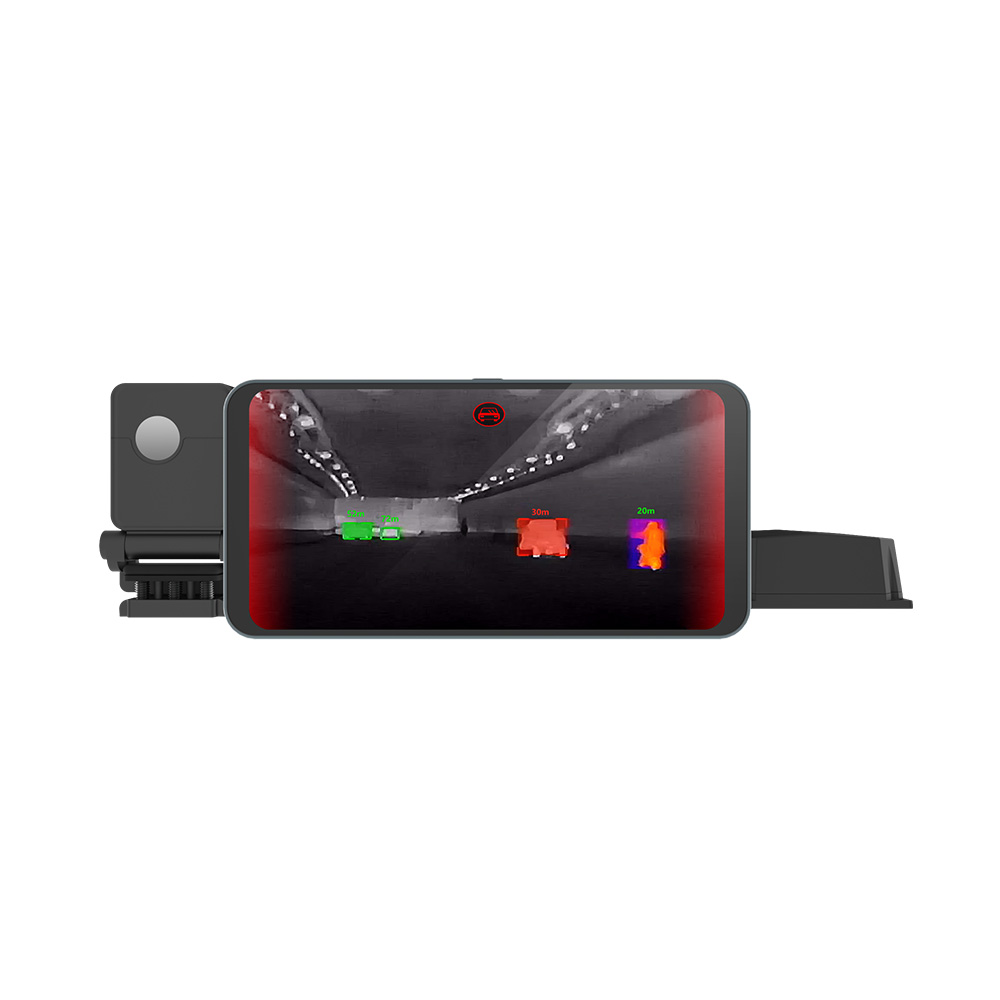
Automotive thermal camera builds face extreme operating conditions: engine bay heat, winter freezes, salt spray, and constant road vibration. Mounting a high-sensitivity core behind a vehicle grille or windshield requires durable Germanium or Chalcogenide protective optical windows with Diamond-Like Carbon (DLC) anti-reflective coatings. The enclosure must also integrate Positive Temperature Coefficient (PTC) heating rings to melt ice and clear condensation automatically, keeping the high-sensitivity optical path unobstructed for ADAS emergency braking algorithms during bad weather.
For a complete teardown of rugged housing design, automotive radiometric calibration, and pedestrian detection architectures, read our application review: Automotive ADAS Night-Vision Thermal Systems.
7. Deep-Dive Technical FAQ
Does high sensitivity in thermal sensors lead to image inconsistency or signal noise?
What are the main advantages of high sensitivity LWIR modules for drone and defense applications?
What specifications determine true high sensitivity in uncooled thermal camera cores?
📚 References & Further Reading
- Industry Standard: Wikipedia Thermal Imaging
- Microcontroller Platform: Arduino
- Related Guide: RS300 V4L2 Linux Driver Architecture Guide
- Related Guide: MIPI Thermal Module Integration on Embedded Platforms
- Related Guide: Automotive ADAS Night-Vision Thermal Systems