

High Sensitivity Thermal Imaging Modules: The Engineer's Guide to Low NETD & AI Vision
2026年8月28日
Lightweight Thermal Camera Solutions: Compact LWIR Modules for Drones & Edge AI
2026年9月1日
Best 25Hz Thermal Camera Module Guide: High-Frame-Rate Cores for Drones & Edge AI
If you have ever spent weeks designing a custom drone gimbal or an autonomous mobile robot (AMR) only to watch your object-tracking neural net drop tracks the moment the vehicle throttles up, you already know the culprit: temporal lag. Deploying long-wave infrared (LWIR) vision on dynamic, fast-moving platforms demands a hard-nosed balance between spatial resolution, thermal sensitivity, pipeline latency, and raw frame rate. For payload engineers, embedded vision architects, and robotics teams, locking in a 25Hz thermal camera module is the baseline requirement for mission success. Sticking with export-restricted 9Hz cores introduces brutal motion smear, warped target geometry, and dropped frames that will wreck your real-time computer vision pipeline, corrupt radiometric temperature readings, and blind your navigation stack.
High-frame-rate uncooled long-wave infrared sensors running at a native 25Hz (or higher) eliminate motion-induced artifacts by streaming clean radiometric or raw 14-bit thermal data straight to your onboard computing engine. Whether you are running high-speed utility line sweeps at 15 meters per second, navigating an AMR through a dust-choked underground mine with zero ambient light, or running lightweight YOLO models on an embedded NPU, a 25Hz LWIR core gives you the temporal resolution needed to catch fleeting thermal transients and run zero-latency target tracking algorithms without missing a beat.
Table of Contents
- 👉 1. The Engineering Imperative: Why 25Hz Outperforms 9Hz in Dynamic Systems
- 👉 2. Uncooled LWIR Sensor Architecture & Optical Design
- 👉 3. Embedded Interface Protocols: MIPI-CSI2, USB, and CVBS/Analog
- 👉 4. Featured High-Performance 25Hz Thermal Camera Modules
- 👉 5. Critical B2B Applications: From Airborne Inspections to Edge AI Automation
- 👉 6. Step-by-Step Engineering Selection Framework
- 👉 7. Deep-Dive Frequently Asked Questions (FAQ)
- 👉 8. Conclusion & Engineering Consultation
1. The Engineering Imperative: Why 25Hz Outperforms 9Hz in Dynamic Systems
In thermal imaging, temporal resolution is every bit as critical as your focal plane array's pixel count. While 9Hz thermal cores flooded commercial markets because they slipped under strict Wassenaar Arrangement and ITAR export controls, they are an engineering dead-end on dynamic platforms. A 9Hz sensor forces a punishing 111.1-millisecond sampling interval between frames. By contrast, a 25Hz sensor fires every 40.0 milliseconds. That 64% reduction in inter-frame latency is the difference between sharp, actionable telemetry and a smeared blur of useless pixels when your platform is moving.
Frame Rate vs. Smear Dynamics in High-Speed UAV Flight
Here's the deal: when an uncooled thermal sensor is mounted under an aerial drone, multi-rotor craft, or rough-terrain ground vehicle, the platform is under continuous angular jitter and linear velocity. Let's look at what happens in the field when an industrial quadcopter inspects a utility line or solar installation at an operational speed of 12 meters per second (roughly 43 km/h or 27 mph):
- ⚠️ 9Hz Core Displacement: The airframe traverses approximately 1.33 meters between consecutive frame captures ($12\text{ m/s} \times 0.1111\text{ s}$). If you are targeting a small, overheated photovoltaic cell junction or a cracked insulator sleeve, the thermal emission smears across multiple adjacent microbolometer pixels while the sensor integrates. The result? Completely corrupted radiometric values, flattened peak temperatures, and blurry edge boundaries.
- ✅ 25Hz Core Displacement: The platform travels just 0.48 meters between frames ($12\text{ m/s} \times 0.040\text{ s}$). This tight spatial window preserves hard thermal edges, stops thermal energy bleeding across detector pixels, and ensures multi-frame noise filtering algorithms (like temporal rolling averages) work without generating ghostly halos.
If you are engineering dedicated gimbaled payloads, check out our in-depth design walkthrough on the thermal camera module for drone UAV architectures.
Real-Time Edge AI Inference and Object Tracking Latency
In the shop, we frequently see vision engineers try to feed 9Hz video streams into neural network tracking pipelines like DeepSORT, ByteTrack, or lightweight YOLOv8 models running on embedded accelerators like the NVIDIA Jetson Orin. The pipeline breaks almost immediately. These tracking filters rely on bounding box overlap (Intersection over Union, or IoU) and constant velocity motion models to track targets across time steps.
At 9Hz, a fast-moving vehicle, animal, or human moves far too much between frames. The bounding boxes fail to overlap, causing the Kalman tracking filter to diverge. The system ends up generating duplicate track IDs, dropping locked targets, and inducing erratic bounding box flicker. At 25Hz, target translation between frames is minimal. The tracker maintains high-confidence IoU matches, enabling smooth optical flow calculations for obstacle avoidance and mission-critical tracking.
2. Uncooled LWIR Sensor Architecture & Optical Design
Selecting the right LWIR module means looking closely at what lives beneath the lens cap. The sensor chemistry, pixel geometry, and readout electronics dictate your system's overall noise floor and responsiveness.
Vanadium Oxide (VOx) Microbolometers & Pixel Pitch Optimization
Modern high-frame-rate LWIR engines rely almost exclusively on uncooled Vanadium Oxide (VOx) thin-film microbolometer focal plane arrays (FPAs). Compared to older Amorphous Silicon ($\alpha$-Si) designs, VOx provides a much higher Temperature Coefficient of Resistance (TCR) and a significantly shorter thermal time constant ($\tau$), typically resting between 8ms and 12ms. This rapid physical response allows the microscopic bolometer membrane to absorb infrared photons, alter its electrical resistance, and shed heat fast enough to support true 25Hz, 30Hz, and 50Hz continuous streaming without residual thermal ghosting. For a background refresher on the physics of long-wave infrared sensors, check out Wikipedia Infrared Imaging.
Modern thermal cores have also transitioned from 17µm down to a 12µm pixel pitch architecture. This provides massive advantages when you are optimizing for Size, Weight, Power, and Cost (SWaP-C):
- ⚙️ Smaller Sensor Footprint & Reduced Optics Mass: A 640×512 detector built on a 12µm pitch has an active array diagonal of just 9.83mm (compared to 13.9mm on a 17µm sensor). This means you can use significantly smaller Germanium (Ge) or Chalcogenide glass lenses to achieve the exact same optical Field of View (FOV).
- ⚙️ Lower Gimbal Motor Demands: Shrinking the optical elements reduces front-end payload weight by up to 35%. That means smaller gimbal motors, less counterweight balance needed, reduced power draw, and longer battery life for your airborne platforms.
Thermal Sensitivity (NETD) and Optoelectronic Signal Conditioning
Noise Equivalent Temperature Difference (NETD) measures the smallest temperature delta the thermal sensor can resolve before signal drowns in electronic noise. Premium 25Hz cores achieve exceptional sensitivity numbers:
$\text{NETD} \le 40\text{ mK to } 50\text{ mK at } f/1.0,\; 300\text{K}\; (25^\circ\text{C})$
Achieving sub-40mK performance at full 25Hz speeds requires custom low-noise Readout Integrated Circuits (ROIC) paired with onboard FPGA processing. The FPGA handles real-time Non-Uniformity Correction (NUC), dynamic Bad Pixel Replacement (BPR), and Digital Detail Enhancement (DDE). These embedded filters continuously account for temperature drift across the microbolometer array and internal housing self-heating, keeping radiometric accuracy rock solid across temperatures from -20°C up to +60°C.
3. Embedded Interface Protocols: MIPI-CSI2, USB, and CVBS/Analog
Your choice of hardware interface directly impacts your CPU load, end-to-end data latency, and physical harness design inside the enclosure.
High-Bandwidth Low-Latency MIPI CSI-2 Pipelines for Jetson & Pi
When you are building tight edge AI vision systems, the MIPI CSI-2 (Camera Serial Interface 2) protocol is unmatched. Unlike USB bridges that convert raw parallel sensor output into serialized packets with heavy driver overhead, MIPI CSI-2 delivers uncompressed 14-bit or 16-bit radiometric frames straight into the host processor's Image Signal Processor (ISP) or Direct Memory Access (DMA) ring buffers.
- ✅ Sub-5ms Glass-to-Memory Latency: Direct DMA transfers skip user-space context switches, dumping raw pixel buffers directly into unified memory for instant CUDA or NPU processing.
- ✅ Zero Host CPU Penalty: Ingesting frames over dedicated D-PHY hardware lanes uses practically zero CPU cycles, leaving your cores free to run path planning or heavy neural networks.
- ✅ Ultra-Thin Cabling: Thin Flexible Flat Cables (FFC) carry high-speed differential signals without adding mechanical stiffness inside compact multi-axis drone gimbals.
To see how to wire and configure these interfaces on single-board computers, read our detailed guide on setting up a thermal camera module for Raspberry Pi and edge compute nodes, or check developer hardware over at DFRobot.
Analog CVBS Integration for Legacy Drone FPV and Long-Range Video Links
Even with digital interfaces dominating onboard AI, analog CVBS (Composite Video) remains a workhorse for tactical FPV pilots. Analog 5.8GHz transmitters pipe composite video directly over long distances without the frame buffering, encoding lag, or sudden cliff-effect dropouts seen in compressed digital video systems. A 25Hz thermal core with native CVBS output allows pilots to fly manual high-speed reconnaissance with instant visual feedback while simultaneously outputting digital telemetry over serial UART.
4. Featured High-Performance 25Hz Thermal Camera Modules
The following uncooled 25Hz LWIR camera modules are designed specifically to meet strict SWaP-C constraints in robotics, industrial automation, and aerial surveillance systems.
Side-by-Side Product Specifications Comparison
| Parameter / Feature | Mini2 640×512 9mm MIPI Thermal Module | Uncooled Mini 384×288 Drone Thermal Module |
|---|---|---|
| Product Visual |
|
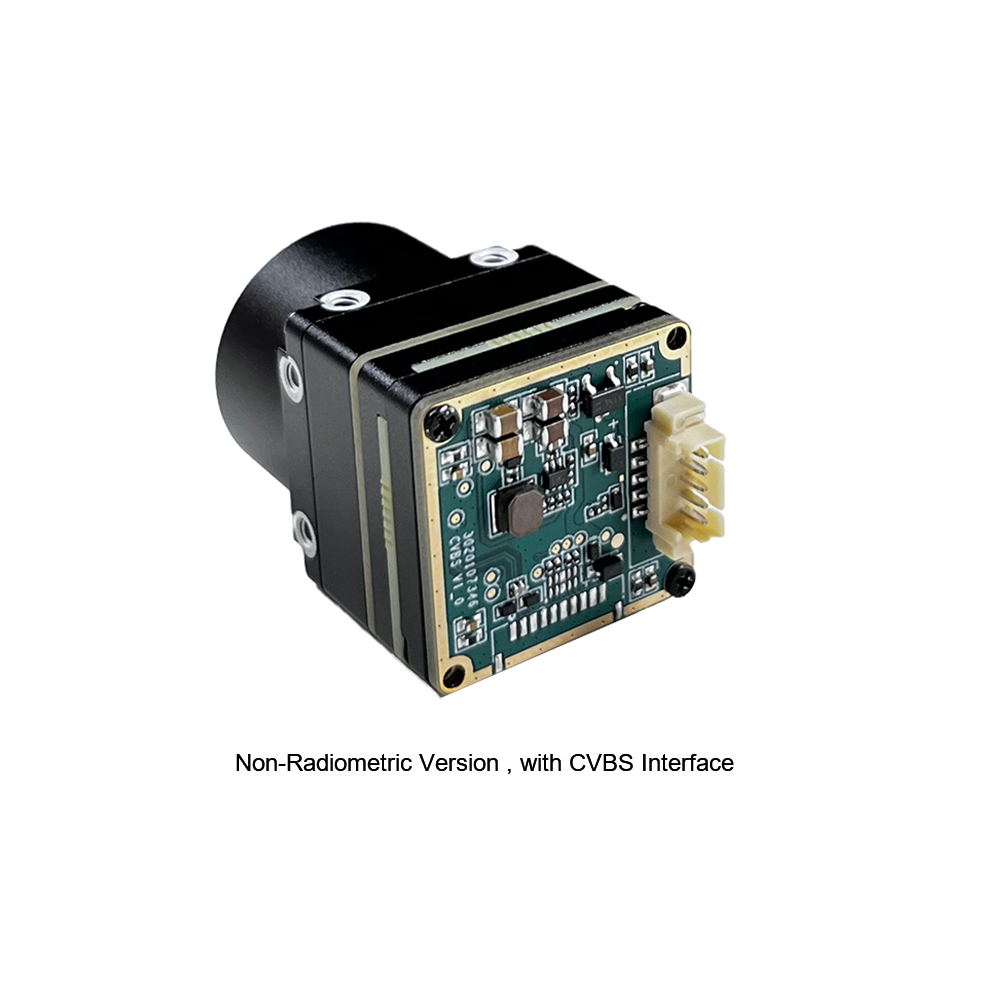
|
| Detector Resolution | 640 × 512 pixels | 384 × 288 pixels (Optional 256×192 / 640×512) |
| Native Frame Rate | 25Hz Real-Time Continuous | 25Hz / 50Hz Real-Time |
| Pixel Pitch & Type | 12 µm Vanadium Oxide (VOx) | 12 µm Vanadium Oxide (VOx) |
| Spectral Band | 8 to 14 µm (LWIR) | 8 to 14 µm (LWIR) |
| Optical Lens Configuration | 9.0 mm Athermalized Fixed Focus | 9.0 mm Standard (Custom Optics Available) |
| Thermal Sensitivity (NETD) | $\le 40\text{ mK at } f/1.0$ | $\le 50\text{ mK at } f/1.0$ |
| Hardware Interfaces | MIPI-CSI2 / D-PHY Raw Data | CVBS Analog / USB / Multi-I/O |
| Module Weight | Ultra-Lightweight (< 20g) | Rugged Compact Mini (< 30g) |
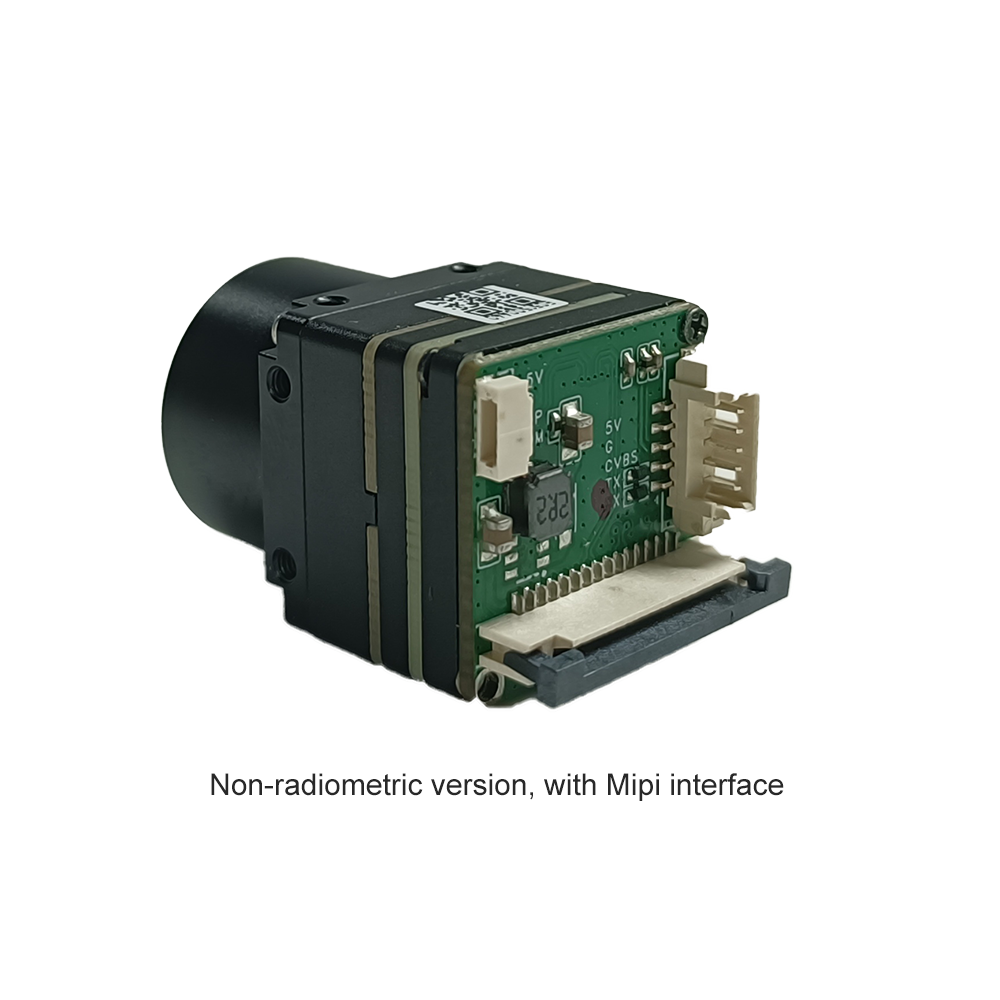
Detailed Analysis: Mini2 640×512 9mm MIPI Thermal Imaging Camera Module
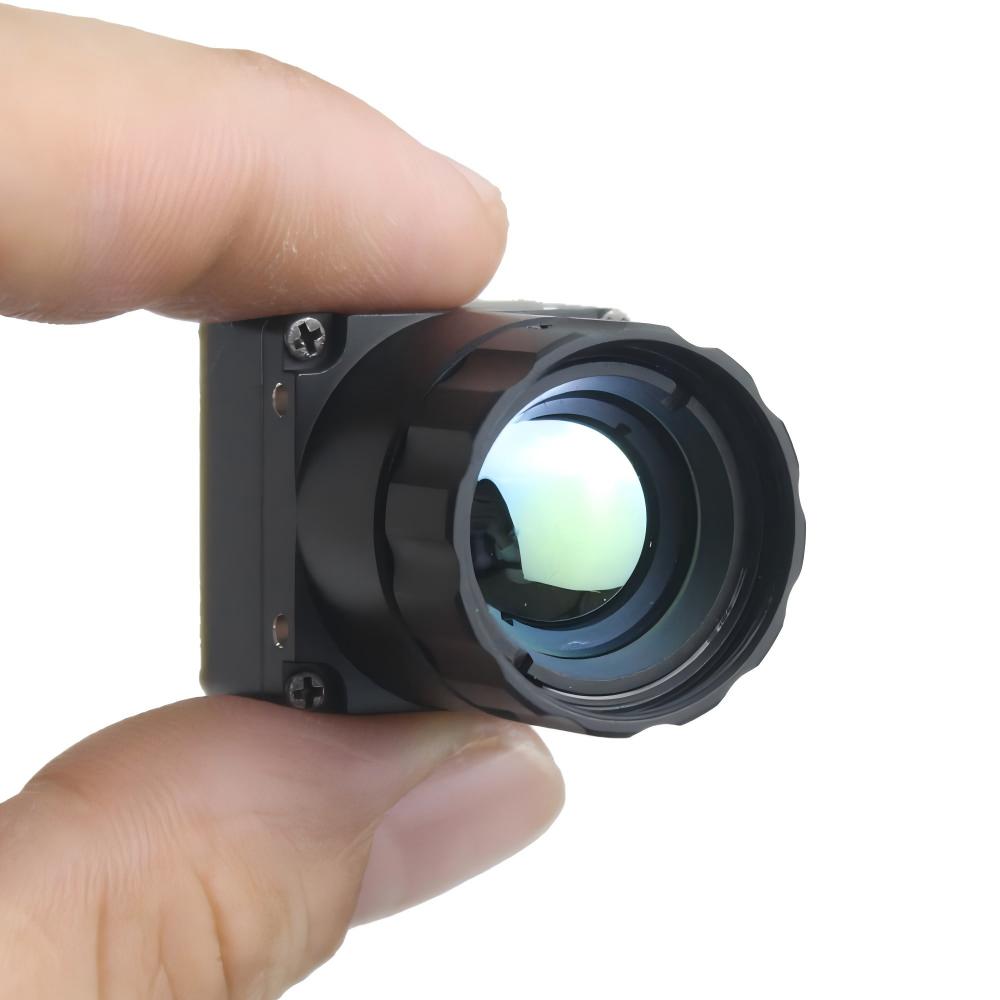
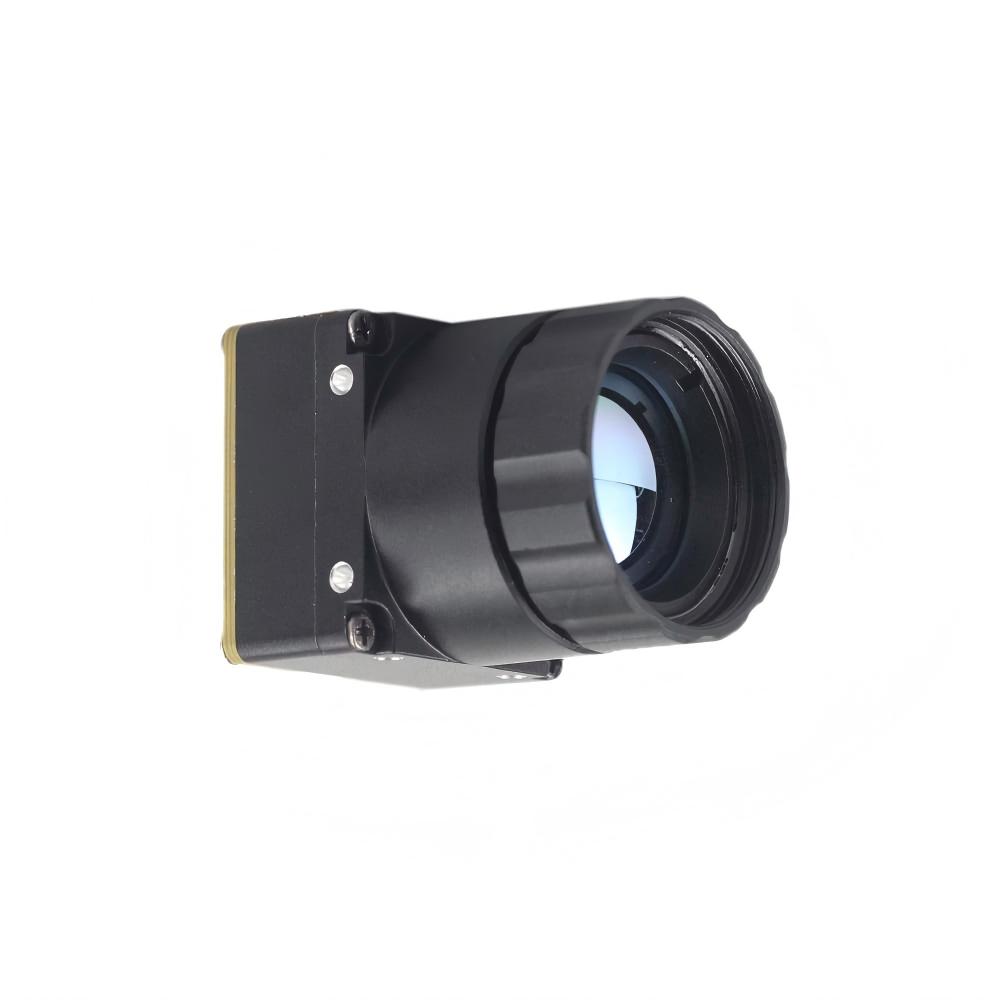
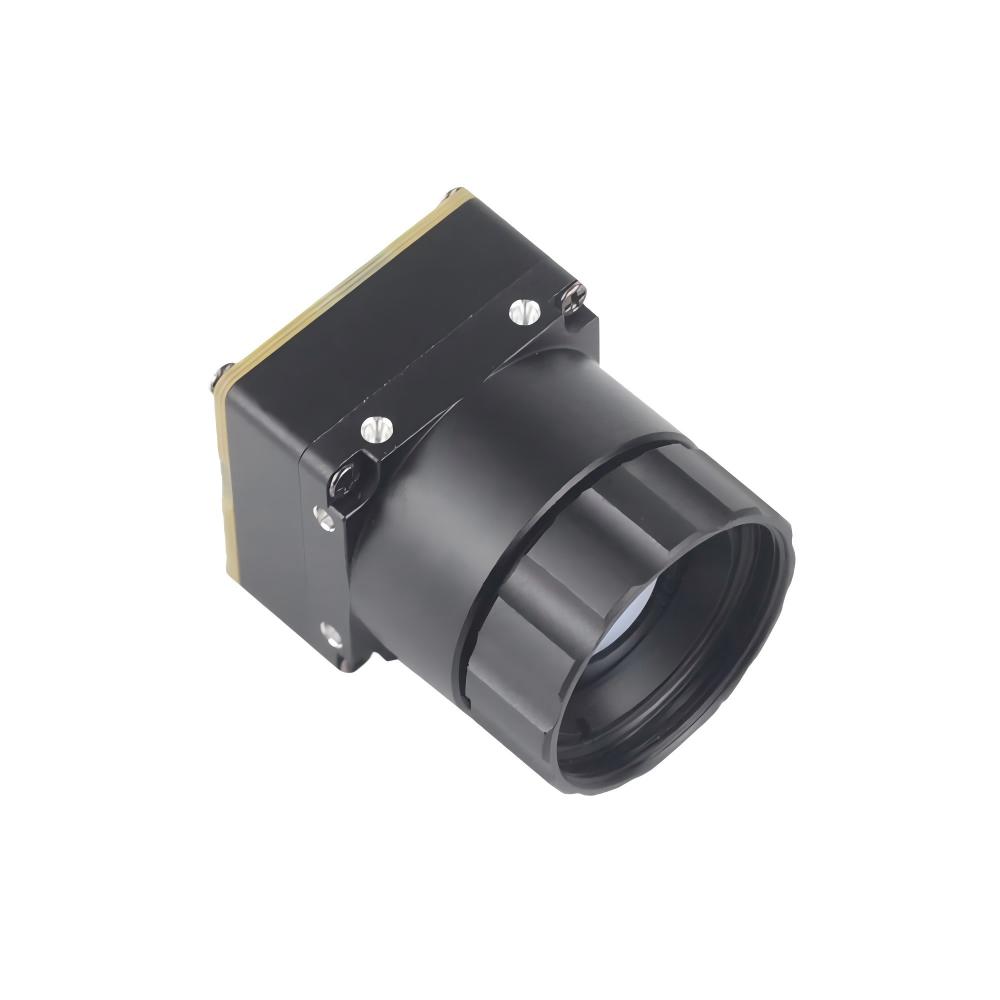
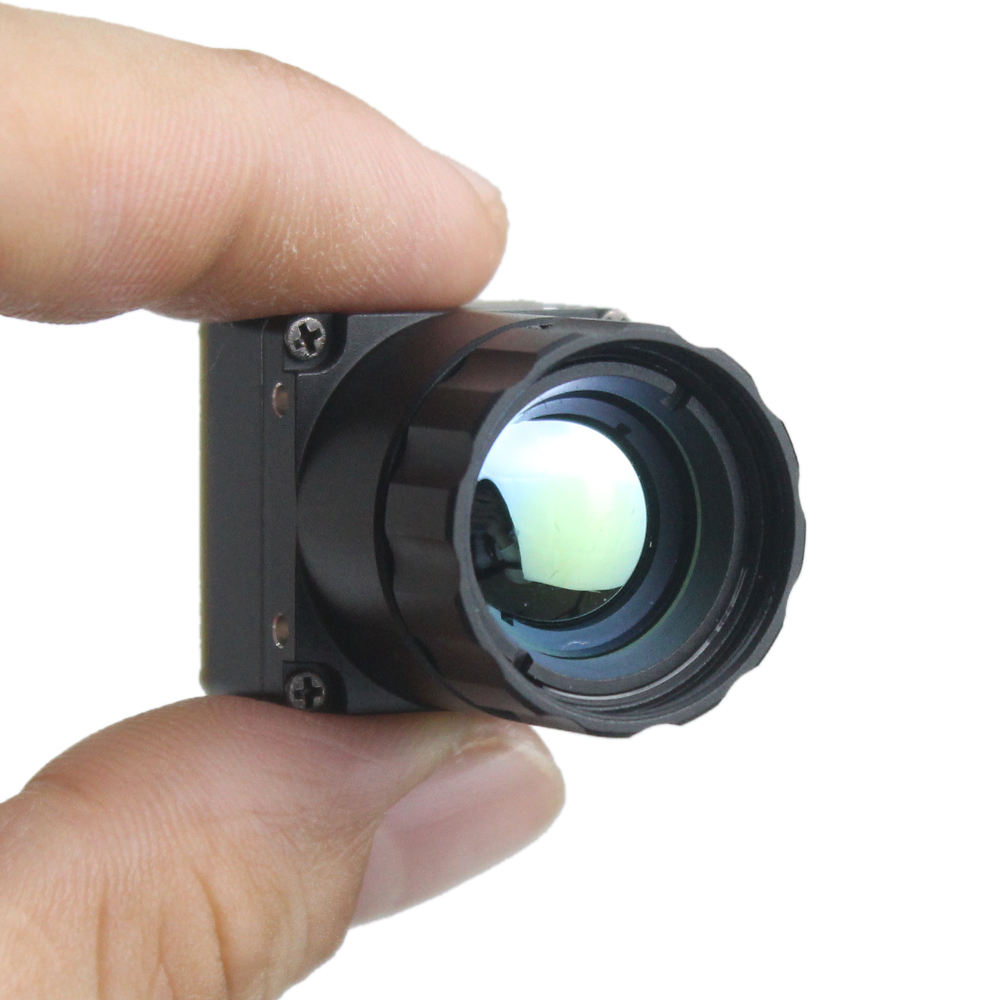
The Mini2 640×512 9mm MIPI Thermal Camera Module is an ultra-compact, high-resolution thermal core built from the ground up for embedded computing. If you are designing for tight UAV micro-gimbals or compact industrial IoT vision systems, this sensor strikes the perfect balance between minimal weight and uncompromising spatial resolution.
With its 640×512 VOx focal plane array on a 12µm pitch, the Mini2 gives you nearly four times the active pixels of older 384-class sensors. Its native MIPI-CSI2 output feeds uncompressed 14-bit radiometric frames directly into host platforms like the NVIDIA Jetson Orin Nano, NXP i.MX8, or Raspberry Pi Compute Module 4 with sub-5ms latency. The built-in 9.0mm athermalized lens maintains razor-sharp focus across wide temperature shifts, making it a reliable workhorse for autonomous roof inspections, utility surveys, and search-and-rescue (SAR) missions.
Multi-Region Integration Note: European developers looking for localized technical specifications can review our Polish engineering brief on the uncooled MIPI infrared thermal module specifications.
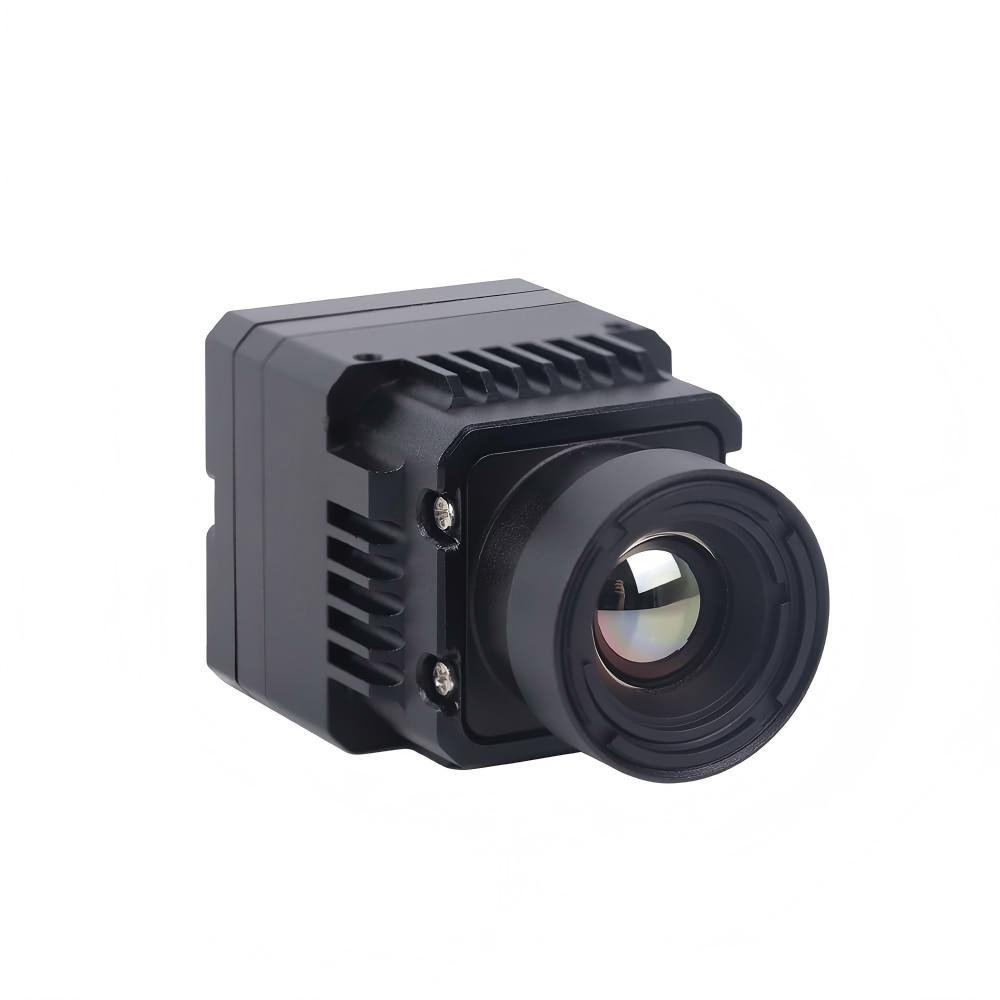
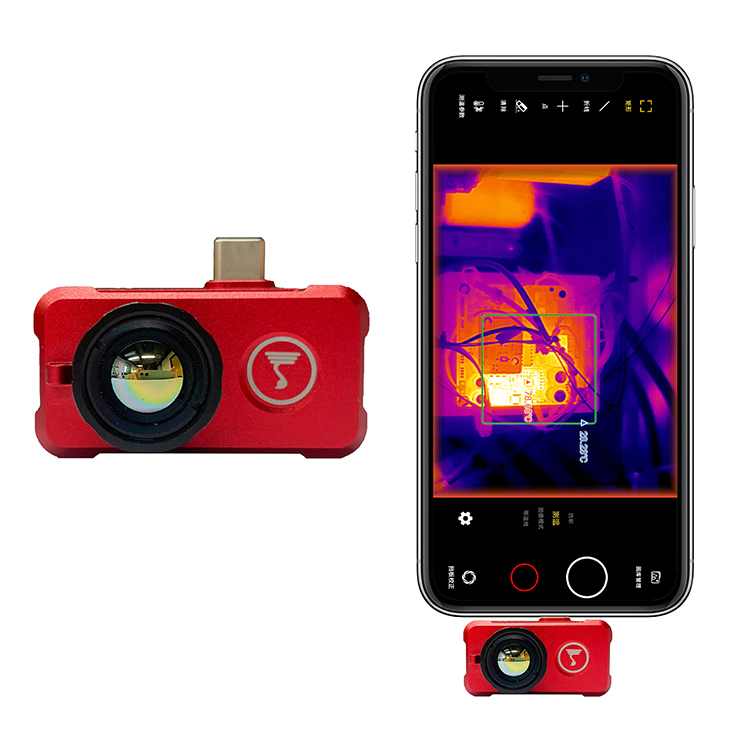
Detailed Analysis: Uncooled Mini 384×288 Multi-Interface Drone Thermal Module
The MINI Series Infrared Thermal Imaging Temperature Measurement Module is a field-proven, multi-interface radiometric engine. Designed for harsh industrial environments, this core delivers rock-solid reliability, broad interface support, and an extensive suite of onboard measurement tools.
Engineered with multi-protocol flexibility (including composite CVBS analog output, standard USB UVC, and TTL/UART serial expansion), this module drops easily into drone payloads, fixed machine-vision lines, and predictive maintenance installations. The onboard radiometric DSP automatically tracks point, line, and area temperatures, firing isotherm triggers directly without burning up host processor resources.
5. Critical B2B Applications: From Airborne Inspections to Edge AI Automation
Pairing a high-speed 25Hz frame rate with high-density VOx microbolometers and low-latency digital interfaces unlocks vital operational capabilities across key industrial sectors:
1. High-Speed Utility Grid and Photovoltaic Inspections
Field inspection teams regularly fly drones along utility-scale solar farms and miles of high-voltage transmission lines. Operating at speeds between 6 to 12 m/s, a 25Hz thermal camera module allows automated airframes to gather clean, blur-free imagery continuously. Critical faults—like failing bypass diodes in solar panels, localized hot spots in distribution transformers, or corroded splice sleeves—show up with clear geometric boundaries, allowing predictive maintenance systems to log exact fault coordinates without requiring the drone to stop and hover at every tower.
2. Autonomous Mobile Robots (AMR) in Zero-Light Environments
AMRs operating in mining tunnels, agricultural fields at night, or unlit warehouses cannot rely on visible-light RGB cameras. Active LiDAR provides great geometric point clouds, but it gives you zero surface temperature data and can struggle in heavy dust or smoke. A 25Hz LWIR module cuts right through atmospheric particulates, providing obstacle-detection neural networks with continuous, real-time thermal streams. This allows industrial vehicles to spot workers, machinery, and hazards without sudden, jerky emergency stops caused by frame latency.
3. Real-Time Perimeter Security and Tactical Target Tracking
Automated perimeter security systems must detect, classify, and track intruders 24/7 in total darkness, rain, or fog. When tracking rapid targets like moving vehicles or running personnel, a 25Hz module feeds smooth, jitter-free video into embedded edge trackers. The higher frame rate keeps the tracking filter locked on the target's trajectory, eliminating lost locks when pan-tilt units slew rapidly to follow movement.
6. Step-by-Step Engineering Selection Framework
When picking a 25Hz thermal module for your OEM build, follow this systematic engineering framework to strike the right balance between optical range and payload constraints.
Step 1: Calculate Target Range Using Johnson’s Criteria
Johnson’s Criteria defines the number of sensor line pairs (or pixel counts) required across a target's critical dimension to achieve Detection, Recognition, and Identification (DRI):
- ⚙️ Detection (1.5 pixels): Verify that something is present in the field of view.
- ⚙️ Recognition (6.0 pixels): Classify what the object is (e.g., distinguishing a person from a large animal).
- ⚙️ Identification (12.0 pixels): Discern specific details (e.g., verifying whether an individual is carrying equipment).
You can calculate your maximum operational distance ($R$) using your focal length ($f$), pixel pitch ($p = 12\mu\text{m}$), target dimension ($H$), and required pixel count ($N$):
$R = \frac{H \times f}{N \times p}$
For close-to-mid-range tasks (under 80 meters), a 384×288 module with a 9mm lens delivers the best mix of wide field of view and target detail. For high-altitude drone surveys and long-range perimeter sweeps (> 250 meters), step up to a 640×512 module to maintain the necessary pixel density on target.
Step 2: Balance Your SWaP-C Budget (Size, Weight, Power, and Cost)
Every gram counts on an airborne platform. Here is how to evaluate your thermal core's mechanical and electrical envelope:
- ⚙️ Thermal Dissipation: Choose a module that draws under 1.5W under full 25Hz load. Excessive power draw creates heat inside small, sealed gimbal enclosures, raising the internal noise floor and forcing frequent shutter recalibrations.
- ⚙️ Athermalized Lens Design: Make sure your optical assembly uses mechanical and optical athermalization. This prevents thermal defocusing across operating ambient temperatures from -20°C up to +60°C without the added mass of motorized focus mechanisms.
- ⚙️ Mounting & Cabling Form Factor: Pick a core under 30 grams with standardized rear-mounting threads so it seats cleanly into your brushless gimbal assembly without demanding custom counterweights.
7. Deep-Dive Frequently Asked Questions (FAQ)
Why choose a 25Hz thermal camera module over a 9Hz sensor for drones and robotics?
Can these 25Hz thermal modules interface directly with embedded boards like Raspberry Pi or NVIDIA Jetson?
Which resolution is right for my project: 256×192, 384×288, or 640×512?
- ⚙️ 256×192 Cores: Best for close-range tasks (1 to 20 meters), compact IoT condition-monitoring nodes, localized electrical cabinet thermal checks, and cost-sensitive micro-robotics where simple threshold triggers are all you need.
- ⚙️ 384×288 Cores: The sweet-spot benchmark for industrial work. Delivering four times the pixels of basic cores, this format is ideal for machine vision, security patrols, and medium-altitude drone surveys (20 to 80 meters) targeting building envelopes and solar installations.
- ⚙️ 640×512 Cores: The premier option for high-altitude UAV mapping, long-distance perimeter tracking, and search-and-rescue operations. Packing 327,680 measurement pixels, a 640-class sensor spots small thermal defects and identifies targets hundreds of meters away.
8. Conclusion & Engineering Consultation
Upgrading to a 25Hz thermal camera module eliminates the motion blur, spatial distortion, and inference tracking lag that plague legacy low-framerate cores. By pairing 12µm uncooled VOx microbolometer technology, sub-40mK thermal sensitivity, and flexible MIPI/USB/CVBS hardware pipelines, these high-frame-rate engines deliver the temporal fidelity and clean radiometric data demanded by modern industrial platforms.
Our optoelectronic engineering team provides end-to-end integration support for OEM system designers—covering custom PCB pinouts, custom Germanium lens designs, ROS/ROS2 driver packages, and low-level Linux V4L2/DMA driver integration for NVIDIA Jetson and Raspberry Pi environments.
- 👉 Explore the 640×512 MIPI Module: Mini2 640×512 Product Page
- 👉 Explore the Multi-Interface 384×288 Module: Uncooled Mini 384×288 Product Page
📚 References & Further Reading
- Industry Standard: Wikipedia Infrared Imaging Fundamentals
- Hardware Resource: DFRobot Open Hardware & Sensor Platforms
- Related Guide: Thermal Camera Module for Drone UAV Platforms
- Related Guide: Thermal Camera Module for Raspberry Pi Edge AI
- Technical Documentation: Uncooled MIPI Infrared Camera Core Architecture