
Infrared Thermal Sensor Module Guide: Selecting High-Res IR Modules for Edge AI & Drones
2026年7月30日
Next-Gen LWIR Thermal Module Guide: OEM Integration for Drones & AI Vision
2026年8月3日
Top IR Camera Module Solutions for Drones & Embedded AI: OEM Integration Guide
If you've ever tried flying a standard optical camera package through thick smoke, midnight fog, or blinding solar glare, you already know the hard truth: visible-spectrum RGB sensors fall flat on their face the second environmental conditions get messy. Building autonomous UAVs, edge AI vision rigs, or rugged industrial inspection gear means you can't rely on clean ambient daylight. To get genuine 24/7 all-weather situational awareness, thermal tracking, and real-time obstacle avoidance, you need an uncooled long-wave infrared (LWIR) ir camera module core doing the heavy lifting.
Look, modern Original Equipment Manufacturer (OEM) setups don't give you room to compromise. You need high thermal resolution, razor-thin Noise Equivalent Temperature Difference (NETD), and an aggressively tight Size, Weight, and Power (SWaP) footprint. Trimming grams off payload mass isn't just a design exercise—it directly translates to extra flight autonomy, lower battery drain, and room for extra hardware on board. At the same time, onboard edge AI processors need clean, low-latency raw video streams to feed real-time inference models without dropping frames.
Here's where Purpleriver comes in. Founded by veteran hardware engineering leaders with roots at the Hong Kong University of Science and Technology (HKUST) and structural expertise from former Huawei HiSilicon chipset architects, Purpleriver builds industrial-grade uncooled microbolometer camera cores designed for quick drop-in integration. We bridge the gap between raw thermal sensor physics and field-ready embedded hardware.
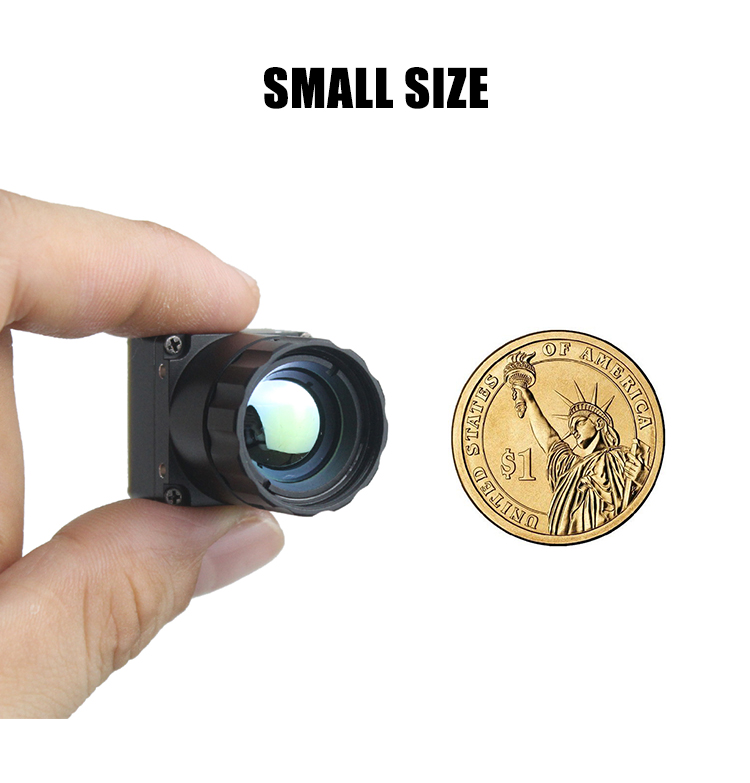
Whether you're machining a sub-compact thermal gimbal for a multirotor drone, building an edge AI security node, or designing handheld thermal inspection gear, picking the right ir camera module interface, pixel pitch, and germanium optical package makes all the difference. This comprehensive guide walks hardware engineers, embedded software developers, and system architects through everything needed to evaluate, integrate, and deploy high-performance thermal cores in demanding real-world environments.
Table of Contents
- 👉 1. Understanding IR Camera Modules: Physics, Spectrum, & Sensors
- 👉 2. Key Architectural Parameters: SWaP, Resolution, Pitch, & NETD
- 👉 3. Purpleriver OEM Thermal Module Specifications Matrix
- 👉 4. Hardware & Software Integration: Embedded AI & Drone Payloads
- 👉 5. Target Industrial & Defense Applications
- 👉 6. Frequently Asked Questions (Deep-Dive Technical FAQ)
1. Understanding IR Camera Modules: Physics, Spectrum, & Sensors
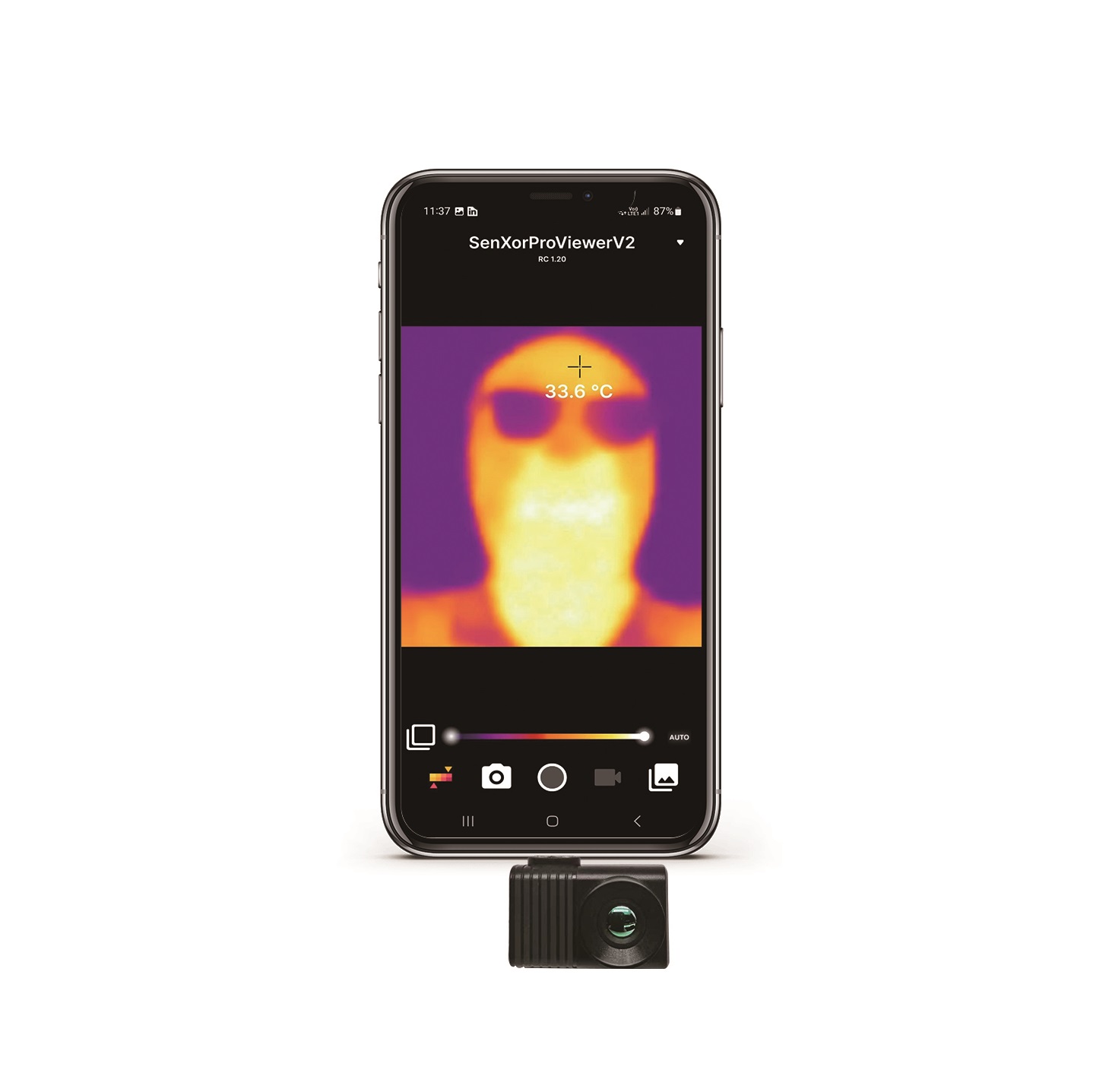
At its core, an ir camera module is an electro-optical engine that captures invisible thermal radiation and turns it into readable digital image streams or exact pixel-by-pixel temperature grids. Standard visible sensors rely on external light bouncing off targets within the narrow 0.4 μm to 0.7 μm band. Thermal imagers work differently: they capture self-emitted blackbody thermal energy. Based on Planck's Law of Thermal Radiation, every object with a physical temperature above Absolute Zero (-273.15°C or 0 Kelvin) constantly shoots off photons across the infrared spectrum.
When you're specifying a thermal payload for OEM hardware, you've got to understand how different wavebands behave out in the field:
- ⚙️ Near-Infrared (NIR, 0.75–1.1 μm) & Short-Wave Infrared (SWIR, 1.4–3 μm): These wavebands rely mostly on reflected ambient light rather than native radiated heat. SWIR is fantastic for cutting through moisture, haze, and seeing directly through glass, making it a go-to for silicon wafer QA or agricultural sorting. But here's the catch: SWIR requires nightglow or active laser illumination to see anything in pitch-black conditions.
- ⚙️ Mid-Wave Infrared (MWIR, 3–5 μm): MWIR picks up self-emitted heat signatures with intense contrast, making it ideal for extreme long-range military tracking and high-speed missile identification. However, MWIR detectors depend on heavy cryogenic Stirling coolers to lower sensor noise. That makes them bulky, power-hungry, mechanically complex, and way too expensive for lightweight commercial UAV gimbals.
- ⚙️ Long-Wave Infrared (LWIR, 8–14 μm): This is the sweet spot. The 8 μm to 14 μm band matches the natural peak thermal radiation emitted by terrestrial objects around ambient temperature (~300 K). Even better, Earth's atmosphere features high atmospheric transmission in this spectrum, so atmospheric signal drop-off is minimal. Uncooled Vanadium Oxide (VOx) microbolometer focal plane arrays operate in LWIR without needing heavy, short-lived mechanical coolers.
Inside an uncooled LWIR focal plane array, you'll find a microscopic 2D matrix of micromachined bolometer bridge elements suspended over a silicon Readout Integrated Circuit (ROIC). Each tiny bridge holds a temperature-sensitive film—typically Vanadium Oxide (VOx) or Amorphous Silicon (a-Si). When incoming thermal energy strikes the bridge, the film heats up, changing its electrical resistance. The ROIC measures these tiny resistance shifts across every single pixel, converting electrical deltas into digital values that reflect exact scene temperatures.
Purpleriver thermal cores focus specifically on advanced VOx microbolometer technology. Why VOx? Simple physics: VOx offers a significantly higher Temperature Coefficient of Resistance (TCR) and lower low-frequency 1/f noise compared to Amorphous Silicon. That gives our cores cleaner signal-to-noise ratios, sharper scene contrast, and lower noise floors across ambient operational temperatures from -40°C all the way up to +80°C. For a deeper dive into radiometric physics, check out this guide on Thermography fundamentals.
2. Key Architectural Parameters: SWaP, Resolution, Pitch, & NETD
Out on the test bench, selecting an ir camera module for a drone gimbal, handheld scanner, or edge AI rig comes down to balancing four main parameters: pixel pitch, array resolution, thermal sensitivity (NETD), and total SWaP-C (Size, Weight, Power, and Cost).
Pixel Pitch & Focal Plane Array Resolution
Pixel pitch is the physical center-to-center distance between neighboring microbolometer pixels on the detector die, measured in micrometers (μm). Older thermal sensors used 25 μm or 17 μm architectures. Today's modern thermal cores—like Purpleriver’s MD Series and Mini 640 Series—have standard-standardized on a sharp 12 μm pixel pitch layout.
Moving from 17 μm down to 12 μm unlocks huge mechanical and optical perks for payload engineers:
- ✅ Smaller Optical Lens Packages: For a given array resolution (like 640x512), shrinking the pixel pitch reduces the physical diagonal area of the detector die. That means you can use a lens with a shorter focal length to achieve the exact same Field of View (FOV). Smaller germanium lenses mean significantly lighter payload mass, reduced overall physical length, and lower bill-of-materials (BOM) cost.
- ✅ Higher Spatial Resolution (iFOV): Instantaneous Field of View (iFOV) measures how much spatial detail a single pixel can resolve at a given target distance. Tighter pixel spacing packs more sensing elements into each angular degree, letting drone operators pinpoint fine target details—like hot power line insulators, small animals, or hidden structural cracks—from much further away.
To eliminate optical distortion across 12 μm microbolometer focal planes, our hardware development team works hand-in-hand with custom germanium optics manufacturers like LightPath Technologies.
Thermal Sensitivity (NETD)
Noise Equivalent Temperature Difference (NETD) is the key metric for rating thermal camera sensitivity. Measured in milliKelvins (mK), NETD represents the smallest temperature variation at the target scene that yields a signal-to-noise ratio (SNR) of exactly 1. Put simply: lower NETD numbers mean a cleaner, more sensitive camera that picks up fine heat differences through raw noise.
Standard industrial-grade thermal cameras typically hover around 50 mK to 60 mK NETD. Purpleriver's high-sensitivity uncooled LWIR modules hit an impressive NETD ≤40 mK (with specialized factory tuning bringing cores down under 30 mK). High sensitivity means your vision pipeline stays crisp even in low dynamic range environments—such as foggy, high-humidity, or overcast days where everything in the background rests at roughly the same temperature.
SWaP Optimization for Unmanned Systems
When you're building drone payloads or lightweight battery-powered inspection gear, every single gram and milliwatt counts. Excess mass burns motor energy faster, restricts flight times, and demands larger battery packs. Purpleriver’s ultra-compact ir camera module designs trim physical housing footprint down to just 21 mm × 21 mm, with raw core weights coming in as light as 15 grams (sans optics). Power consumption sits well under 1.0 Watt, reducing internal thermal buildup inside sealed IP67 gimbal enclosures and avoiding unwanted thermal drift.
If you're designing multi-sensor gimbals, review our detailed guide on multi-functional thermal camera module integration to sync up visible light, LWIR, and laser rangefinder channels cleanly.
3. Purpleriver OEM Thermal Module Specifications Matrix
Purpleriver provides a versatile lineup of uncooled microbolometer ir camera module options ready for drop-in use in edge AI compute nodes, sub-compact drone gimbals, smart security rigs, and portable thermography gear. Check out our full production lineup at the official Purpleriver Thermal Product Catalog.
Here's how our core flagship thermal camera modules stack up on the hardware spec sheet:
| Specification / Feature | MD Series 384x288 Thermal Core | Mini 640 LWIR Thermal Core |
|---|---|---|
| Detector Type & Material | Uncooled VOx Microbolometer | Uncooled VOx Microbolometer |
| FPA Resolution | 384 × 288 pixels | 640 × 512 / 640 × 480 pixels optional |
| Pixel Pitch | 12 μm | 12 μm |
| Spectral Waveband | 8 μm – 14 μm (LWIR) | 8 μm – 14 μm (LWIR) |
| NETD Sensitivity | ≤40 mK (@25°C, F1.0) | High Sensitivity (Sharp/Crisp Image Pipeline) |
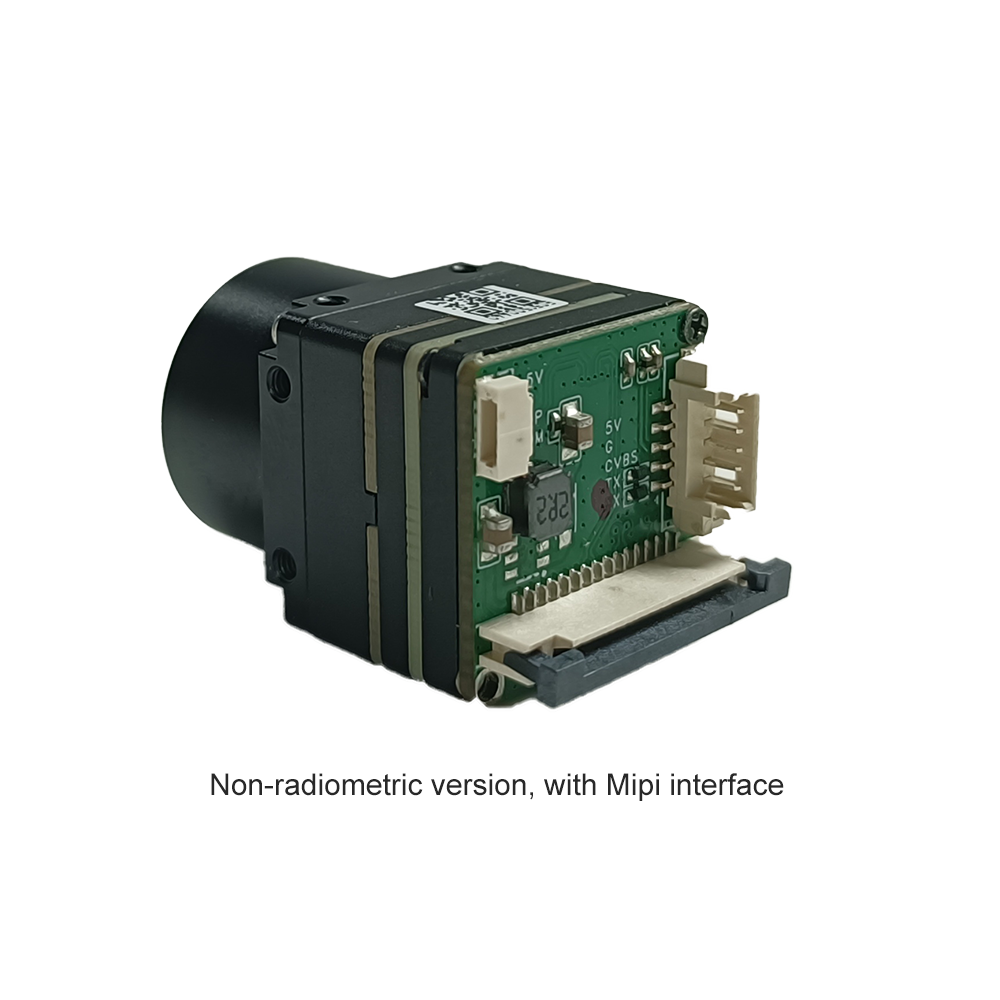
| Interface Options | MIPI CSI-2, USB 2.0 Type-C, CVBS Analog | Direct USB (UVC), Digital Stream, SDK Control |
| Mechanical Form Factor | Compact Industrial Housing / Custom OEM Board | Ultra-Miniature 21 mm × 21 mm Core Size |
| Optical Lens Options | Athermalized Fixed & Manual Focus Lenses | 5mm, 9mm, 13mm, 18mm, 35mm, 50mm, 75mm, 100mm, 150mm |
To learn more about Purpleriver’s engineering lineage, manufacturing standards, and customized design work, check out our background page on Guangzhou Purple River Electronic Technology capabilities.
Featured Product Deep-Dives
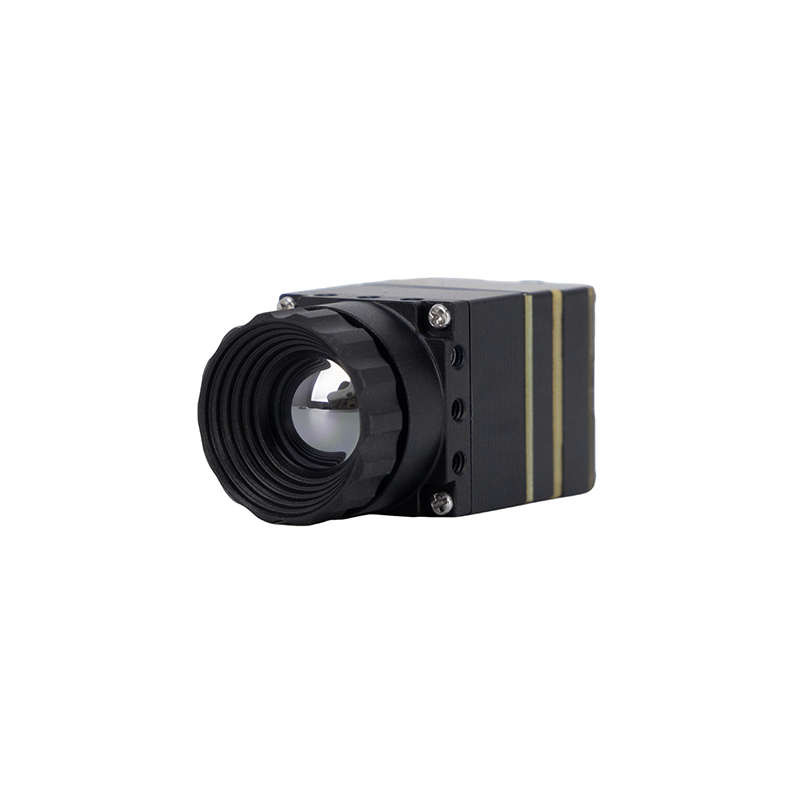
MD Series 384x288 Uncooled Infrared Thermal Camera Module
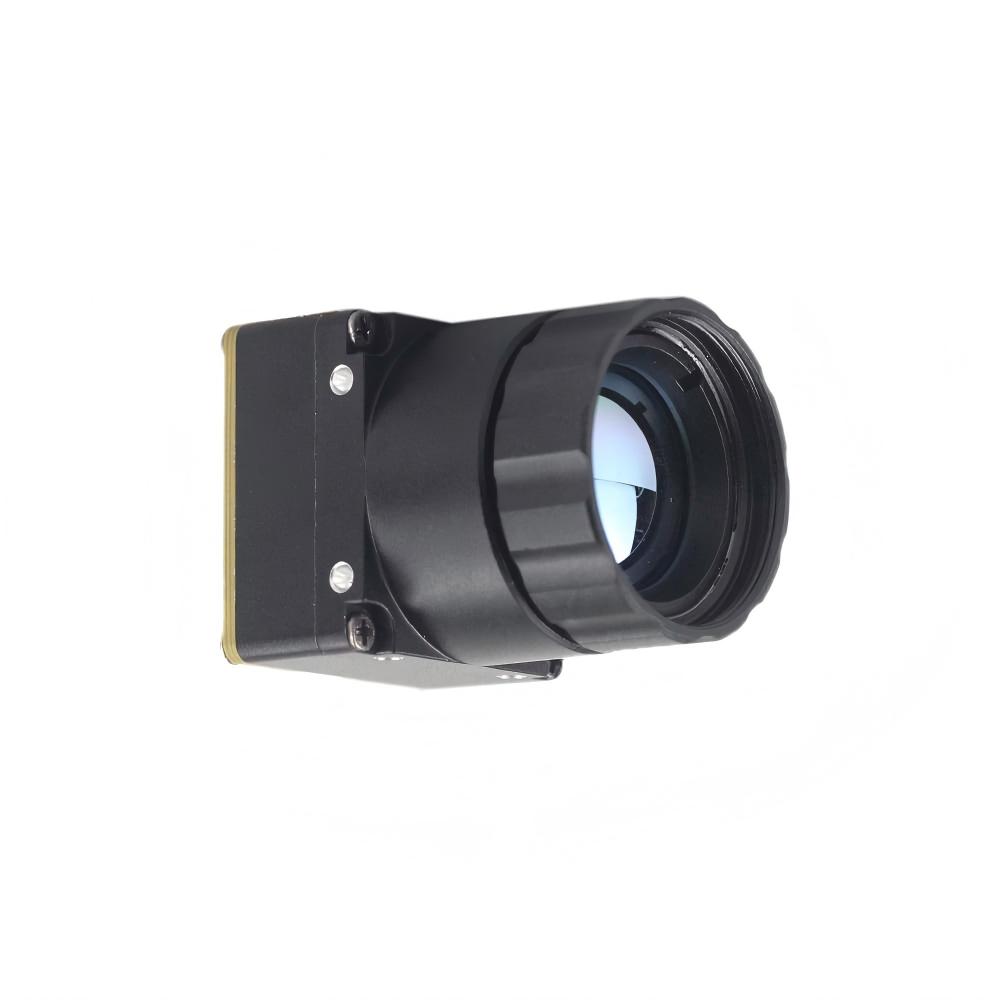
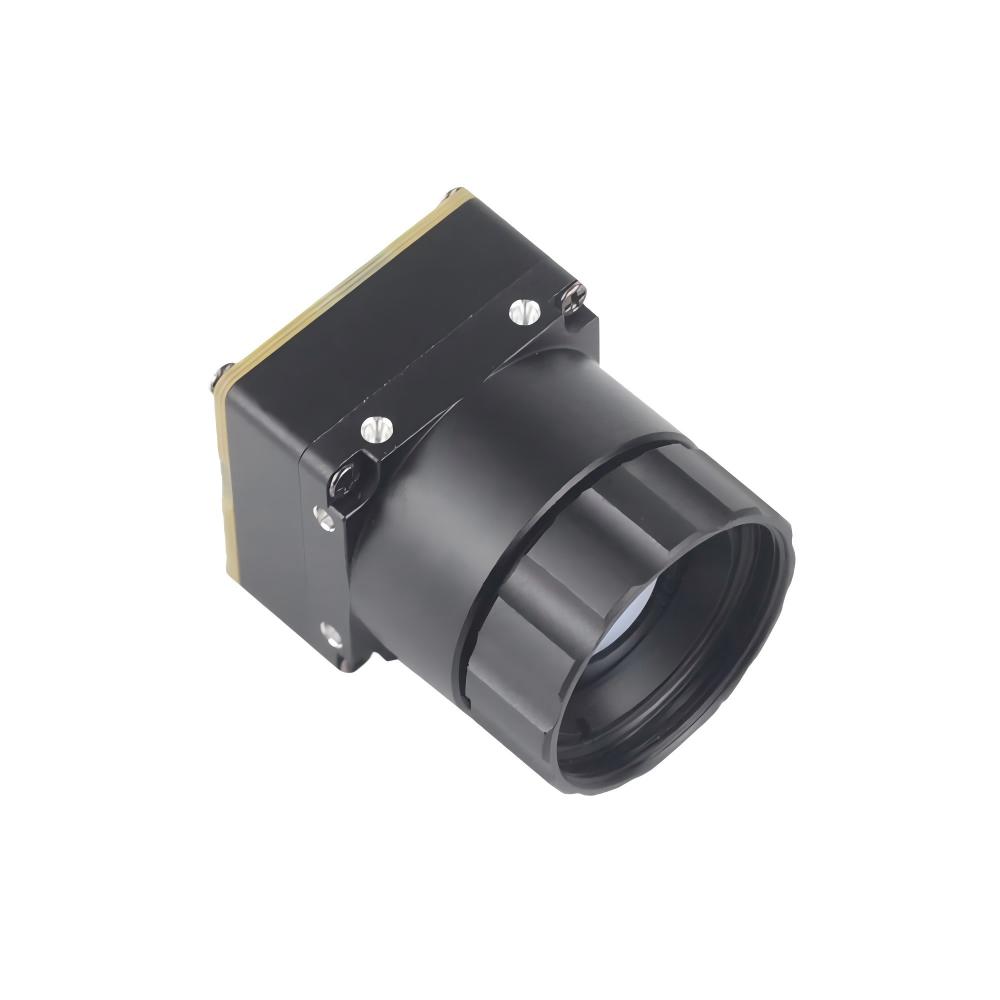
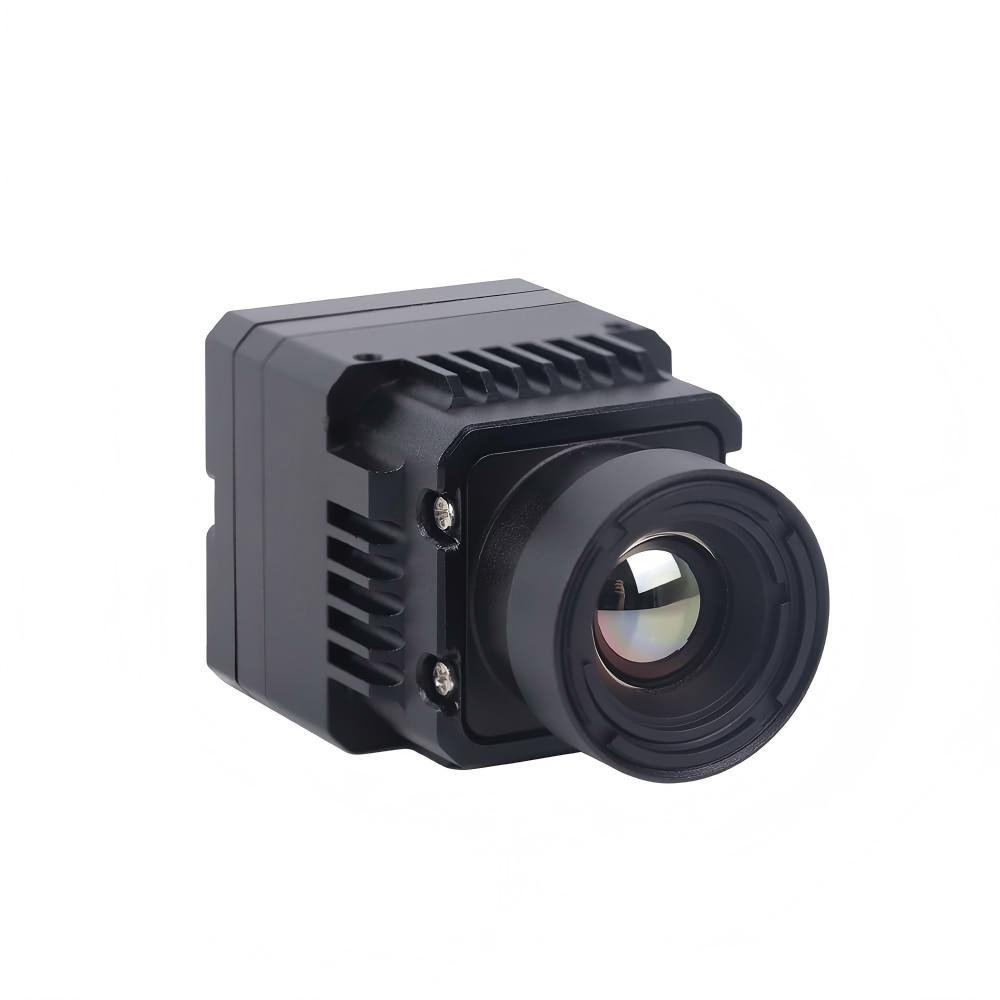
The Purpleriver MD Series thermal camera module is built for industrial-grade precision across security monitoring, real-time temperature tracking, and UAV integration. Built around an uncooled VOx infrared detector featuring a tight 12 μm pixel pitch, the MD Series delivers high thermal sensitivity and sharp edge clarity. Its plug-and-play setup supports multiple video interfaces—including MIPI CSI-2, USB 2.0, and CVBS analog output—ensuring smooth integration into carrier boards and edge AI platforms. Engineered by former Huawei HiSilicon chipset architects and HKUST researchers, Purpleriver offers full OEM/ODM customization for board layouts, lens mounts, firmware tweaks, and communication protocols.
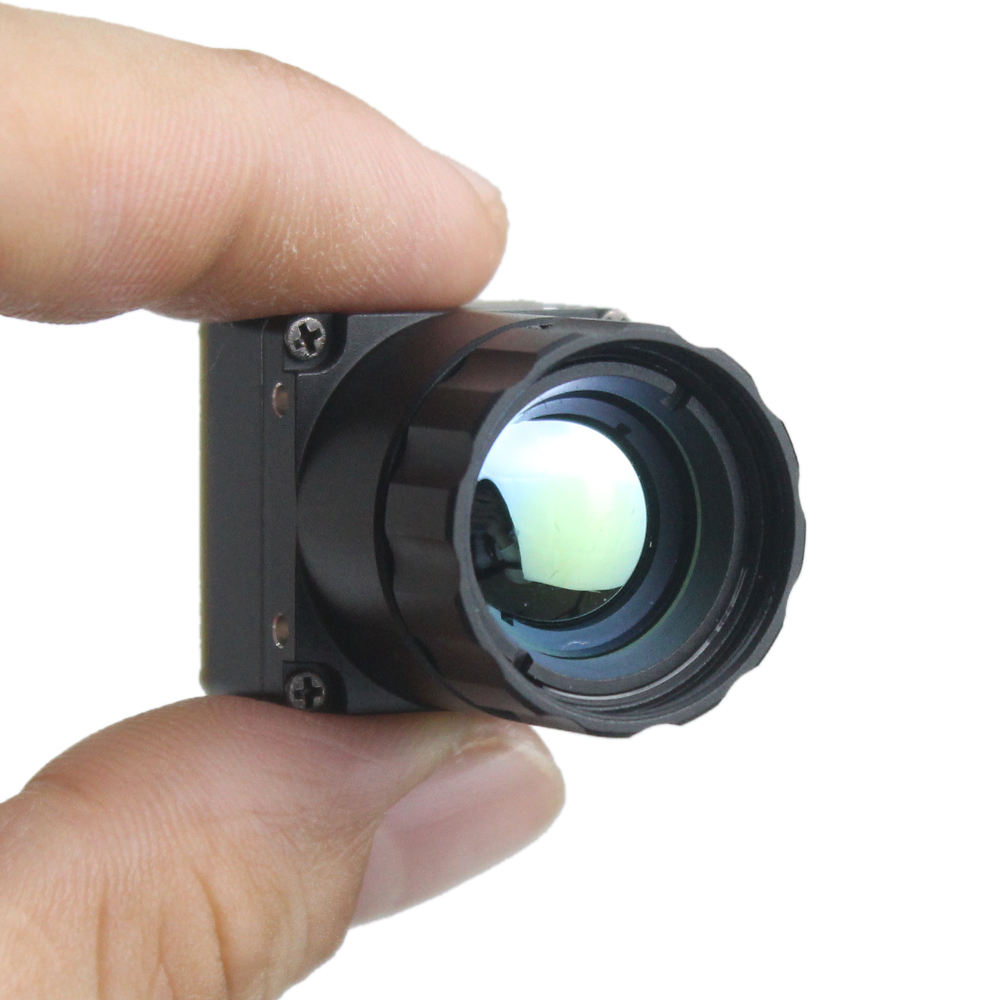
Uncooled LWIR USB Mini 640*512 Thermal Imaging Camera Core Module
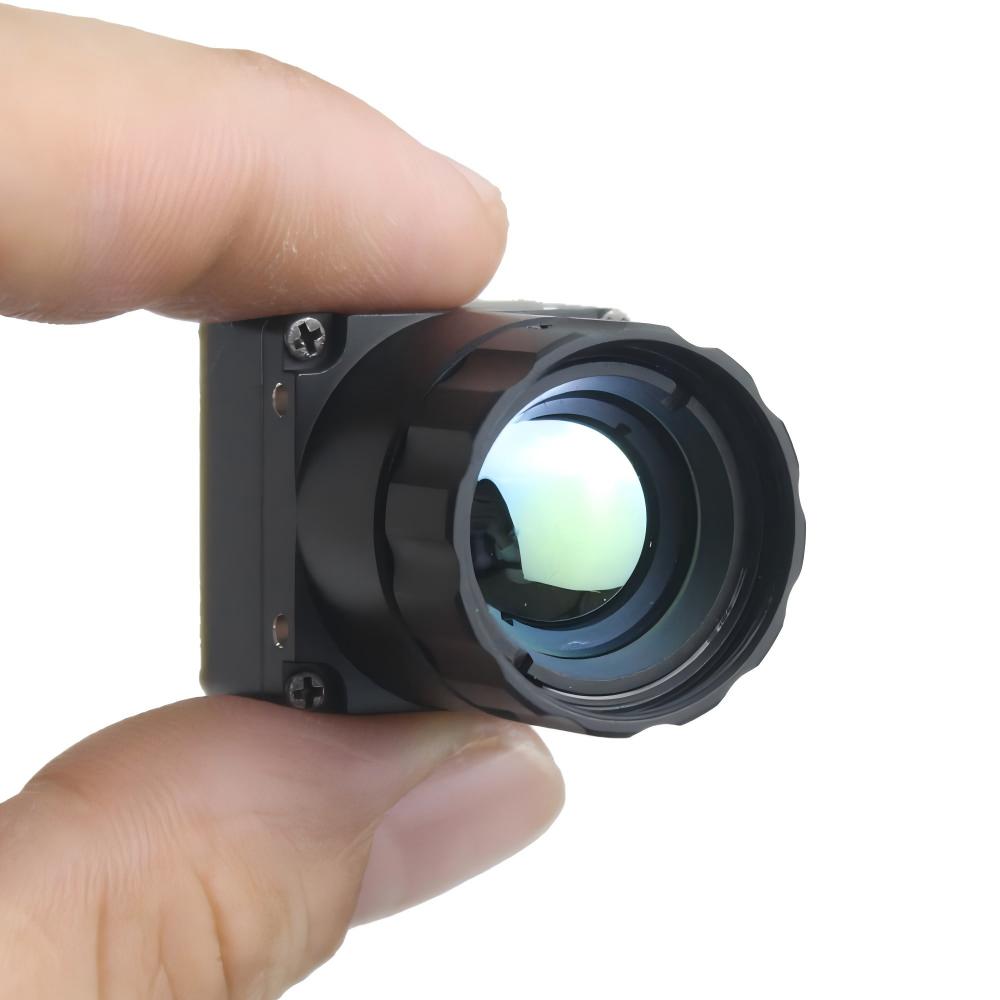
Designed specifically for sub-compact drone payloads, handheld inspection tools, and lightweight robotics, the Mini 640 LWIR camera module packs high thermal resolution into a tiny footprint. Featuring an ultra-small 21 mm × 21 mm housing, this miniature core outputs detailed thermal imaging at 640×512 or 640×480 array resolutions. Built tough for harsh field conditions, the module delivers exceptional environmental stability and shock resistance. Engineers can select from a wide array of optical focal lengths—ranging from 5mm wide-angle lenses up to 150mm telephoto glass—giving you complete flexibility for short-range checks or long-distance aerial observation.
4. Hardware & Software Integration: Embedded AI & Drone Payloads
Integrating an uncooled ir camera module into a high-performance drone gimbal or embedded computer requires careful hardware planning across electrical interfaces, thermal dissipation, SDK bindings, and real-time processing pipelines.
Electrical Hardware Interfaces: MIPI vs. USB vs. CVBS
Selecting the right hardware interface comes down to host processor compatibility, latency targets, and cable layout requirements:
- ⚙️ MIPI CSI-2 (Mobile Industry Processor Interface): MIPI CSI-2 is hands-down the best choice for direct connection to embedded SoCs like the NVIDIA Jetson Orin Nano/AGX, Rockchip RK3588, or Raspberry Pi CM4. MIPI transfers raw pixel data (Raw10/Raw14) straight into system memory via Direct Memory Access (DMA), bypassing CPU serial conversion. That gives you near-zero latency—essential for high-speed edge AI object tracking, autonomous flight navigation, and real-time computer vision.
- ⚙️ USB 2.0 / USB Video Class (UVC): USB provides standard plug-and-play simplicity across industrial x86 PCs, ARM single-board computers, and ground station laptops. Operating as a standard UVC camera, it enumerates without requiring custom kernel drivers. It's perfect for quick bench prototyping, field diagnostics, and straightforward video streaming.
- ⚙️ CVBS Analog Video: Composite Video Blanking and Sync (CVBS) outputs standard analog video signals (NTSC/PAL) for legacy low-bandwidth wireless video transmitters. Analog output gives zero digital frame buffering delay, which is still popular for FPV drone piloting and long-range tactical monitors.
Image Signal Processing (ISP) & Software Architecture
Raw microbolometer data comes off the sensor as digital counts representing raw detector temperature states combined with inherent pixel non-uniformities. Purpleriver’s built-in Image Signal Processing (ISP) pipeline cleans up this raw data in real time before sending frames to your host application:
- ⚙️ 1. Non-Uniformity Correction (NUC): Every microbolometer pixel reacts slightly differently to heat. The onboard ISP runs real-time two-point Non-Uniformity Correction algorithms, using periodic mechanical shutter cycles or shutterless mathematical models to keep image response uniform across the whole array.
- ⚙️ 2. Bad Pixel Replacement (BPR): Any dead or noisy pixels on the microbolometer die are identified and dynamically smoothed out in real time using spatial median filter algorithms.
- ⚙️ 3. Dynamic Detail Enhancement (DDE): Thermal images often suffer from low dynamic range contrast. Purpleriver’s DDE algorithms run high-pass spatial filtering and dynamic histogram equalization (HEQ), bringing out fine thermal gradients from background noise without washing out hot targets.
- ⚙️ 4. Pseudo-Color Mapping: For human operator screens, the host SDK maps 14-bit grayscale thermal values into clean 8-bit color palettes—like White Hot, Black Hot, Ironbow, Rainbow, or specialized fire-inspection palettes.
Here's how data flows step-by-step from the physical thermal detector all the way up into your edge AI engine:
First, the physical VOx microbolometer array (384x288 or 640x512 with 12 μm pitch) captures raw atmospheric heat signatures and shoots frames across native MIPI CSI-2 or USB 2.0 buses. Next, the Linux V4L2 (Video4Linux2) driver layer manages buffer queues and executes direct memory writes straight into system RAM. Then, Purpleriver's middleware SDK exposes C++/Python bindings for raw 14-bit radiometric pixel extraction, shutter control, AGC curve tuning, and palette LUT management. Finally, your deep learning framework (like NVIDIA TensorRT, OpenCV, or ONNX Runtime) processes the clean frames for target identification (e.g., YOLOv8), human tracking, or automated thermal threshold alerts.
5. Target Industrial & Defense Applications
The compact SWaP footprint and rugged builds of Purpleriver uncooled ir camera module units make them an easy fit across high-stress commercial, industrial, and defense payloads.
1. UAV Aerial Inspection & Search and Rescue (SAR)
Mounting a Mini 640 thermal module onto a 3-axis aerial drone gimbal lets first responders spot human body heat through dense foliage, dark woods, or heavy smoke. SAR crews can search huge swathes of terrain in pitch darkness. For utility grid inspection, drone payloads scan power lines, high-voltage transformers, and substations, quickly identifying high-resistance electrical hot spots before catastrophic equipment failures hit.
2. Autonomous Mobile Robots (AMRs) & Industrial Vehicles
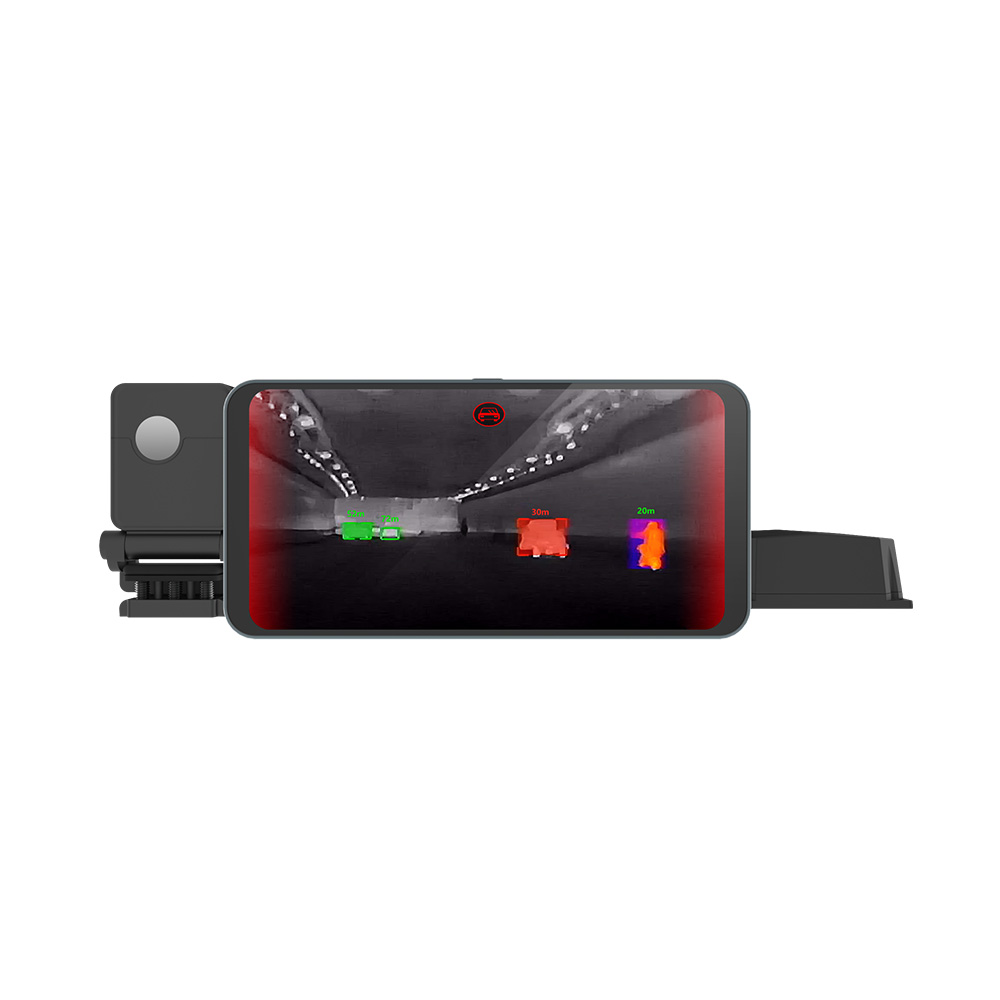
Autonomous mobile robots running around industrial plants, mines, or farms need reliable sensor fusion to navigate safely. Visible-light RGB cameras get blinded by heavy dust clouds, darkness, or steam leaks. Standard LiDAR sensors can struggle against reflective metal or light-absorbing surfaces. An LWIR thermal camera core gives AMRs continuous visual situational awareness no matter the lighting, helping rovers dodge personnel, livestock, and hot machinery hazards on the fly.
3. Critical Infrastructure & Perimeter Security
Fixed security cameras powered by Purpleriver thermal modules provide reliable 24/7 perimeter defense for power stations, airports, water facilities, and military bases. Thermal imaging eliminates false alarms triggered by swaying trees, moving shadows, light reflection, or light fog. Connected directly to local edge AI compute nodes, integrated security platforms automatically track, classify, and alert operators to human or vehicular trespassers at extreme ranges, triggering automated PTZ camera tracking.
6. Frequently Asked Questions (Deep-Dive Technical FAQ)
How do I integrate an IR camera module with Raspberry Pi or embedded platforms via USB/MIPI?
Integrating a Purpleriver ir camera module into Linux-based single-board computers—like Raspberry Pi 4/5, Raspberry Pi CM4, or NVIDIA Jetson kits—is straight to the point. For USB connections, our core presents as a standard USB Video Class (UVC) device. Connecting the camera enumerates a media device node under /dev/videoX. You can stream video immediately using standard Linux utilities like v4l2-ctl, OpenCV, GStreamer, or FFmpeg. We supply full C/C++ and Python SDK wrappers for direct access to raw 14-bit radiometric pixel maps, AGC controls, palette adjustments, and temperature data.
For MIPI CSI-2 integration, the camera module skips USB bus conversion, sending raw 10-bit or 14-bit microbolometer data straight into system RAM via Direct Memory Access (DMA). Purpleriver supplies V4L2-compliant Linux kernel drivers alongside pre-compiled Device Tree Overlays (.dtbo). These overlays configure host SoC ISP settings and pin multiplexing. This zero-copy pipeline cuts host CPU load significantly, leaving your edge AI engine (NVIDIA TensorRT, ONNX, or RKNN) free to run computer vision models at full frame rate.
What is the operational difference between a standard grayscale IR camera and an uncooled LWIR thermal camera module?
While both capture light beyond human vision, standard monochrome IR cameras and uncooled LWIR thermal modules rely on fundamentally different physics, detector materials, and spectral bands:
- Spectral Waveband & Source: Standard monochrome IR cameras (often called Day/Night or Night Vision cameras) operate in the Near-Infrared (NIR, 0.75–1.1 μm) range. They capture reflected photons. In complete darkness, an NIR camera requires active IR LED illuminators to flood the area with light. In contrast, an uncooled LWIR thermal module operates in the Long-Wave Infrared band (8–14 μm). It detects self-emitted heat radiation radiated by all physical objects above absolute zero—zero external illumination required.
- Environmental Penetration: NIR light hits airborne water droplets, fog, smoke, and dust, bouncing light back and blinding NIR cameras. LWIR energy passes right through smoke, haze, dust, and fog because longer wavelengths suffer far less atmospheric scattering.
- Data Output: An NIR camera gives you relative surface brightness based on reflectivity. An LWIR thermal core measures actual thermal differences across the scene, outputting exact quantitative radiometric measurements per pixel.
How do I choose the optimal resolution (e.g., 256x192 vs 384x288 vs 640x512) for drone payload optimization?
Choosing the right thermal resolution for a drone payload comes down to balancing detection range requirements against SWaP limits and onboard processing overhead:
- 256×192 Resolution: Great for short-range jobs (0–30 meters) like close indoor robotics, entry-level building checks, or basic obstacle avoidance. It features low bandwidth demands but lacks the resolution for distant targets.
- 384×288 Resolution (MD Series): The ideal sweet spot for mid-range commercial UAV work (30–200 meters). Packing twice the pixels of budget sensors, it delivers sharp clarity for power line checks, solar farm audits, and structural inspections without choking memory bus bandwidth.
- 640×512 Resolution (Mini 640 Series): The professional choice for long-range tactical surveillance, search and rescue (SAR), and wide-area mapping (200–1000+ meters). A 640×512 matrix offers four times the pixel density of basic sensors, letting operators identify targets from safe standoff distances or sweep huge flight paths in fewer passes.
What is the difference between Radiometric and Non-Radiometric thermal camera modules?
The core difference is exact temperature calculation. A Non-Radiometric thermal module uses thermal signatures strictly to generate relative visual contrast frames. It uses dynamic gain controls to make scene elements look clear for human viewing, which works great for basic obstacle detection or visual tracking. However, individual pixel brightness values cannot be converted into absolute target temperatures.
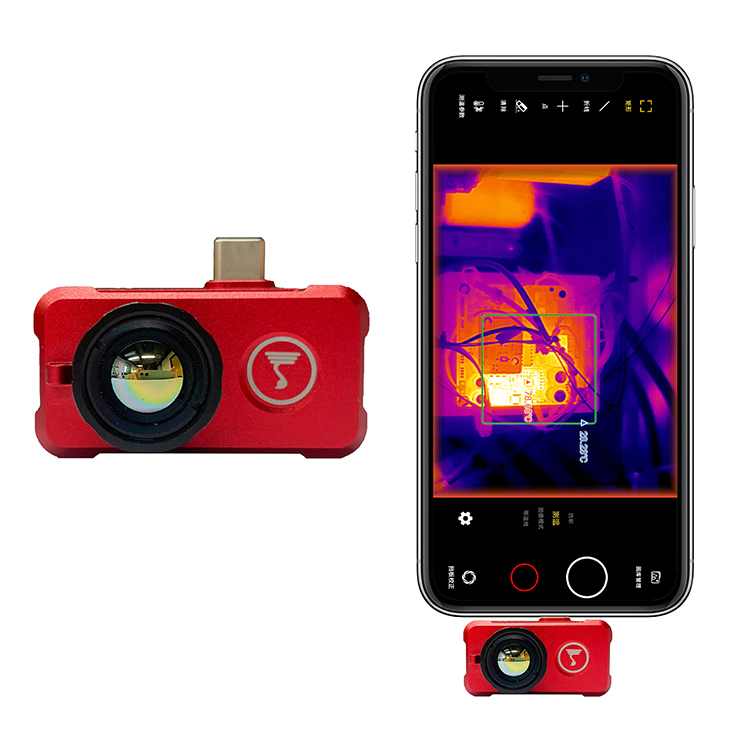
A Radiometric thermal module (like calibrated builds of Purpleriver's MD and Mini 640 series) undergoes factory calibration. It outputs raw 14-bit pixel values that correlate directly to real surface temperature readings (°C or °F) at every pixel. This allows your software to pull absolute surface temperatures, account for target emissivity, and trigger automated alarms when temperature thresholds are crossed—vital for solar inspections, industrial plant QA, and fire prevention systems.
Why is Non-Uniformity Correction (NUC) critical, and how does shutter calibration work?
Microbolometer arrays contain hundreds of thousands of individual VOx sensor bridges. Because of microscopic manufacturing variations, every pixel reacts with slightly different gain and offset parameters. As the camera body heats up or cools down during flight, these variations cause unwanted fixed-pattern noise, vertical lines, and thermal image drift.
Non-Uniformity Correction (NUC) re-calibrates the array on the fly. A internal mechanical shutter briefly drops in front of the sensor, presenting a uniform thermal target. The ISP calculates baseline pixel offsets and normalizes sensor output across the grid. Purpleriver cores also support advanced shutterless NUC algorithms that continually calculate background drift algorithmically, removing mechanical clicks and eliminating frame freezes—critical for high-speed navigation and uninterrupted target tracking.
📚 References & Further Reading
- Industry Standard: Wikipedia Thermal Imaging & Thermography Fundamentals
- Optical Components: LightPath Technologies Advanced Thermal Optics
- Company Capabilities: Guangzhou Purple River Electronic Technology Engineering Profile
- System Integration: Multi-Functional Thermal Camera Module Integration Guide
- Product Catalog: Purpleriver IR Camera Module Shop & Hardware Catalog