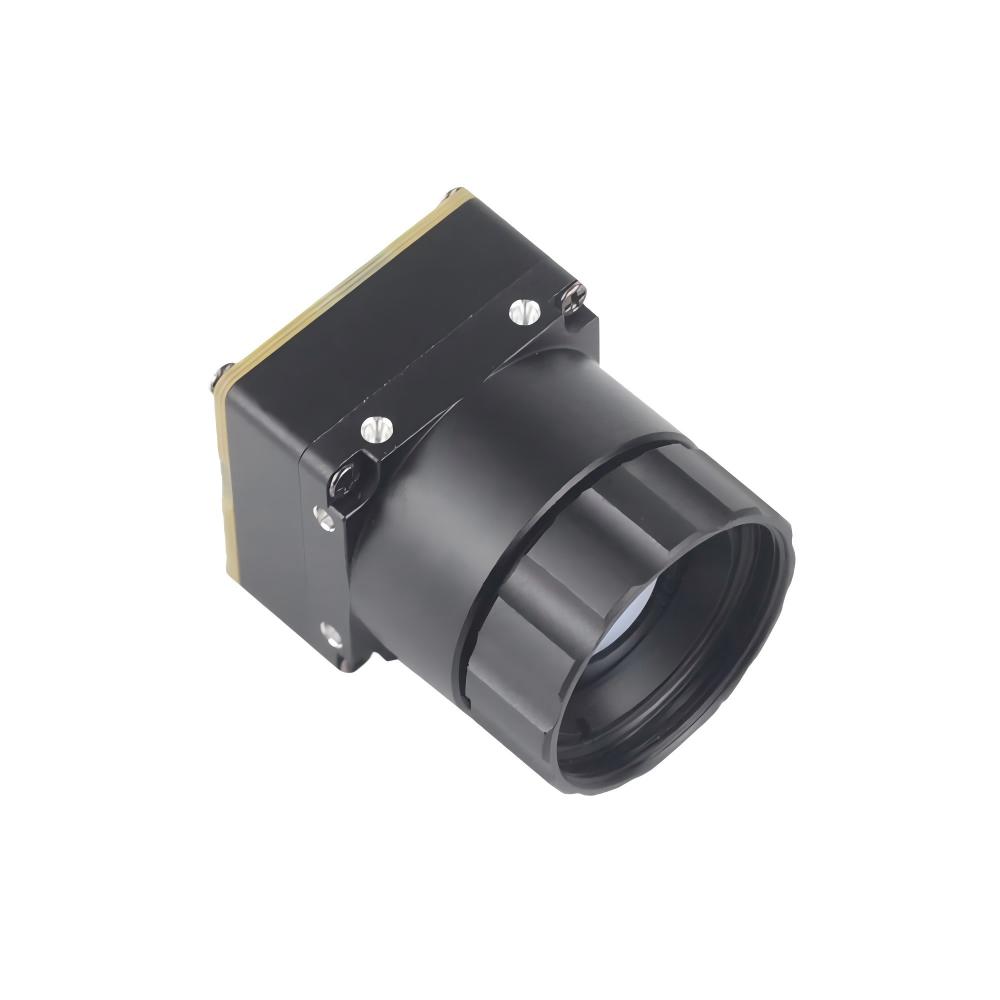
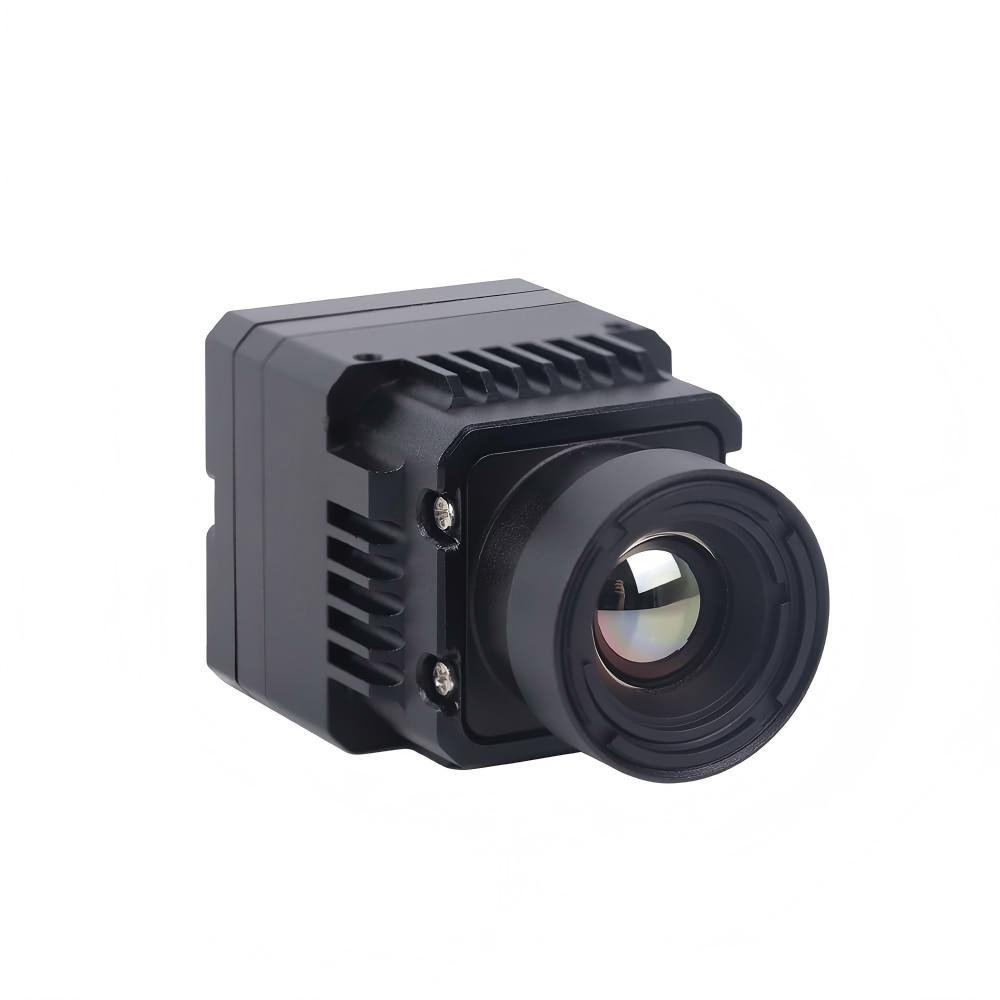
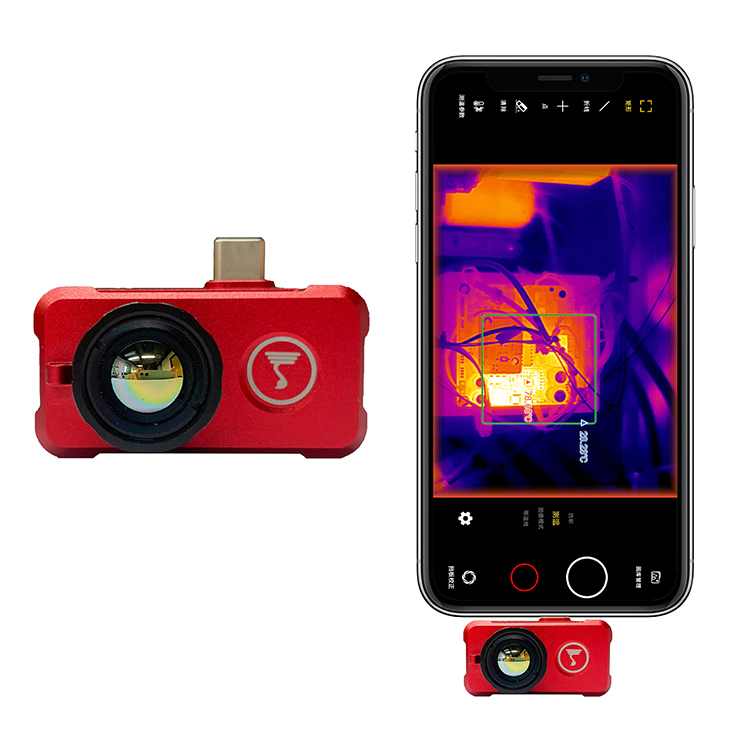
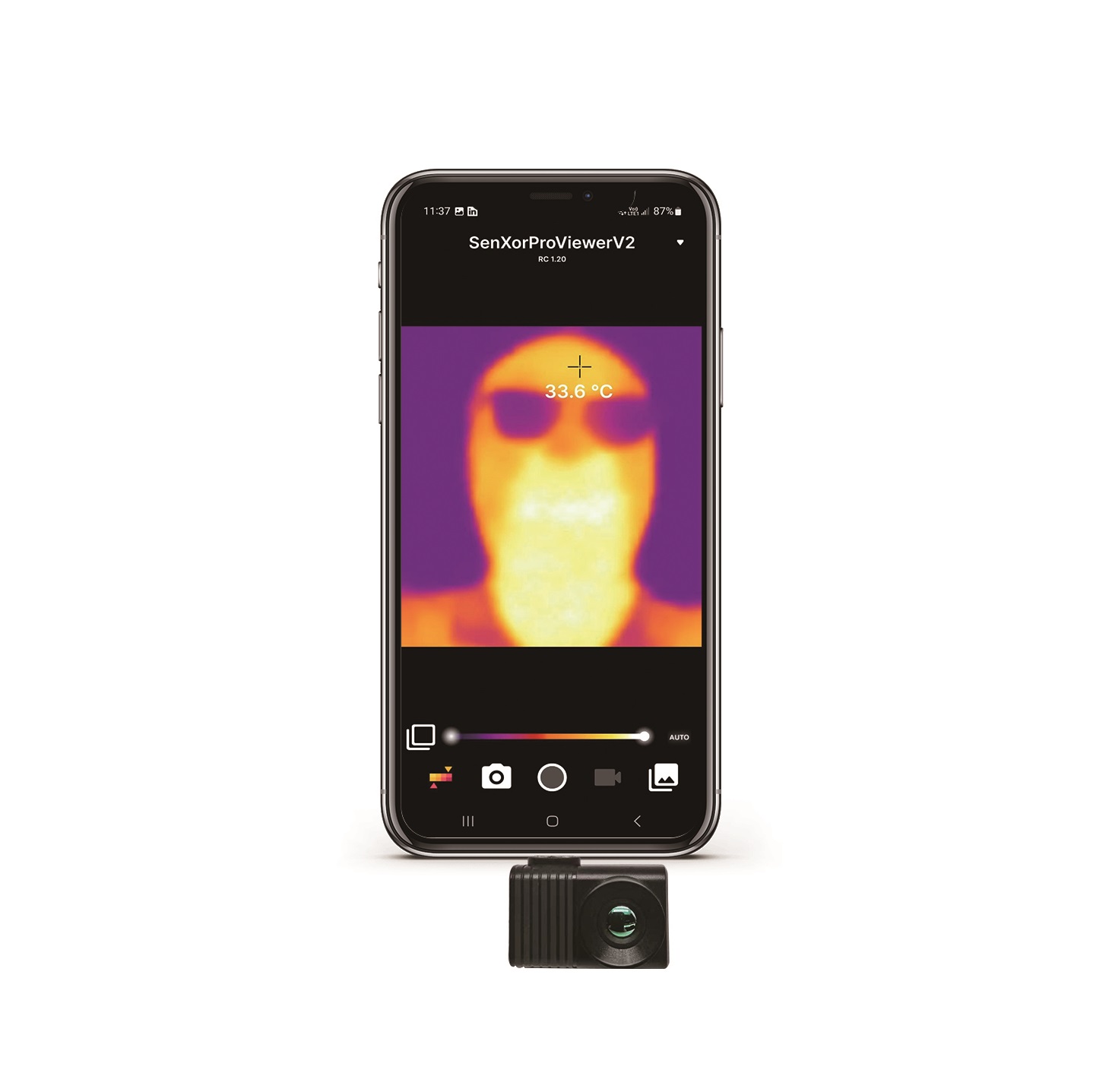
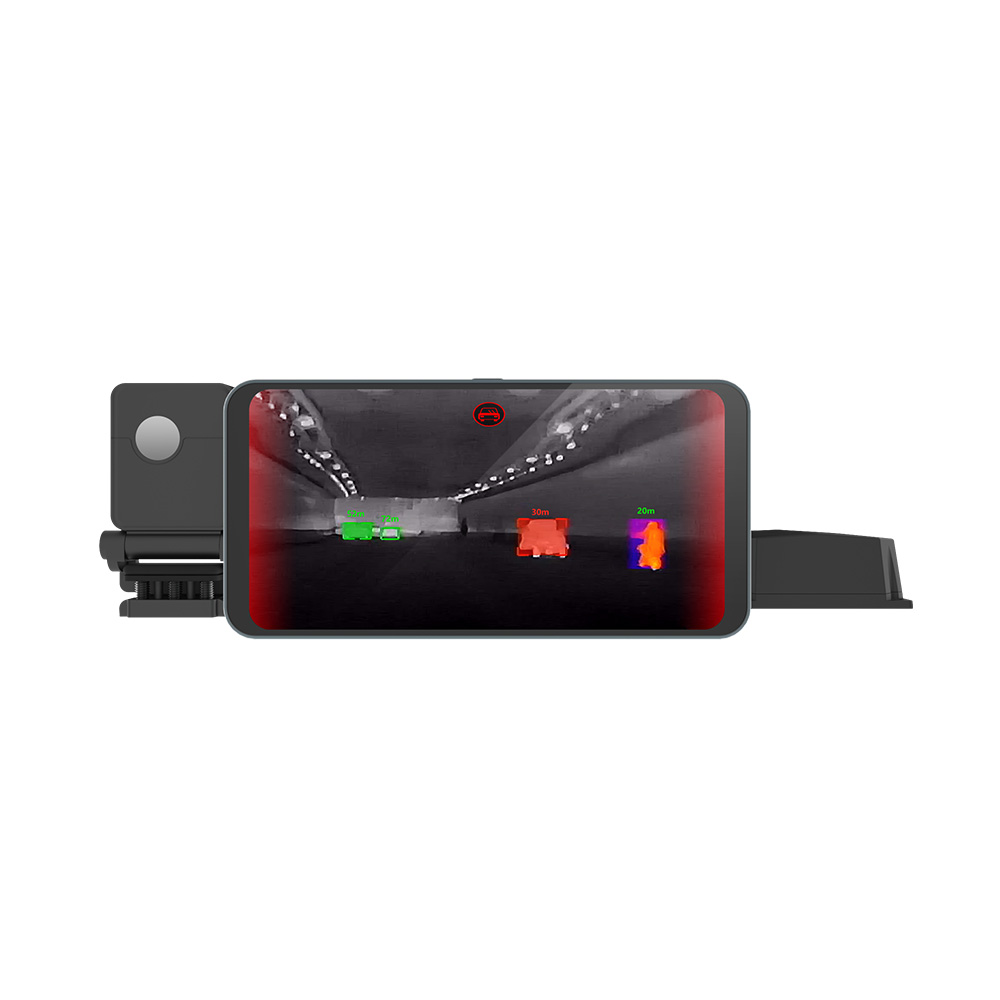

640x512 MIPI Thermal Module: High-Res OEM Camera Core for Drones & Embedded AI
2026年9月17日
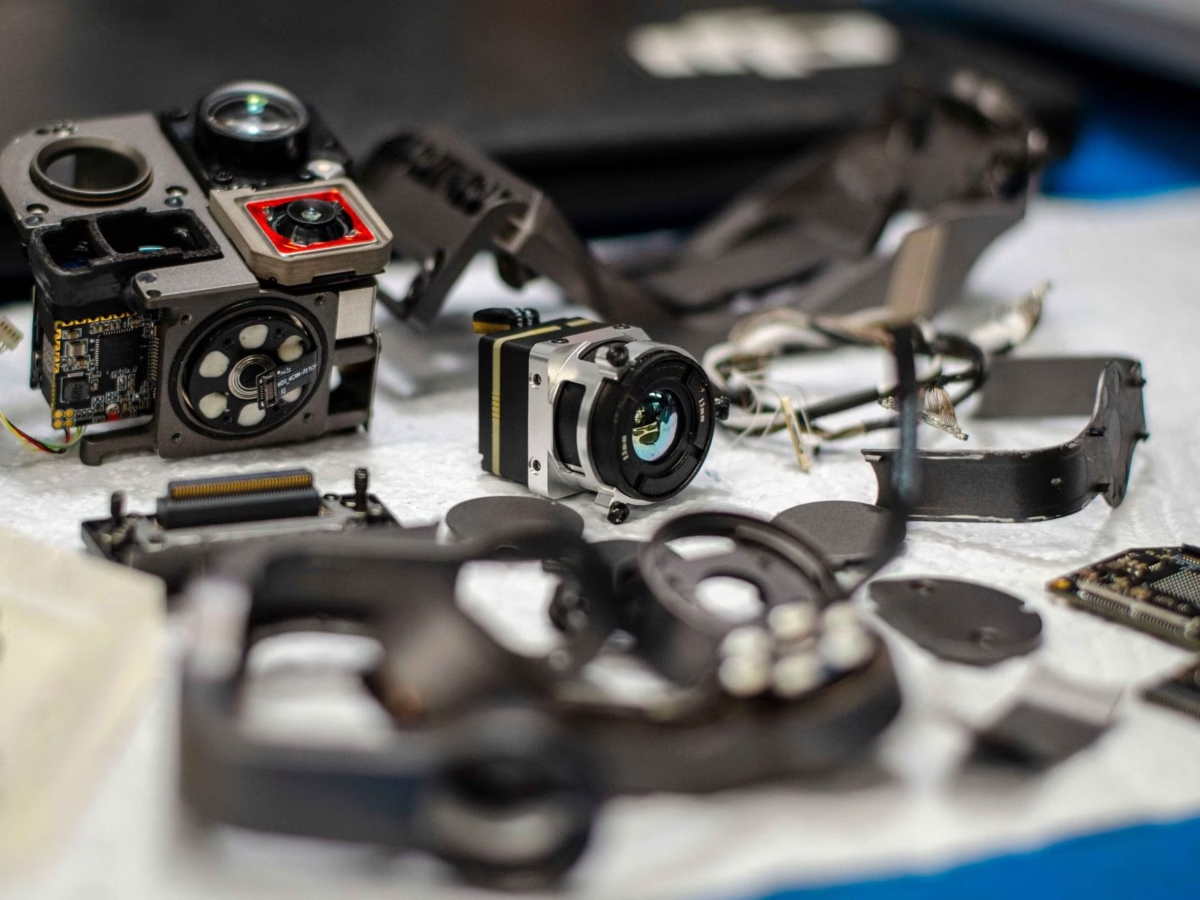
Modern autonomous aerial systems and agile robotic platforms increasingly operate under zero-lux visibility, dense atmospheric obscurants, and complex environmental conditions. While electro-optical visible cameras falter in darkness and active LiDAR arrays encounter significant power, computational, and weight penalties, long-wave infrared sensing provides the direct radiometric signature required for persistent situational awareness. For embedded system architects, firmware developers, and payload engineers, deploying an uncooled mipi thermal camera core bridges the gap between high-fidelity thermographic physics and resource-constrained edge computing. By pairing vanadium oxide microbolometer sensor arrays directly with native Mobile Industry Processor Interface Camera Serial Interface 2 transports, developers bypass the catastrophic serialization overhead, bus jitter, and processor bottlenecks inherent to legacy USB or analog composite video interfaces.
Integrating a native MIPI thermal sensor directly into modern system-on-chip architectures—such as the NVIDIA Jetson Orin series, Rockchip RK3588, NXP i.MX8, or Raspberry Pi compute platforms—unlocks hardware-accelerated direct memory access, zero-copy frame capture, and sub-millisecond pipeline latency. This technical blueprint dissects the optical, electrical, and software engineering principles governing uncooled MIPI thermal camera cores. From microbolometer response mechanics and non-uniformity correction pipelines to hardware carrier board design, Linux V4L2 driver development, and optical parameter selection, this guide delivers an actionable roadmap for engineers building mission-critical vision payloads for autonomous drones, robotic inspection units, and tactical edge platforms.
The operational landscape for autonomous platforms has shifted dramatically. Where thermal imaging was once treated as an auxiliary payload intended purely for human teleoperation over analog downlink frequencies, it is now an indispensable raw data feed feeding real-time onboard autonomy. Perception stacks require deterministic latency, uncompressed 14-bit or 16-bit radiometric depth, and minimal computational overhead to execute simultaneous localization and mapping (SLAM), semantic segmentation, and dynamic obstacle avoidance. Achieving this performance profile demands an intimate understanding of the entire thermal imaging stack, spanning semiconductor solid-state physics, differential high-speed printed circuit board layout, kernel-level memory management, and downstream edge AI acceleration.
By bypassing external protocol bridge chips—such as MIPI-to-USB or parallel-to-USB converter ICs—system designers eliminate failure points, reduce bill-of-materials costs, and shed critical grams from aerial gimbals. More importantly, native CSI-2 direct connections enable thermal sensors to participate as first-class hardware citizens within the host SoC's hardware image processing architecture. This allows incoming thermal frames to be routed straight to specialized deep learning accelerators, optical flow engines, and unified host memory with negligible CPU involvement, making real-time thermal intelligence truly viable on battery-constrained platforms.
Table of Contents
- 👉 1. Engineering Architecture: How Uncooled MIPI CSI-2 Cores Work
- 👉 2. Key Performance Metrics for Embedded Thermal Vision
- 👉 3. Hardware Integration & Linux V4L2 Pipeline Architecture
- 👉 4. OEM Product Specifications & Side-by-Side Comparison
- 👉 5. Deployment Paradigms: Drones, Tactical Robotics & Edge AI
- 👉 6. Deep-Dive Technical FAQ
1. Engineering Architecture: How Uncooled MIPI CSI-2 Cores Work
An uncooled thermal camera core relies on an array of micro-machined pixels fabricated on top of a complementary metal-oxide-semiconductor read-out integrated circuit. Each pixel absorbs incident infrared radiation within the long-wave infrared spectrum, typically defined between 8 micrometers and 14 micrometers. Unlike cryogenically cooled sensors such as Indium Antimonide or Mercury Cadmium Telluride detectors operating at cryogenic temperatures near 77 Kelvin, an uncooled system uses an array of thermal detectors known as a microbolometer. These detectors are predominantly fabricated from thin films with high temperature coefficients of resistance, most notably Vanadium Oxide or amorphous Silicon.
When long-wave infrared radiation hits the thermally isolated microbolometer membrane, the active material absorbs the photon energy, causing an increase in temperature. This thermal shift induces a proportional, predictable change in electrical resistance. The underlying ROIC periodically samples the resistance across each pixel cell in the focal plane array, converting minute resistance fluctuations into digital voltages using high-precision onboard analog-to-digital converters. The output is expressed as raw 14-bit or 16-bit digital numbers, which correspond directly to the uncalibrated radiance detected by each sensing element.
The microbolometer's operational physics impose unique constraints on image formation. The thermal time constant—the duration required for a pixel membrane to change temperature in response to incoming radiance fluctuations—typically ranges from 8 to 14 milliseconds. Consequently, reading out the sensor requires carefully regulated electrical bias pulses to avoid self-heating, which can skew measurement accuracy. Because microbolometer pixels are isolated in vacuum packages via micromachined silicon nitride bridges, even tiny thermal fluctuations in the camera chassis will alter pixel readings. As a result, the read-out circuitry must compensate for substrate temperature drift using integrated blind reference pixels shielded from incoming thermal flux.
The raw digital data generated at the sensor level cannot be piped directly into standard computer vision, visual odometry, or convolutional neural network algorithms without extensive digital pre-processing. Raw microbolometer data contains substantial inherent noise, spatial gain disparities, and offset anomalies. The onboard image signal processing pipeline must execute multiple mathematically intensive corrections in real time:
- ⚙️ Non-Uniformity Correction: Due to microscopic fabrication tolerances, individual microbolometer pixels exhibit non-identical baseline resistances and thermal responsivities. Uncooled cores execute non-uniformity correction using mechanical calibration shutters (single-point calibration against a known internal thermal reference) or advanced shutterless algorithmic correction models to eliminate spatial noise and sensor drift across changing ambient operational temperatures.
- ⚙️ Bad Pixel Replacement: Inherent semiconductor manufacturing constraints inevitably result in a small percentage of dead, saturated, or intermittently flashing pixels. The internal signal processor identifies these outlier coordinates and dynamically interpolates their values based on surrounding healthy pixel arrays using bilateral geometric kernels.
- ⚙️ Digital Detail Enhancement & Dynamic Range Compression: Thermal scenes frequently exhibit extreme dynamic ranges spanning tens of thousands of digital counts, while critical operational targets—such as humans or animals obscured in brush—may only present an energetic differential of a fraction of a degree. Digital detail enhancement splits the high-dynamic-range radiometric image into low-frequency base layers (overall scene temperature) and high-frequency detail layers (edges and local contrasts), allowing local temperature differences to be visually highlighted and processed by edge computer vision models.
- ⚙️ Spatial Noise Ceiling Suppression: Sensor fixed-pattern noise manifests as subtle horizontal and vertical striping caused by ROIC column and row read-out amplifiers. The onboard pipeline applies spatial filtering algorithms specifically tuned to attenuate non-Gaussian line noise without degrading structural edge boundaries.
Historically, developer evaluation kits and consumer drone modules bridged raw sensor outputs to host microprocessors using Universal Serial Bus (USB 2.0 or USB 3.0) or legacy analog composite interfaces. However, for industrial robotics, agile autonomous flight, and real-time guidance systems, USB transport presents severe engineering hurdles. USB is an asynchronous, packet-based, host-polled communication architecture. It requires the host operating system's software USB stack to continually handle transaction interrupts, endpoint scheduling, and memory serialization. This introduces significant end-to-end transport latency—routinely adding 30 to 80 milliseconds of frame jitter. Under system bus stress, USB packets can be dropped entirely, leading to catastrophic frame stutter during rapid flight maneuvers.
Conversely, native MIPI CSI-2 is a synchronous, point-to-point, unidirectional high-speed physical interface. Governed by the MIPI Alliance D-PHY physical layer specification, CSI-2 transmits raw serialized pixel streams alongside dedicated clock lanes directly into the host SoC's hardware-level Video Input subsystem. Dedicated direct memory access channels on the processor write incoming image buffers directly into system memory with zero copy overhead and practically negligible central processing unit utilization. Interface latency is reduced to sub-millisecond levels, making the uncooled mipi thermal camera core the definitive sensor interface architecture for closed-loop flight control, high-speed visual inertial odometry, and edge target tracking.
For system integrators seeking broader component context, our comprehensive engineering guide on the High-Performance Infrared Core Guide: Compact LWIR Modules for OEM Integration details how modern uncooled sensors are adapted across diversified aerospace and defense platforms.
2. Key Performance Metrics for Embedded Thermal Vision
Specifying the optimal uncooled MIPI thermal core requires an empirical balance between thermal sensitivity, spatial resolution, optical mechanics, and SWaP-C constraints. Embedded architects must evaluate sensor data sheets using precise physical criteria:
| Metric Parameter | Technical Definition | Engineering Relevance & Operational Impact |
|---|---|---|
| Pixel Pitch | Physical center-to-center distance between adjacent detector pixels (typically 12 μm vs. 17 μm). | A smaller pixel pitch directly reduces the total physical area of the focal plane array. Moving from 17 μm to 12 μm reduces the required focal length for a given field of view, drastically reducing the physical mass, volume, and optical diameter of expensive Germanium lenses. |
| NETD | Noise Equivalent Temperature Difference, measured in millikelvins (mK) at a specific f-number. | Represents the threshold temperature change producing a signal-to-noise ratio of unity. A core rated at ≤ 40 mK resolves vastly superior scene texture and target boundaries through mist, fog, and light foliage compared to a legacy ≤ 60 mK module. |
| Frame Rate | Sensor temporal capture frequency (9 Hz, 25 Hz, 30 Hz, or 50/60 Hz). | High frame rates (25–50 Hz) are mandatory for aerial drone navigation and robotic autonomy. A frame rate of 9 Hz induces severe spatial motion blur and visual latency when a drone translates at velocities exceeding 3 meters per second. |
| Radiometry | Linear output representing calibrated, absolute surface temperatures per pixel. | Enables automated industrial thermography. Raw 14-bit data allows software algorithms to measure temperatures from -20°C to +150°C (standard) or +550°C (industrial) for electrical inspections and solar farm monitoring. |
The choice of long-wave optical elements directly impacts the physical dimensions and capabilities of the payload. Thermal infrared radiation cannot penetrate standard optical glass elements, which are completely opaque in the 8 to 14 micrometer spectrum. Thermal cores must instead incorporate precision elements machined from monocrystalline Germanium, Chalcogenide glass, or Zinc Selenide, coated with specialized anti-reflective diamond-like carbon layers to survive harsh outdoor environments.
Optical selection also involves managing thermal defocusing. Germanium possesses an unusually high refractive index temperature coefficient (approximately $dn/dt = 4.0 \times 10^{-4}/\text{°C}$), roughly 40 times higher than typical optical borosilicate crown glass. As ambient temperatures shift during high-altitude drone operations, an uncompensated Germanium lens rapidly slips out of focus. Industrial-grade uncooled modules resolve this through optical athermalization—combining distinct optical materials with opposing thermal expansion profiles—or mechanical athermalization using precision aluminum and POM housing sleeves that physically adjust lens-to-focal plane spacing as temperature varies.
The horizontal field of view of an uncooled thermal core is dictated by the active sensor width and the selected optical focal length. The mathematical relationship is expressed by:
HFOV = 2 × arctan( Sensor Width / (2 × Focal Length) )
Where the physical sensor width is calculated as the horizontal pixel resolution multiplied by the individual pixel pitch. For an advanced 640×512 resolution core with an industry-standard 12 micrometer pixel pitch, the total active sensor width is 7.68 millimeters:
- ⚙️ 9mm Lens Selection: Yields a wide horizontal field of view of approximately 46.2 degrees. This optical profile is ideal for obstacle avoidance, situational awareness, autonomous search-and-rescue flights at low altitudes, and simultaneous localization and mapping pipelines.
- ⚙️ 18mm to 35mm Lens Selection: Narrows the horizontal field of view to between 24 degrees and 12.5 degrees. This optical concentration significantly increases detection, recognition, and identification ranges according to Johnson's Criteria, making it optimal for perimeter security, tactical target detection, and high-altitude power line infrastructure inspections.
- ⚙️ Instantaneous Field of View Considerations: The IFOV dictates the spatial resolution of a single pixel projected into physical space: $\text{IFOV} = \text{Pixel Pitch} / \text{Focal Length}$. With a 12 μm pitch and a 9mm lens, the resulting IFOV is 1.33 mrad, meaning that at a 100-meter standoff distance, a single pixel covers a square area of 13.3 cm × 13.3 cm on the target.
If you are integrating lower-footprint platforms using hobbyist or intermediate industrial microcomputers, review our dedicated guide covering the best thermal camera unit for Raspberry Pi embedded vision for tailored hardware bring-up techniques.
3. Hardware Integration & Linux V4L2 Pipeline Architecture
Achieving stable high-framerate video transmission requires disciplined electrical routing between the thermal core's physical output flex print connector and the host computing carrier board. The MIPI CSI-2 physical layer uses differential signaling governed by low-voltage swing metrics. Payload hardware designers must strictly implement the following printed circuit board routing rules:
- ⚙️ Controlled Differential Impedance: All MIPI D-PHY differential trace pairs (Data Lane 0, Data Lane 1, and the differential Clock lane) must maintain a continuous differential impedance of 100 Ohms (±10%), with single-ended trace impedances constrained to 50 Ohms.
- ⚙️ Trace Length Matching: To prevent phase distortion and signal degradation at multi-gigabit serialization frequencies, the intra-pair trace skew between positive and negative differential lines must not exceed 0.15 mm (corresponding to roughly 1 picosecond of delay). Inter-pair trace length matching across data lanes and the differential clock must remain strictly within 0.5 mm.
- ⚙️ Ground Plane Shielding & Solid Reference Planes: High-speed differential traces must be routed over an unbroken, solid ground plane layer without crossing splits or power boundaries. Crossing a plane gap introduces immediate common-mode impedance discontinuities, generating severe high-frequency electromagnetic radiation and degrading signal eye diagrams.
- ⚙️ Power Supply Decoupling & Isolation: High-sensitivity microbolometer read-out circuits are extremely vulnerable to power supply noise. Switching noise generated by quadcopter electronic speed controllers and high-torque brushless gimbal motors can manifest on the thermal focal plane as severe horizontal banding artifacts. The thermal module's analog rails must be isolated using high-PSRR (Power Supply Rejection Ratio) low-dropout regulators, bypassing raw battery distribution rails completely.
At the operating system level, an embedded Linux platform discovers and configures the uncooled MIPI thermal core via the Device Tree Source. The camera core is represented as a subdevice attached to an onboard I2C master controller for register management (the Camera Control Interface) and linked directly to the system's CSI-2 receiver endpoint block. Below is an engineering-grade DTS excerpt representing a production sensor configuration:
// Purpleriver LWIR MIPI CSI-2 Device Tree Node
&i2c1 {
    status = "okay";
    clock-frequency = <400000>;

    thermal_sensor: camera@1a {
        compatible = "purpleriver,mipi-thermal-core";
        reg = <0x1a>;

        reset-gpios = <&gpio1 18 GPIO_ACTIVE_LOW>;
        pwdn-gpios  = <&gpio1 19 GPIO_ACTIVE_HIGH>;

        clocks = <&sensor_mclk>;
        clock-names = "mclk";

        port {
            thermal_to_csi: endpoint {
                remote-endpoint = <&csi_in>;
                data-lanes = <1 2>;
                clock-lanes = <0>;
                clock-noncontinuous;
                link-frequencies = /bits/ 64 <400000000>;
            };
        };
    };
};

&csi_host {
    status = "okay";
    port {
        csi_in: endpoint {
            remote-endpoint = <&thermal_to_csi>;
            data-lanes = <1 2>;
            bus-type = <4>; // MIPI CSI-2 D-PHY Specification
        };
    };
};
Once the kernel registers the device driver, the camera becomes accessible in userspace through standard Video4Linux2 kernel subsystems, usually populating as /dev/video0. Unlike visible RGB cameras that output streams encoded as YUV420 or MJPEG, radiometric uncooled thermal sensors output pixel data formatted as 16-bit unsigned integers representing linear calibrated radiance values (Digital Numbers). This is captured using the standard V4L2_PIX_FMT_Y16 pixel format.
Using the modern GStreamer multimedia framework, robotic payloads can stream uncompressed 16-bit radiometric thermal buffers into edge machine learning and vision pipelines with direct memory access and zero host CPU intervention:
# Low-latency GStreamer pipeline for 16-bit Radiometric Stream Ingestion
gst-launch-1.0 v4l2src device=/dev/video0 ! \
    video/x-raw, format=GRAY16_LE, width=640, height=512, framerate=30/1 ! \
    identity drop-allocation=true ! \
    appsink name=thermal_sink drop=true max-buffers=1
In high-level applications written in C++ or Python utilizing OpenCV, the raw frame data is mapped instantly to a 16-bit single-channel matrix (CV_16UC1). Developers can apply linear conversion equations directly against the raw pixel matrix to compute absolute Celsius temperatures in real time without passing data through external dynamic libraries:
Temperature (°C) = (Raw Digital Number × Radiometric Resolution Multiplier) - Thermal Offset
For high-performance robotic payloads running edge inference platforms like TensorRT or ONNX Runtime, maintaining raw 16-bit radiometric fidelity avoids quantization losses. Standard 8-bit normalization discards subtle thermal gradations critical for detecting faint thermal signatures. By passing raw radiometric tensors directly into custom convolutional neural networks or Vision Transformers, detection architectures retain the subtle target-to-background energetic contrast that visible spectrum pipelines miss completely.
4. OEM Product Specifications & Side-by-Side Comparison
Purpleriver manufactures miniature, high-reliability uncooled thermal imaging camera modules engineered specifically for industrial unmanned aerial vehicles, inspection payloads, and embedded edge systems. The following table provides an empirical engineering comparison of the core modules:
| Specification | Mini2 640x512 9mm MIPI Core | Mini 640 Uncooled LWIR Core |
|---|---|---|
| Sensor Physical Array | 640 x 512 Uncooled VOx Microbolometer | 640 x 512 / 640 x 480 Optional Array |
| Physical Pixel Pitch | 12 μm | 12 μm |
| Sensor Spectral Band | 8 μm to 14 μm (LWIR) | 8 μm to 14 μm (LWIR) |
| Thermal Sensitivity (NETD) | ≤ 40 mK (@ f/1.0, 25°C ambient) | ≤ 50 mK (@ f/1.0, 25°C ambient) |
| Optical Configuration | Integrated 9mm Athermalized Germanium Lens | Modular Lens: 5/9/13/18/35/50/75/100/150mm |
| Primary Hardware Interface | Native MIPI CSI-2 (Direct Carrier Interconnect) | USB Mini / Digital Interface Protocol |
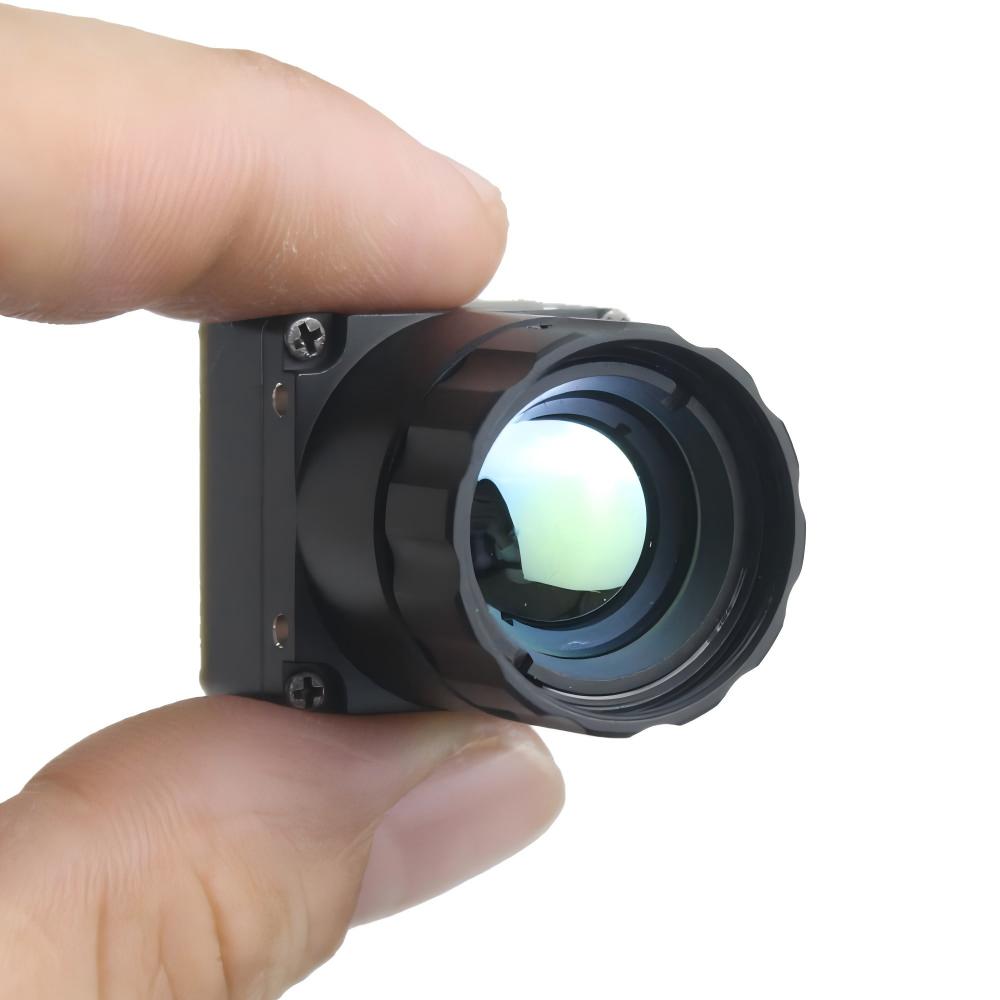
| Dimensions & Envelope | Ultra-compact (~21mm x 21mm body) | Mini-Size 21mm x 21mm |
| Target Application Space | Direct Edge SoCs, Real-time Drone Vision | DJI-grade Gimbals, Long-range Target Tracking |
Uncooled Infrared Mini2 640x512 9mm Thermal Imaging Camera Module For Drones
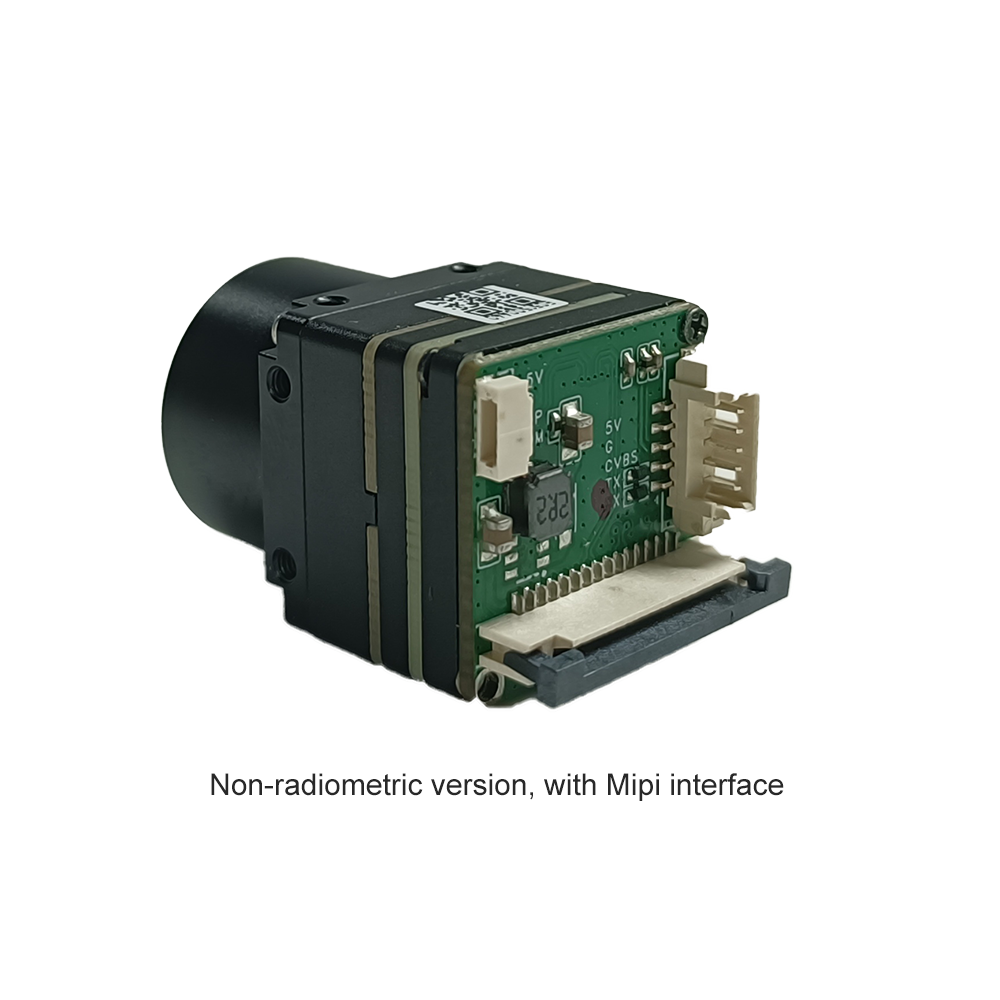
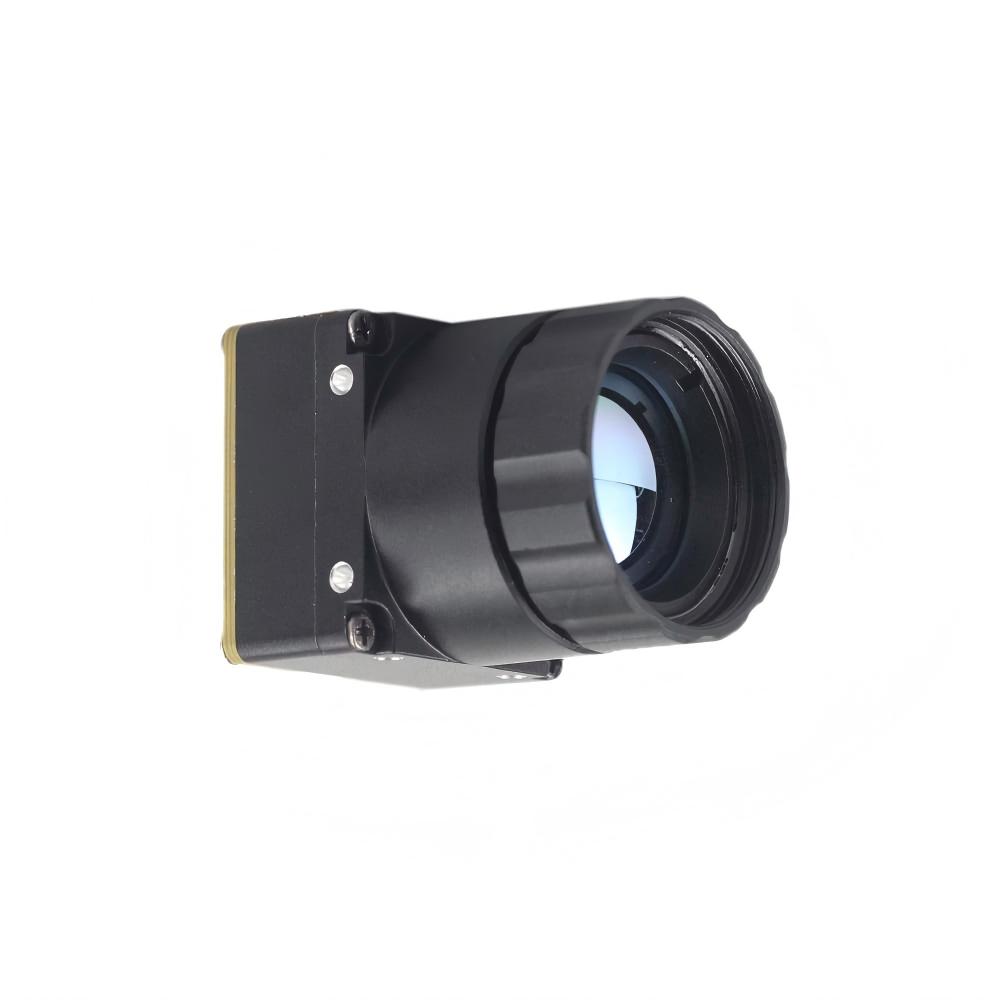
The Mini2 uncooled infrared thermal imaging module delivers sharp and crisp image presentation within an ultra-compact footprint at low system cost. Specifically architected for seamless integration onto aerial drone platforms and embedded robotic payloads, this core combines a native MIPI CSI-2 interface with a high-performance 640x512 12 μm VOx detector. Designed with an integrated 9mm athermalized optical assembly, it delivers wide spatial coverage ideal for close-to-medium range autonomous flight operations, emergency search and rescue, and industrial asset inspection.
- ✅ Native MIPI CSI-2 connectivity eliminating hardware protocol converters and interface latency.
- ✅ Exceptional thermal sensitivity (NETD ≤ 40 mK) for clear contrast in low thermal gradient conditions.
- ✅ Optimized miniature volume and low power consumption to preserve airborne battery endurance.
Uncooled LWIR USB Mini 640*512 Thermal Imaging Camera Core Module For Drones Similar To DJI
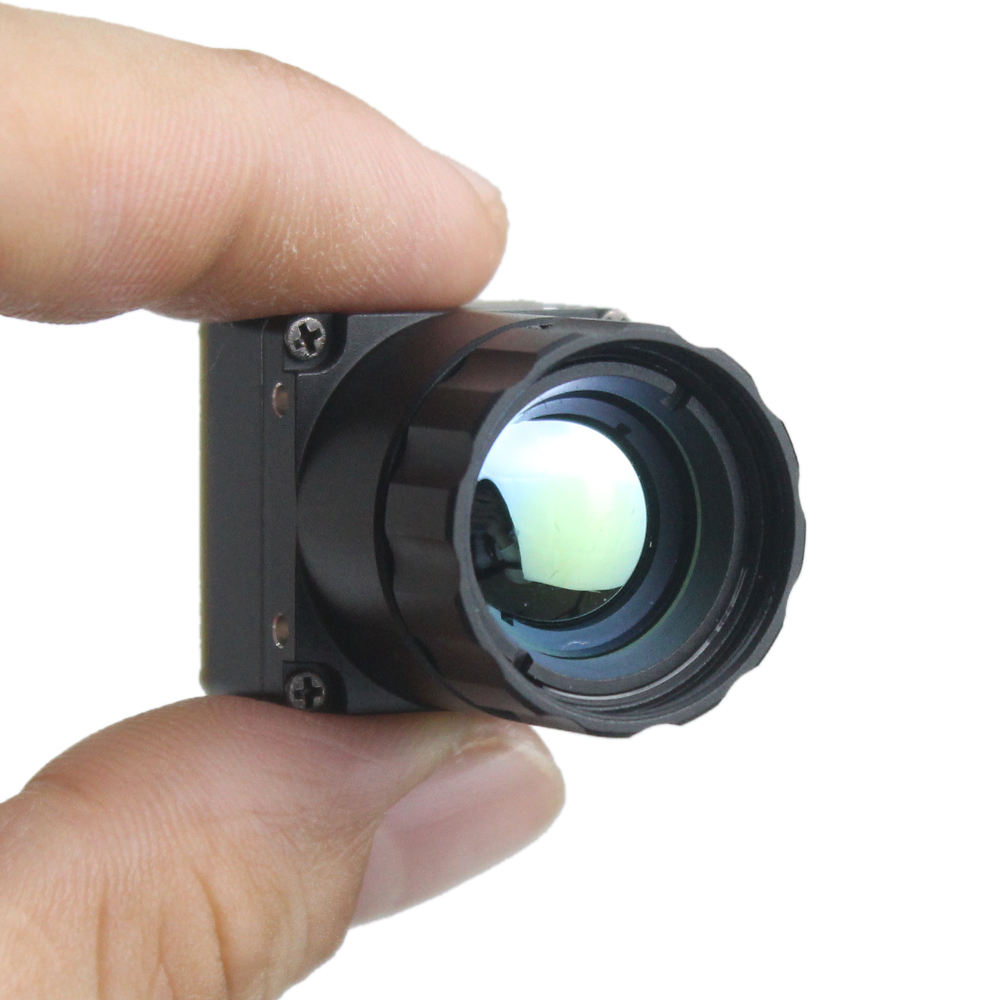
Engineered as a direct structural and functional counterpart to industry-standard aerial payloads like DJI Zenmuse thermal modules, this core features a micro-envelope of just 21mm*21mm. It provides versatile multi-lens support covering 5mm, 9mm, 13mm, 18mm, 35mm, 50mm, 75mm, 100mm, and 150mm configurations. Delivering sharp and crisp image presentation alongside stable operational performance and strong environmental adaptability, it offers developers an adaptable platform for long-range observation, tactical monitoring, and multi-axis gimbal stabilization systems.
- ✅ Comprehensive optical flexibility supporting ultra-wide to extreme telephoto Germanium optics.
- ✅ Rigid 21mm x 21mm structural core engineered for multi-axis drone gimbal mechanisms.
- ✅ High environmental stability maintaining calibration across extreme industrial operating temperatures.
For development teams working with mid-range payload constraints or budget profiles, consider cross-evaluating the Uncooled Mini 384x288 Thermal Camera Module for Drones, which utilizes identical structural integration paradigms in an entry-level spatial resolution profile.
5. Deployment Paradigms: Drones, Tactical Robotics & Edge AI
The operational value of deploying an uncooled MIPI thermal camera core becomes evident when evaluating real-world autonomous missions where traditional visible sensors fail entirely.
Unmanned Aerial Systems: Utility Infrastructure and Search & Rescue
In autonomous utility grid inspection, small quadcopters fly predefined autonomous paths along high-voltage transmission lines, substations, and utility-scale solar photovoltaic farms. Traditional visible inspection payloads cannot detect resistive electrical faults hidden beneath metal housings or defective solar cells that fail to carry normal photovoltaic current. An uncooled MIPI thermal core captures absolute surface radiometry in real time. Because the MIPI link feeds raw 14-bit frames directly into an onboard edge computing module without protocol overhead, the system can execute lightweight deep learning models directly on the payload computer. Hotspots indicating failing bypass diodes or overloaded line splices are classified instantly, generating automated georeferenced inspection flags while the drone remains airborne.
During search and rescue operations across wilderness terrain or disaster zones, targets are frequently obscured by dense forest canopies or thick smoke. The thermal sensitivity of the VOx sensor detects subtle thermal variations between human body heat and cooler wilderness backgrounds. Eliminating latency via native MIPI signaling allows autonomous search algorithms to adjust drone flight paths, camera gimbal tilts, and optical zoom dynamically without the dangerous control oscillations associated with delayed video feeds.
Autonomous Ground Robotics & Legged Systems
Quadruped robots and autonomous mobile platforms operating in industrial manufacturing facilities, underground utility tunnels, and chemical plants regularly encounter complete darkness, airborne particulate dust, or dynamic shadows cast by heavy industrial machinery. Traditional visual simultaneous localization and mapping (SLAM) frameworks fail when optical lighting fluctuates unpredictably or when particulate matter reflects onboard lighting arrays. By replacing or augmenting visible cameras with an uncooled MIPI thermal core, the robotic system tracks thermal feature points across structural surfaces that remain constant regardless of ambient illumination. The deterministic low-latency delivery provided by the MIPI interface ensures that the robot's real-time state estimator receives temporal updates at predictable intervals, preserving kinematic stability during fast dynamic maneuvers.
Furthermore, industrial ground units deployed for safety monitoring can run continuous thermographic checks across high-pressure steam distribution pipes, rotating mechanical bearings, and chemical reactor vessels. By combining spatial SLAM tracking with per-pixel temperature telemetry, the robot creates a persistent 3D thermal digital twin of the entire facility, flagging mechanical degradation long before catastrophic failure occurs.
6. Deep-Dive Technical FAQ
Why choose an uncooled MIPI CSI-2 thermal camera core over USB modules for Raspberry Pi or Jetson platforms?
How does a 640x512 uncooled thermal core solve the common image quality complaints of entry-level 256x192 sensors?
Is it difficult to integrate a MIPI thermal camera core into custom Linux embedded builds?
📚 References & Further Reading
- ⚙️ Industry Standard: Learn more about physics-based detector mechanics via Wikipedia Microbolometer resources.
- ⚙️ Computer Vision Framework: Explore real-time thermographic frame processing techniques with OpenCV.
- ⚙️ Related Guide: Master broader hardware integration parameters in our High-Performance Infrared Core Guide: Compact LWIR Modules for OEM Integration.
- ⚙️ Embedded Application: Read our implementation breakdown on the best thermal camera unit for Raspberry Pi embedded vision.