

Custom Infrared Camera Core: High-Resolution OEM Thermal Imaging Solutions
2026年9月7日
Thermal Imaging Sensor Integration Guide: OEM Cores & Edge AI Vision
2026年9月9日
Wholesale Thermal Camera Module: High-Performance LWIR Sensor Cores for OEM & Drones
If you've spent any real time on the bench integrating electro-optical payloads, you already know the story. Rapid technological shifts across unmanned aerial vehicles (UAVs), tactical reconnaissance, industrial predictive maintenance, and autonomous mobile robotics (AMRs) have blown the doors off global demand for high-performance Long-Wave Infrared (LWIR) imaging engines. System integrators, aerospace engineers, and original equipment manufacturers (OEMs) can no longer accept bulky, power-hungry thermal sensors or fragile consumer-grade add-ons that drift the second ambient temperatures shift ten degrees. Engineering teams building next-generation gimbal payloads, automated optical inspection (AOI) stations, perimeter monitoring rigs, and handheld diagnostic gear need miniature, low-latency, uncooled thermal camera modules that balance brutal Size, Weight, Power, and Cost (SWaP-C) constraints with dead-on radiometric precision.
Here's the deal: sourcing a dependable wholesale thermal camera module partner is far more strategic than buying bare microbolometer dies off a broker sheet. It means locking down high-yield, production-ready sensor engines backed by mature software development kits (SDKs), fully characterized optical assemblies, reliable embedded hardware interfaces, and bulletproof multi-year supply chains. Whether you are dropping 640×512 resolution cores directly onto the high-speed MIPI-CSI2 lanes of an onboard AI companion computer or streaming raw 14-bit digital thermography over USB-C to an industrial PC on a factory floor, procuring tier-one uncooled Vanadium Oxide (VOx) thermal imaging cores at wholesale scale provides the engineering agility and unit economics you need to get out of prototype purgatory and straight into volume commercial shipping.
Table of Contents
- 👉 1. LWIR Microbolometer Physics & Core Architecture
- 👉 2. Embedded Data Interfaces: MIPI-CSI2, USB, DVP & IP/RTSP
- 👉 3. SWaP-C Engineering for Drones, FPV, and Robotic Gimbals
- 👉 4. Radiometric Accuracy, NUC Calibration, and Edge AI Integration
- 👉 5. Wholesale OEM Product Showcase: Technical Specifications & Comparison
- 👉 6. Bulk Procurement, Optical Customization (5mm–150mm), and Lifecycle Management
- 👉 7. Frequently Asked Questions (FAQ)
1. LWIR Microbolometer Physics & Core Architecture
Thermal infrared imaging operates squarely within the 8 µm to 14 µm Long-Wave Infrared (LWIR) atmospheric transmission window. Unlike visible-spectrum CMOS sensors that count reflected ambient photons bouncing off a surface, an LWIR sensor measures self-emitted thermal radiant flux governed by Planck's Radiation Law and the Stefan-Boltzmann Law. At the heart of an industrial uncooled wholesale thermal camera module sits a Focal Plane Array (FPA) packed with thousands of micro-machined bridge pixels, known across the industry as microbolometers.
Each individual microbolometer pixel consists of an infrared absorber membrane suspended over a silicon readout integrated circuit (ROIC) by tiny, micro-machined thermal isolation legs. When thermal radiation hits that membrane, its temperature climbs. That minute temperature shift modulates the electrical resistance of the underlying thin-film material. The ROIC scans this resistance change across a row-and-column matrix, turning thermal flux into tiny analog voltages that get digitized by precision on-chip analog-to-digital converters (ADCs). In the shop, if your thermal isolation legs have even minor structural defects, your thermal conductance shoots up, your sensitivity goes down the drain, and your spatial noise spikes.
Vanadium Oxide (VOx) vs. Amorphous Silicon (a-Si)
When you're evaluating sensor wafers at the wholesale level, your thermistor material makes or breaks your baseline signal-to-noise ratio, uniformity, and thermal responsiveness:
- ⚙️ Vanadium Oxide (VOx): Modern tier-one OEM modules run predominantly on VOx thin films. VOx gives you a much higher Temperature Coefficient of Resistance (TCR)—typically clocking in between -2% and -3% per Kelvin—paired with low 1/f electrical flicker noise. The practical result? VOx FPAs deliver significantly lower noise floors, snappier thermal response times, and consistent thermal stability across wide operating temperature envelopes (-40°C all the way up to +80°C).
- ⚙️ Amorphous Silicon (a-Si): While historically attractive because standard semiconductor fabs could spit them out cheaply on standard CMOS lines, a-Si suffers from lower TCR figures and substantially higher 1/f noise. To squeeze an acceptable picture out of an a-Si array, engineers have to slam the data with aggressive digital filtering and fire the calibration shutter constantly, which kills tracking loops during critical operations.
Noise Equivalent Temperature Difference (NETD)
The standard benchmark for raw thermal sensitivity is Noise Equivalent Temperature Difference (NETD), specified in millikelvins (mK). NETD is simply the temperature delta at the target scene that produces a signal-to-noise ratio of exactly one at the sensor output. High-performance industrial cores carry ratings of ≤40 mK or ≤35 mK (tested at f/1.0, 25°C ambient, running at 50 Hz). A lower NETD means your system pulls usable contrast out of minute thermal gradients. That's the difference between a search-and-rescue drone spotting a hypothermic hiker lost in dense brush or flying right past them, or an electrical utility gimbal spotting a loose high-resistance lug before the entire transformer bank catches fire.
The 12 µm Pixel Pitch Revolution
The shift from older 17 µm pixel architectures down to modern 12 µm pixel pitch is hands-down the biggest mechanical and optical win for payload designers over the last decade. Shrinking the pixel pitch to 12 µm slashes the physical die surface area of a 640×512 array by roughly 50% compared to a legacy 17 µm chip with the exact same pixel count. That footprint reduction cascades right through your bill of materials:
- ⚙️ Optical Miniaturization: Because the sensor's active diagonal shrinks, you need a significantly shorter focal length to hit the exact same field of view (FOV). A lightweight 9mm lens on a 12 µm sensor delivers roughly the same angular coverage as a hefty 13mm lens sitting on a 17 µm sensor.
- ⚙️ BOM and Payload Weight Reduction: Germanium (Ge) and specialized Chalcogenide glass elements dominate the optical cost and mass of any thermal assembly. Smaller clear apertures mean optical fabricators like Jinde can grind and coat substantially smaller, lighter optical packages that won't overload your gimbal motors.
- ⚙️ Lower Thermal Inertia: Smaller pixel elements hold less physical mass, which means lower heat capacity. You get faster thermal time constants (τ < 10 ms), giving you clean, blur-free 50 Hz frame captures even during violent, high-yaw aerial maneuvers.
2. Embedded Data Interfaces: MIPI-CSI2, USB, DVP & IP/RTSP
Look, when you're sitting down to route an OEM thermal core into your carrier board, your interface choice determines your throughput, system latency, CPU overhead, and board trace complexity. Purpleriver modules provide several distinct interface topologies tailored for modern embedded hardware:
MIPI-CSI2 (Mobile Industry Processor Interface)
MIPI-CSI2 is the gold standard when you're building embedded vision systems, tactical UAV payloads, or robotic navigation heads. By streaming uncompressed raw 14-bit or 16-bit radiometric data alongside synchronized YUV feeds directly over high-speed differential pairs, MIPI pipes frames straight into the Image Signal Processor (ISP) and hardware Direct Memory Access (DMA) channels of modern System-on-Chips (SoCs)—think NVIDIA Jetson Orin, Rockchip RK3588, or NXP i.MX8 hardware.
Going direct over MIPI gets your latency down under 15 ms from exposure to system memory frame availability. It cuts out the middleman—no USB bridge ICs, no protocol converters, and virtually zero host CPU thrashing. If you are laying out high-density multi-layer carrier boards, check out the differential signaling routing rules and pinout strategies inside our mini thermal camera module guide for high-resolution LWIR cores.
USB 2.0 / USB 3.0 Type-C
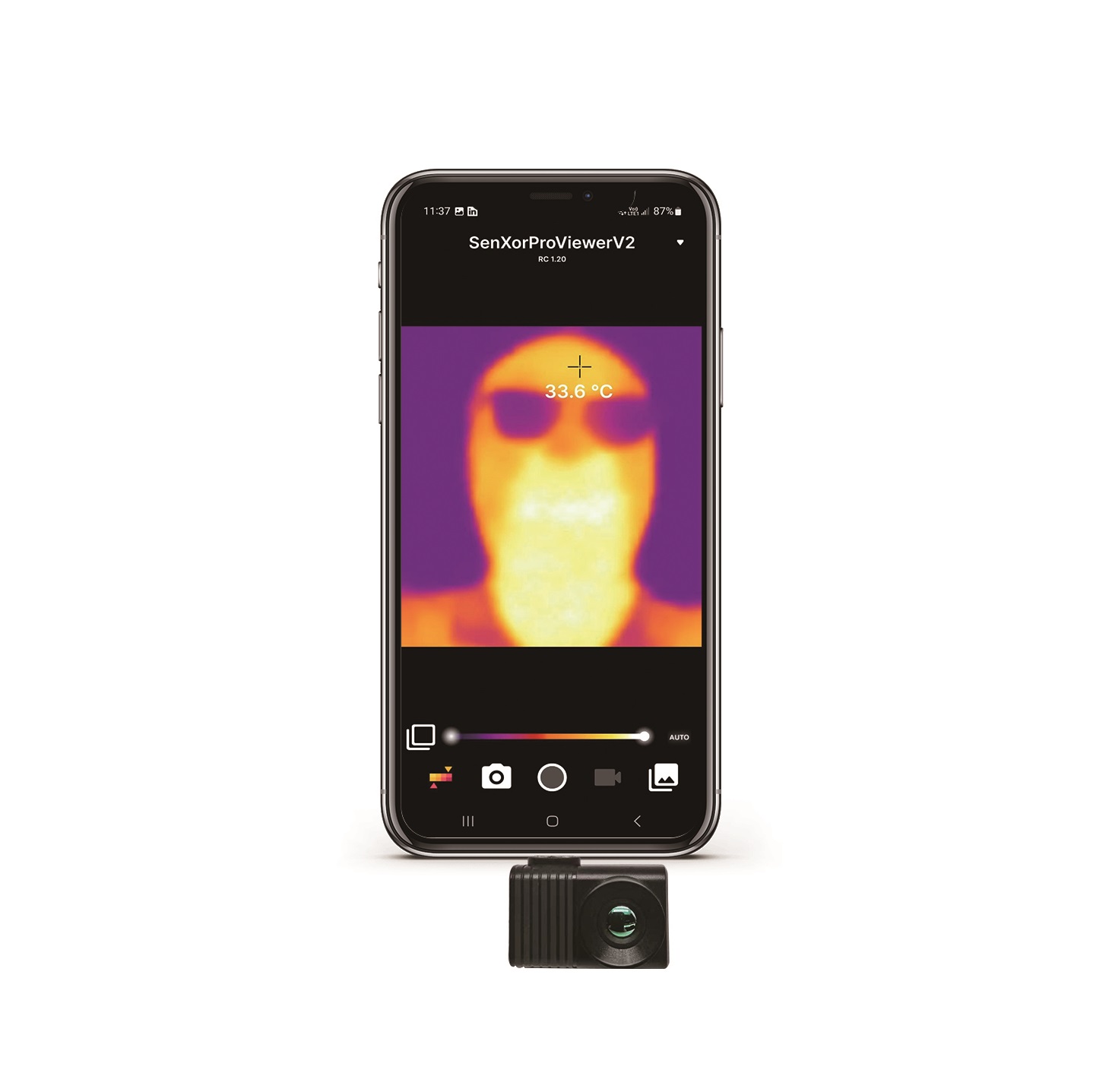
For benchtop test setups, modular machine vision rigs, and ruggedized handheld diagnostic tablets, USB is impossible to beat for convenience. Purpleriver USB cores run under standard USB Video Class (UVC) protocols, serving plug-and-play visual thermal streams straight into Linux (V4L2), Windows (DirectShow/Media Foundation), and Android without needing brittle proprietary kernel drivers. Teams wiring up rapid prototyping stacks using developer kits from ecosystems like DFRobot can bring up an operational machine vision pipeline in an afternoon using standard GStreamer pipelines or OpenCV capture loops.
Parallel Digital Video Port (DVP / CMOS)
Parallel digital video buses remain the workhorse in aerospace, defense avionics, and custom Field Programmable Gate Array (FPGA) processing blocks. Feeding pixel clock, horizontal sync, vertical sync, and 14-bit raw parallel data across matched CMOS traces, DVP modules give FPGA engineers deterministic, cycle-accurate control over incoming frame buffers. When your mission profile demands hard real-time tracking loops with zero OS jitter, DVP is your friend.
IP / RTSP / CVBS Output
For perimeter fences, border surveillance towers, and fixed industrial facility monitoring, native Ethernet IP cores ditch the requirement for external video encoder boards. Purpleriver supplies cores carrying dedicated onboard ASICs that compress raw LWIR frames directly into high-efficiency H.264/H.265 streams, serving them up via RTSP/ONVIF over standard RJ45 Ethernet, alongside legacy analog CVBS composite video for backward compatibility with analog ground stations. For permanent fixed installations that need direct networked management, take a hard look at the uncooled infrared RJ45 CVBS RTSP IP 640x512 ASIC core module.
3. SWaP-C Engineering for Drones, FPV, and Robotic Gimbals
In the drone world, weight is the enemy. Every single gram of payload you hang under an airframe shaves off battery flight endurance and forces motor electronic speed controllers (ESCs) to work harder, generating unwanted electrical noise and waste heat. Locking in a truly miniature wholesale thermal camera module allows gimbal designers to extract maximum airtime while keeping stabilization loops tight and responsive.
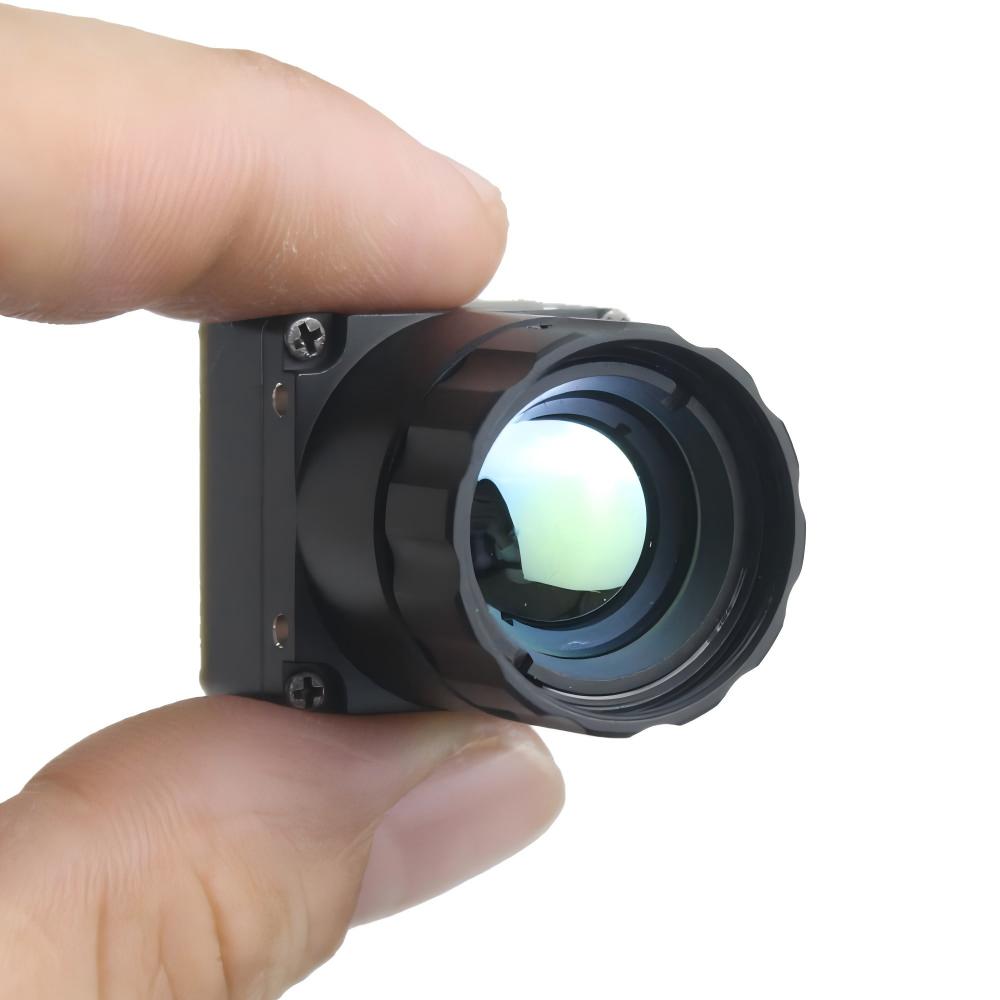
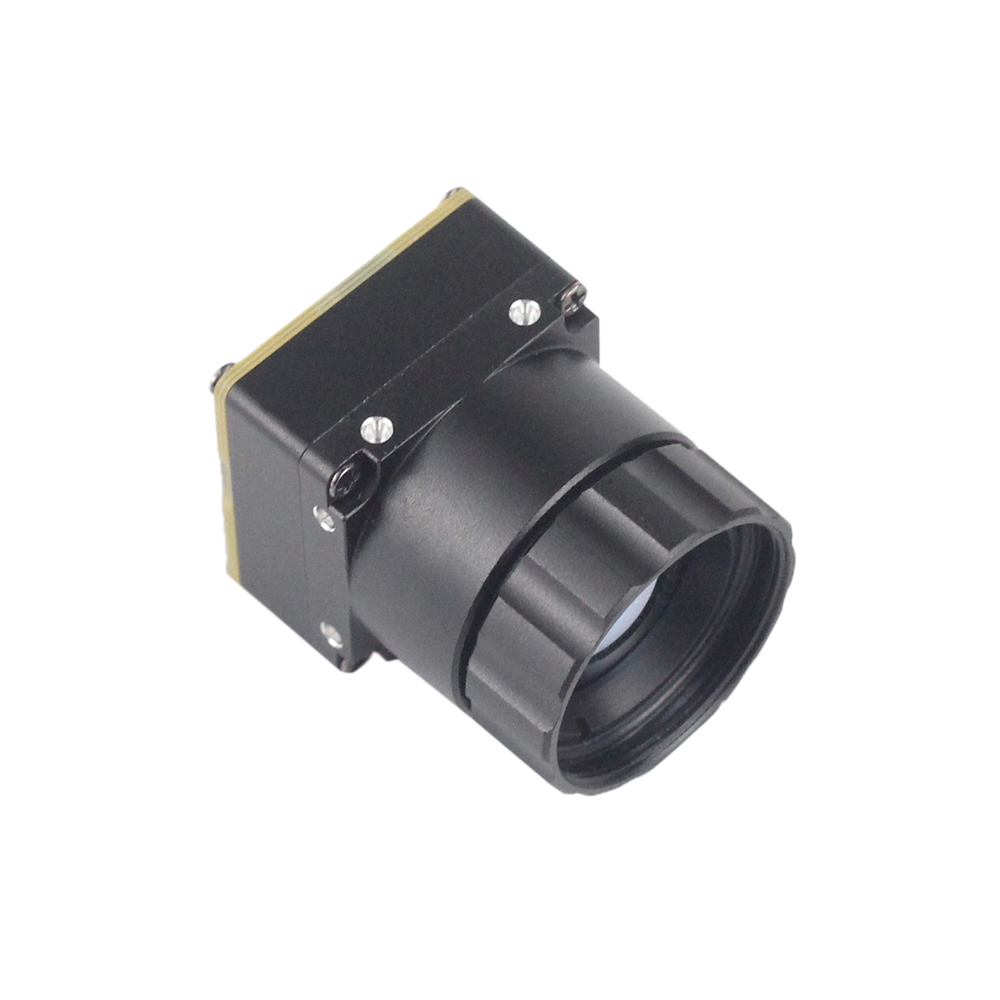
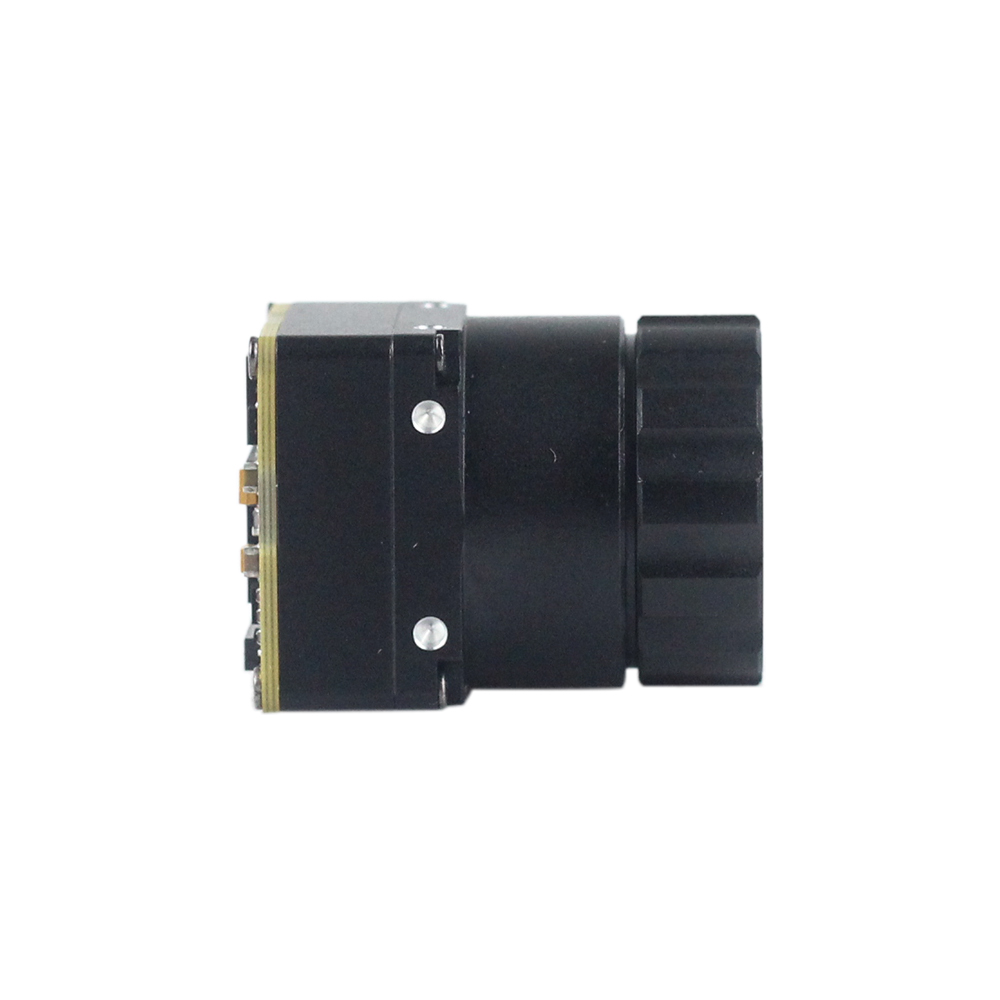
Purpleriver's Mini series cores are built from the ground up to solve these aggressive SWaP-C headaches. Measuring an incredible 21mm × 21mm and tipping the scales at under 20 grams with an integrated 9mm athermalized lens, these modules slip right into micro-brushless 2-axis and 3-axis gimbals. Keeping the payload mass centered and minimal drops rotational inertia, which means you can run smaller, low-torque gimbal motors, eliminate motor slip during high-speed banked turns, and eradicate high-frequency micro-jitter from your downlinked video feed.
Thermal Dissipation and Drift Management
Thermal sensors have an Achilles' heel: conductive and convective heat transfer coming from nearby electronics. When your onboard power buck regulators or companion processors radiate heat into the FPA, your microbolometer develops nasty spatial temperature gradients, fixed-pattern noise (FPN), and radiometric measurement drift. In the shop, we mitigate thermal equilibrium issues using three core design strategies:
- ✅ Sub-Watt Power Consumption: Running at under 1.0W during active 50 Hz frame acquisition, our custom ASIC minimizes internal self-heating. That is critical when you have to pack a core inside a sealed, IP67-rated waterproof drone pod where heat has nowhere to go.
- ✅ Thermally Decoupled Mechanical Stacking: The sensor FPA PCB is physically isolated from the primary processor and interface carrier boards. This prevents high heat generated by the image pipeline from conducting right onto the VOx microbolometer wafer.
- ✅ Dynamic Temperature Compensation: Precision thermistors embedded directly within the optical barrel and on the FPA substrate feed real-time temperature telemetry back to the ISP. The engine applies mathematical lookup corrections on the fly, dramatically extending the operational window between physical mechanical shutter recalibration cycles.
4. Radiometric Accuracy, NUC Calibration, and Edge AI Integration
A massive trap that catches inexperienced payload integrators is failing to separate basic observation cores from true radiometric measurement engines. They look similar on a spec sheet, but their processing guts are fundamentally different.
Non-Radiometric Imaging (Observation Cores)
Observation cores are built strictly to give human operators crisp situational awareness, clean target detection, and high visual contrast. The internal ISP pulls 14-bit raw thermal data from the ROIC and processes it through dynamic Histogram Equalization (HEQ) or Digital Detail Enhancement (DDE) filtering. These algorithms ruthlessly squeeze the wide dynamic range down into standard 8-bit color palettes (White Hot, Black Hot, Ironbow). The image looks phenomenal to a pilot tracking an intruder, but all true, calibrated surface temperature metrics are thrown in the trash to achieve that visual pop.
Full Radiometric Measurement Cores
Radiometric thermal modules maintain an unbroken mathematical link between incoming radiant flux and pixel digital numbers. Every single pixel in the frame stream represents an absolute, calibrated temperature reading encoded in a 14-bit or 16-bit register. Purpleriver radiometric cores deliver industrial-grade accuracy of ±2°C or ±2% across broad scene temperature ranges (-20°C to +150°C, and up to +550°C in extended industrial operating modes).
To guarantee this level of accuracy across changing outdoor field conditions, every single core undergoes multi-point factory blackbody calibration over a sweeping temperature matrix. Embedded mathematical correction engines run these compensation passes in real time:
- ⚙️ Two-Point Non-Uniformity Correction (NUC): Normalizes tiny gain and offset variances across all 327,680 individual pixels in a 640×512 array, wiping out sensor curtaining and column-to-column striations.
- ⚙️ Defective Pixel Concealment: Dynamically detects drifting, blinking, or unresponsive microbolometer elements on the fly, seamlessly interpolating their values using healthy neighboring cells.
- ⚙️ Athermal Lens Compensation: Automatically recalculates calibration coefficients as ambient temperatures cause optical barrel elements to expand or contract, preserving sharp focus and thermal accuracy without requiring manual retuning.
If you want to dive deeper into the architectural shifts driving modern infrared development, take a look at our engineering breakdown on the evolution of modern thermal imaging and essential integration methodologies.
5. Wholesale OEM Product Showcase: Technical Specifications & Comparison
To support high-rate commercial integration, Purpleriver manufactures standardized, high-yield LWIR camera engines designed specifically for embedded carrier boards, stabilized multi-sensor gimbals, and tactical tracking pods. The side-by-side comparison below details our two core platforms built for drone integration and modular OEM hardware packaging.
| Specification | Uncooled Infrared Mini2 640x512 9mm Drone Module | Uncooled LWIR USB Mini 640*512 Thermal Camera Core |
|---|---|---|
| Sensor Array Architecture | Uncooled VOx Microbolometer (Mini2 Platform) | Uncooled VOx Microbolometer (Mini 640 Platform) |
| Array Resolution | 640 × 512 pixels (384×288 / 256×192 options) | 640 × 512 pixels (640×480 resolution optional) |
| Pixel Pitch & Spectral Band | 12 µm | 8 µm to 14 µm (LWIR) | 12 µm | 8 µm to 14 µm (LWIR) |
| Thermal Sensitivity (NETD) | ≤40 mK (@ f/1.0, 25°C) | ≤40 mK (@ f/1.0, 25°C) |
| Native Output Frame Rates | 25 Hz / 50 Hz (Optimized for smooth tracking) | 25 Hz / 50 Hz Native Video Stream |
| Optical Lens Configuration | 9mm Athermalized Optical Assembly Included | Modular: 5 / 9 / 13 / 18 / 35 / 50 / 75 / 100 / 150mm |
| Electrical Hardware Interface | Native MIPI-CSI2 / Parallel DVP Bus | USB 2.0 / USB Type-C (UVC + Serial Radiometry) |
| Core Physical Dimensions | Ultra-Compact Drone Profile (< 20g) | Mini-Size 21mm × 21mm Chassis Envelope |
| Target Integration Segments | Direct SoC AI Drones, FPV Interceptors, Gimbals | Industrial Diagnostics, DJI-like Multi-Rotors, PTZ Units |
Comprehensive Product Deep-Dive
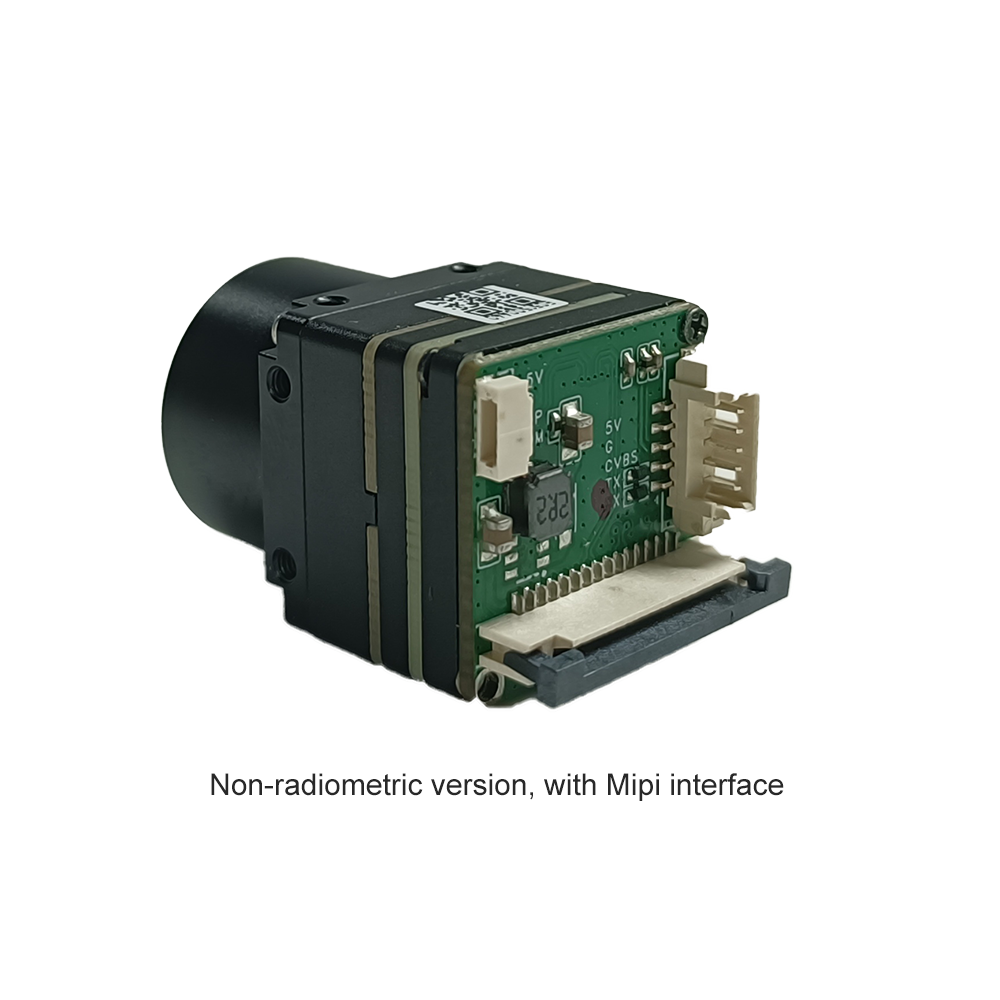
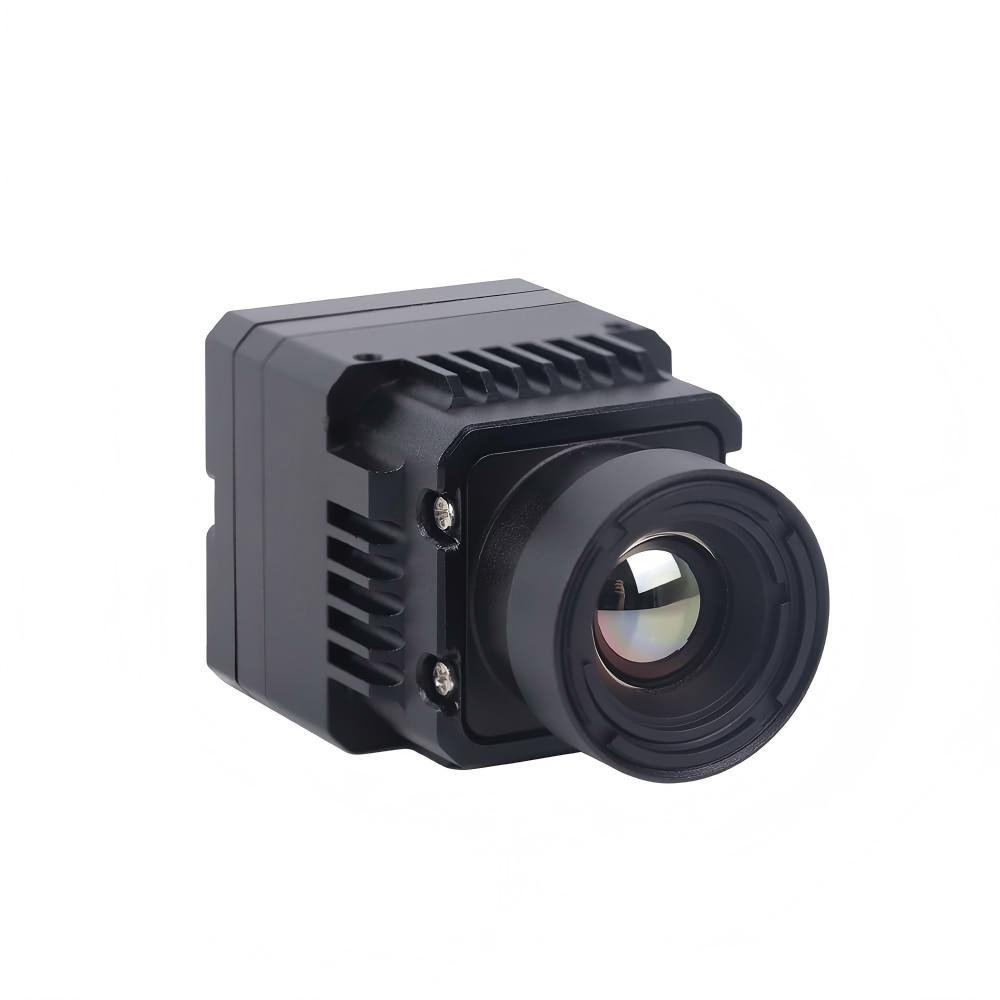
Uncooled Infrared Mipi 640 384 256 9mm Thermal Imaging Camera Module For Drones
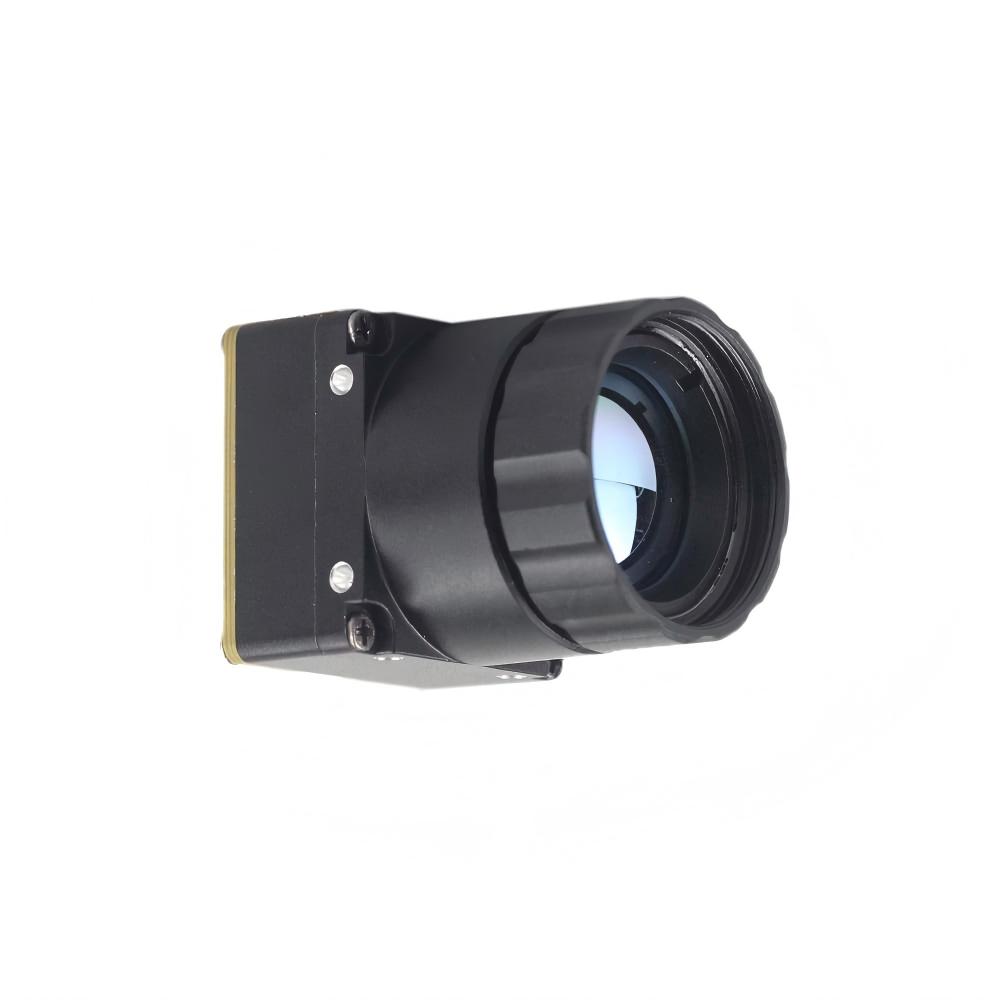
The Mini2 uncooled infrared thermal imaging camera module is engineered specifically to hit the high frame rate, ultra-low latency, and severe weight budgets required by modern tactical and commercial drone platforms. Built around a high-resolution 640×512 uncooled VOx microbolometer array—with cost-optimized 384×288 and 256×192 hardware variants available—this core delivers razor-sharp thermal target distinction through heavy haze, dust, smoke, and zero-light night operations.
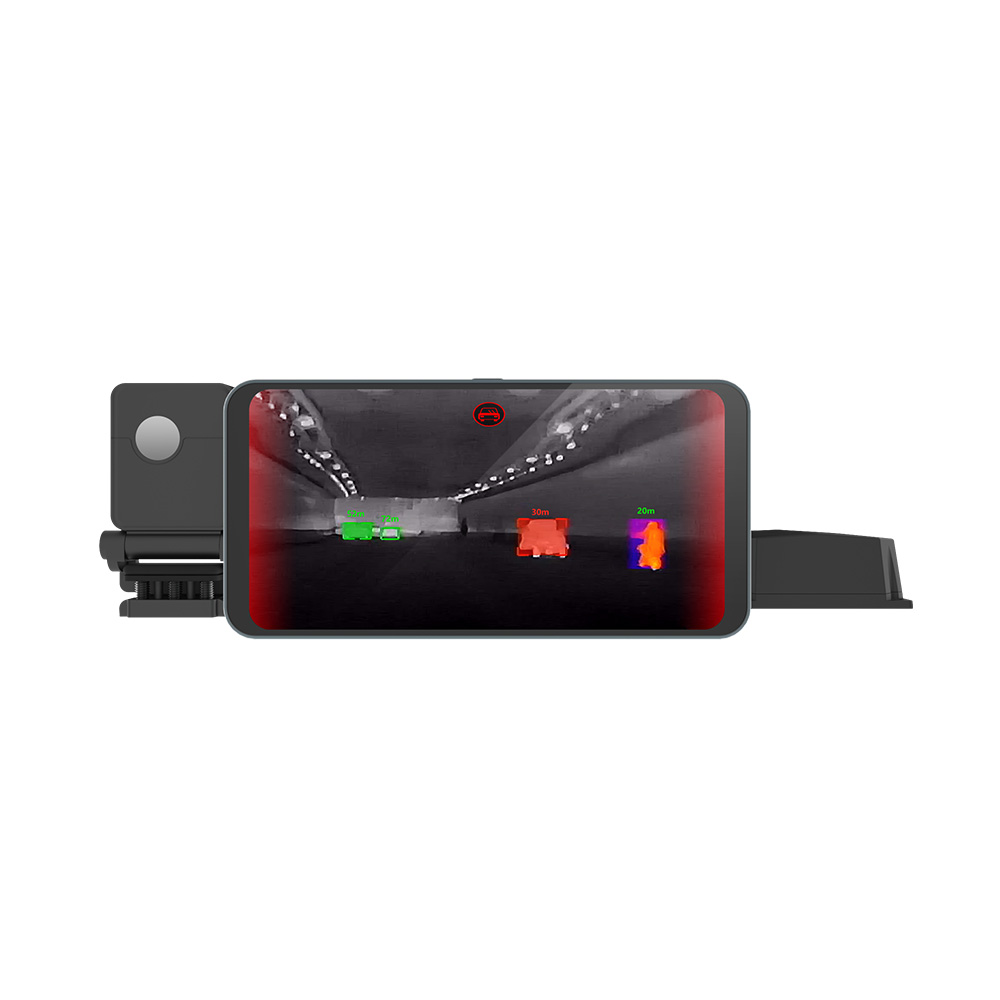
Equipped with a precision 9mm athermalized lens, the Mini2 hooks directly into host companion computers via low-overhead MIPI-CSI2 lanes. This bypasses the processing lag and jitter introduced by USB conversion bridge chips, allowing embedded edge computing modules running neural net object trackers (such as YOLOv8 or TensorRT models) to ingest raw frames at a full 50 Hz for real-time target interception and autonomous path planning.
- ✅ High Dynamic Contrast: Delivers crisp, razor-sharp edge definition with an NETD of ≤40 mK, exposing faint thermal anomalies across dense forestry, open water, or cold metal structures.
- ✅ Featherweight Airframe Integration: Purpose-built for agile drone platforms, keeping BOM costs low and overall payload mass under 20 grams to maximize flight endurance.
- ✅ Scalable Sensor Architecture: Available across 640×512, 384×288, and 256×192 resolution tiers, letting you build out budget, mid-tier, and flagship enterprise SKUs on a unified hardware footprint.
- ✅ Direct Edge AI Interconnect: Native MIPI-CSI2 interface enables zero-copy DMA streaming into popular embedded boards like the NVIDIA Jetson Orin Nano, Raspberry Pi CM4, and Rockchip platforms.
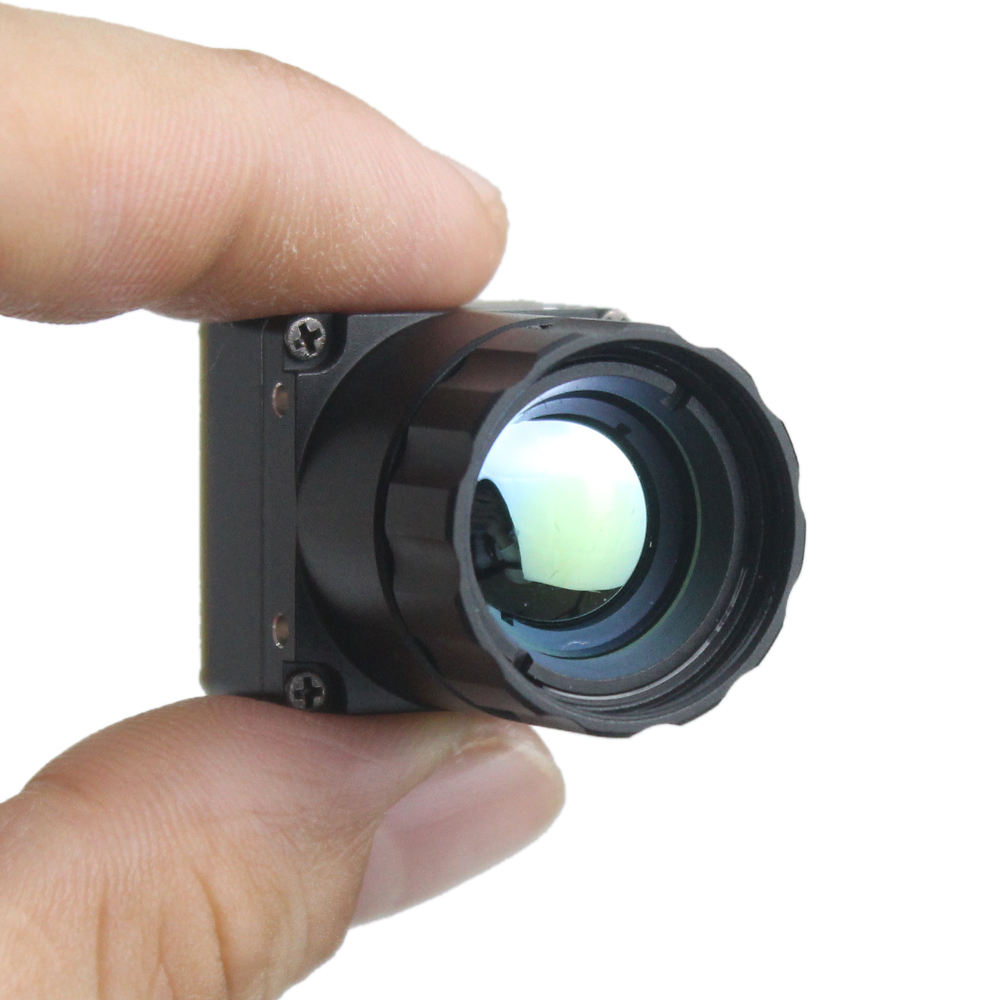
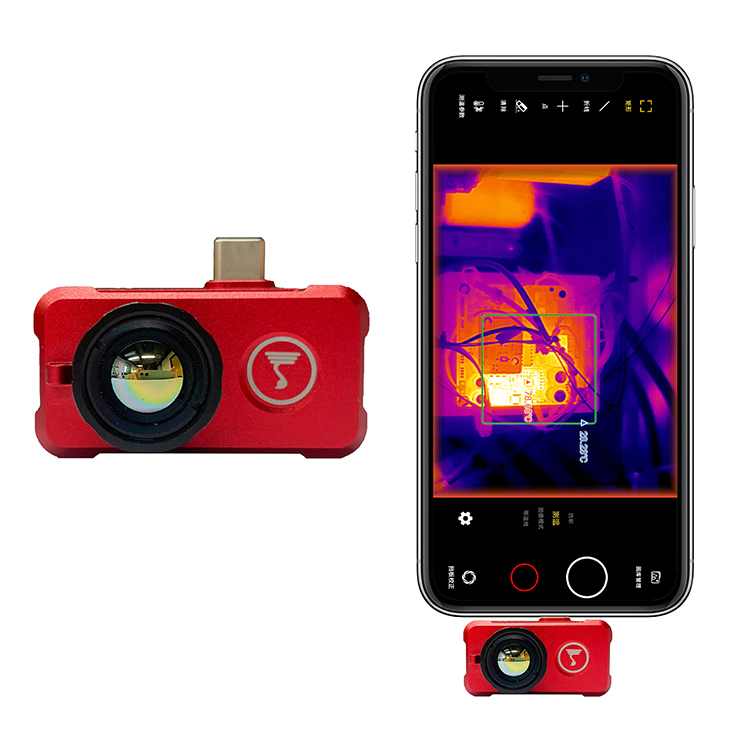
Uncooled LWIR USB Mini 640*512 Thermal Imaging Camera Core Module For Drones Similar To DJI
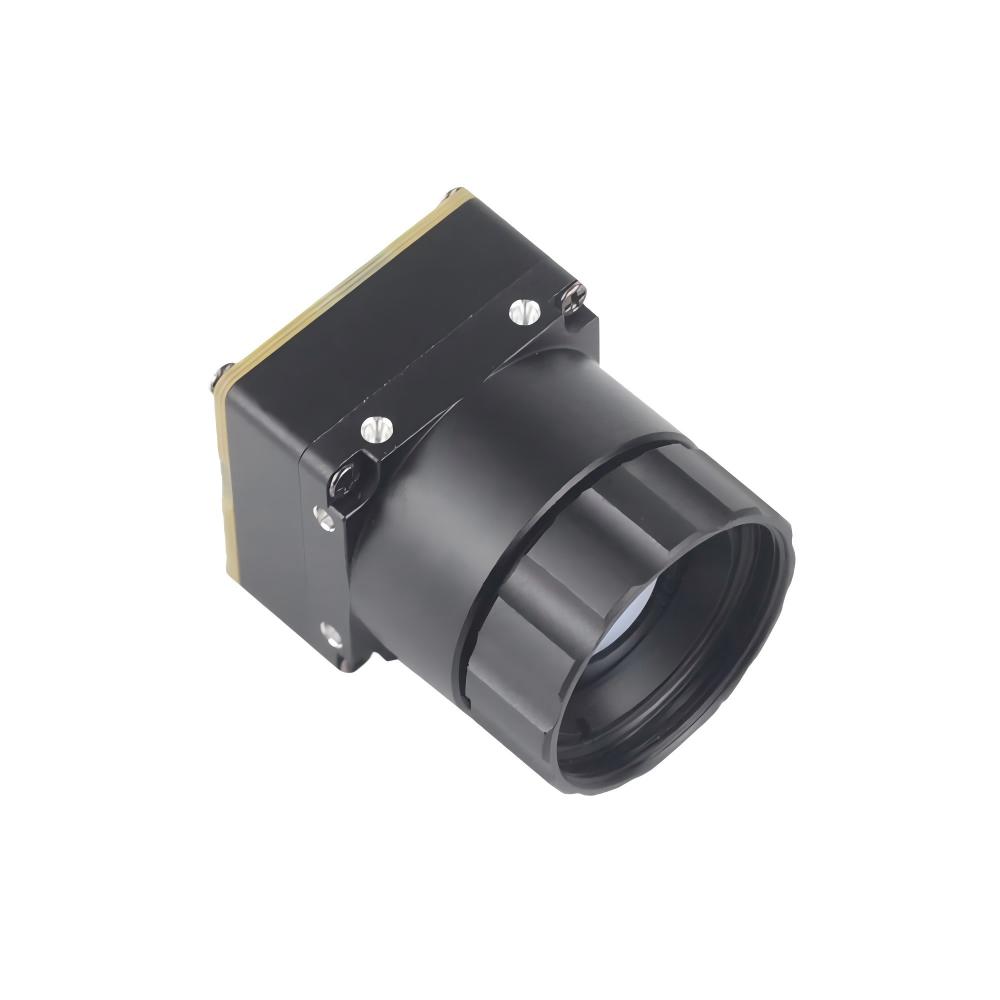
The Purpleriver Mini 640 uncooled LWIR thermal core sets the engineering standard for size, optical flexibility, and rapid systems integration. Housed in an ultra-miniature 21mm × 21mm aluminum block, this core matches the thermal imaging fidelity seen on DJI enterprise industrial payloads, but gives you the freedom of an open, unencumbered OEM architecture.
Engineered for mission flexibility, the Mini 640 platform supports an extensive lineup of interchangeable optical configurations: 5mm, 9mm, 13mm, 18mm, 35mm, 50mm, 75mm, 100mm, and 150mm. Featuring a clean, robust USB Type-C interface that feeds simultaneous UVC visual streaming and serial radiometric telemetry, this core drops straight into industrial inspection UAVs, handheld diagnostic imagers, and automated factory QA stations with zero friction.
- ✅ Ultra-Miniature 21mm × 21mm Chassis: Compact form factor slots effortlessly into restricted gimbal spaces, tight pan-tilt housings, and slim inspection wands.
- ✅ Massive Optical Ecosystem: Direct compatibility with focal lengths ranging from 5mm wide-angle optics up to 150mm telephoto lenses, tackling close-up robot navigation up to multi-kilometer border monitoring.
- ✅ High Spatial Fidelity: 640×512 active pixel matrix (with optional 640×480 operational modes) renders crisp, highly detailed radiometric thermal maps for pinpoint diagnostics.
- ✅ Ruggedized Industrial Design: Validated to handle aggressive thermal shocks, heavy flight vibration spectrums, and harsh outdoor operating environments.
6. Bulk Procurement, Optical Customization (5mm–150mm), and Lifecycle Management
Taking a product from initial prototype validation into volume factory production is where real engineering meets supply chain reality. You need a thermal manufacturing partner who delivers verified part-to-part consistency, transparent batch binning, and deep optical customization. When you're ordering wholesale thermal camera modules by the hundreds or thousands, keep these three critical procurement pillars front and center:
Focal Length Selection & Johnson's Criteria
Purpleriver supports an extensive range of precision optical assemblies spanning 5mm all the way out to 150mm, letting your systems engineering team calculate precise Detection, Recognition, and Identification (DRI) envelopes based on Johnson's Criteria:
- ⚙️ Wide-Angle Optics (5mm, 9mm, 13mm): These lenses deliver broad angular coverage (FOV > 45°). They are the exact tool you want for agile FPV drone piloting, indoor AGV collision avoidance, tight electrical cabinet monitoring, and short-range robotic clearing.
- ⚙️ Mid-Range Optics (18mm, 35mm, 50mm): The bread and butter for commercial drone inspection workflows—solar farm mapping, building envelope audits, aerial firefighting, and industrial roof inspection. They give you a safe standoff flight ceiling while pulling enough pixels on target to spot critical thermal leaks.
- ⚙️ Telephoto Optics (75mm, 100mm, 150mm): Built for long-range observation platforms, high-altitude surveillance gimbals, maritime navigation, and perimeter defense systems, allowing operators to detect human targets out past 3 to 5 kilometers.
OEM Quality Control and Stress Screening
Nothing kills field reliability faster than an optical barrel losing focus during motor spin-up or an FPA developing blind lines under thermal cycling. Purpleriver modules undergo strict Environmental Stress Screening (ESS) before boxing. Our testing regime includes multi-axis sinusoidal and random vibration profiles to verify optical assembly rigidity, broad thermal chamber cycling (-40°C to +80°C) to validate athermalization curves, and multi-point automated blackbody verification to confirm absolute radiometric calibration across the sensor wafer.
Supply Chain Roadmap and BOM Stability
In our business, unexpected silicon obsolescence is an absolute nightmare. Getting hit with a "part discontinued" notice forces immediate board respins, software updates, and expensive aerospace re-certification runs. Purpleriver provides a guaranteed 5- to 7-year product lifecycle availability across our core OEM sensor families. Pinouts, mechanical mount dimensions, and software SDK register structures remain locked and backward-compatible, giving your manufacturing operations the predictable supply chain baseline needed to scale profitably.
7. Frequently Asked Questions (FAQ)
How do Purpleriver wholesale thermal camera modules overcome the latency and SDK limitations of budget consumer IR sensors?
Purpleriver industrial LWIR OEM engines eliminate those bottlenecks completely. We pair native 25 Hz and 50 Hz VOx microbolometers with high-speed, hardware-optimized ASICs. By streaming raw uncompressed thermographic video over direct MIPI-CSI2 or high-speed USB lines, total pipeline latency drops below 30 ms, making tight, closed-loop tracking dead simple. On the software side, we don't lock you inside closed, proprietary sandboxes. Purpleriver provides production-ready C/C++ and Python SDKs for Linux (Ubuntu, Debian), ROS/ROS2, Android, and Windows. You get direct register access to 14-bit raw radiometric pixel values, programmatic shutter NUC triggering, and dynamic palette lookups without running into hidden licensing paywalls.
What thermal sensor resolution and lens configurations are optimal for drone and FPV integration?
The 9mm lens yields roughly a 50° horizontal field of view, matching familiar visual navigation cameras and allowing pilots to spot ground obstacles quickly without fisheye distortion. Because the entire optical and core assembly weighs less than 20 grams, you can run lightweight micro-brushless motors without pulling excess current or killing your flight time. If your aircraft flies utility line inspections or high-altitude crop mapping, stepping up to an 18mm or 35mm lens tightens the FOV, giving you the high pixel density needed to resolve small hotspots from standard regulatory ceiling altitudes.
What OEM customization and bulk order support does Purpleriver provide for integrators?
Optically, our engineers handle custom lens mounting, focus calibration, and environmental athermalization across focal lengths from 5mm to 150mm, ensuring your optical train stays rock solid across the entire -40°C to +80°C operating range. At the firmware level, we support application-specific radiometric lookup tables, automated alarm threshold outputs, and custom shutterless calibration algorithms. For volume production, Purpleriver backs your program with tiered wholesale pricing schedules, dedicated Field Application Engineer (FAE) direct support, and locked BOM lifecycle roadmaps that protect your design from component changes for 5+ years.
📚 References & Further Reading
- Industry Standard: Precision Infrared Optics & Custom Germanium Lens Assemblies by Jinde
- Industry Standard: Embedded Computing & Rapid Prototyping Hardware Solutions via DFRobot
- Related Guide: Best Mini Thermal Camera Module Guide: High-Resolution LWIR Cores for Integrators
- Related Guide: Revolution in Thermal Vision: Essential Modern Integrations and Core Technologies
- Related Guide: Uncooled Infrared RJ45 CVBS RTSP IP 640x512 ASIC Thermal Core Module