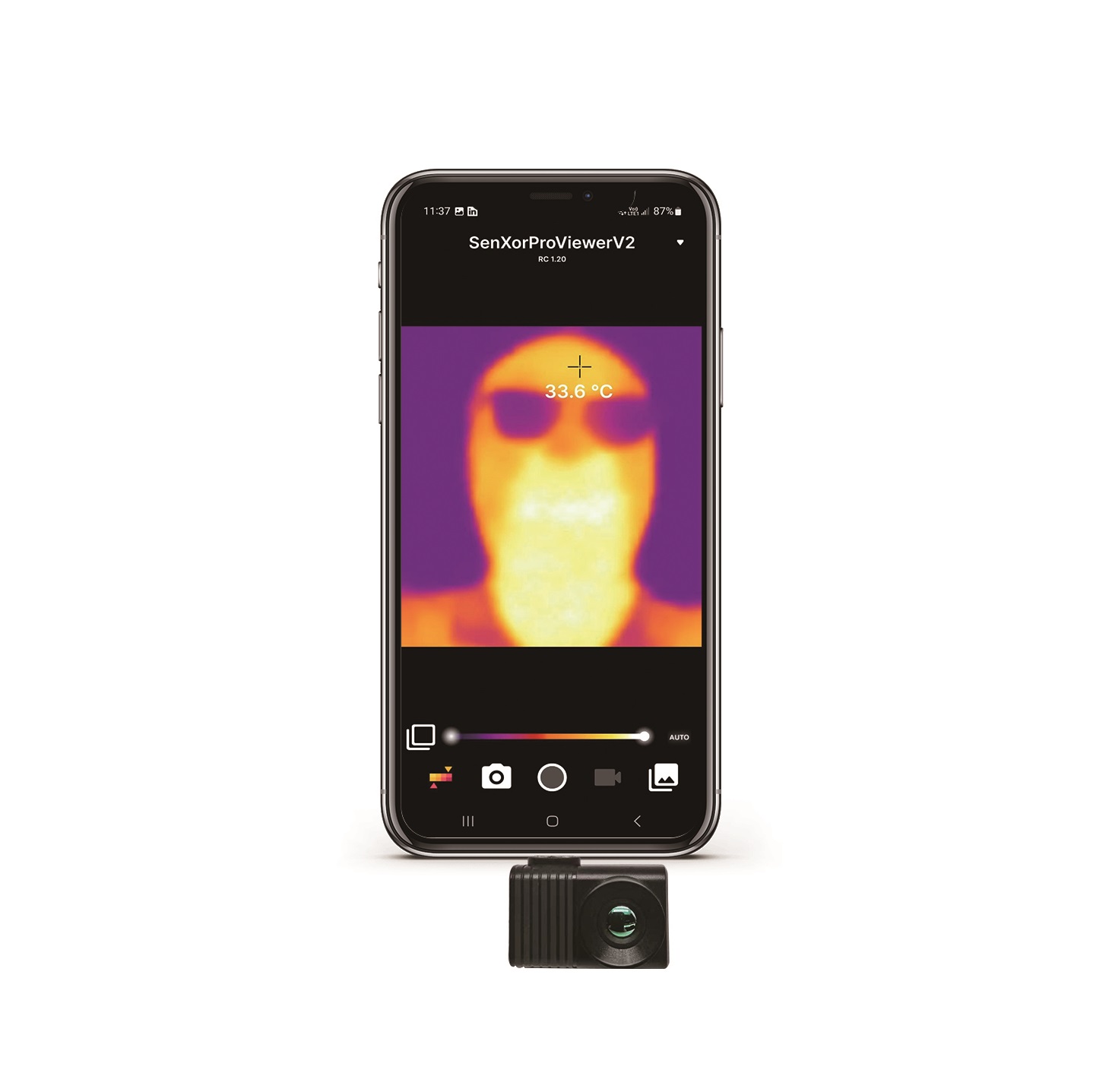
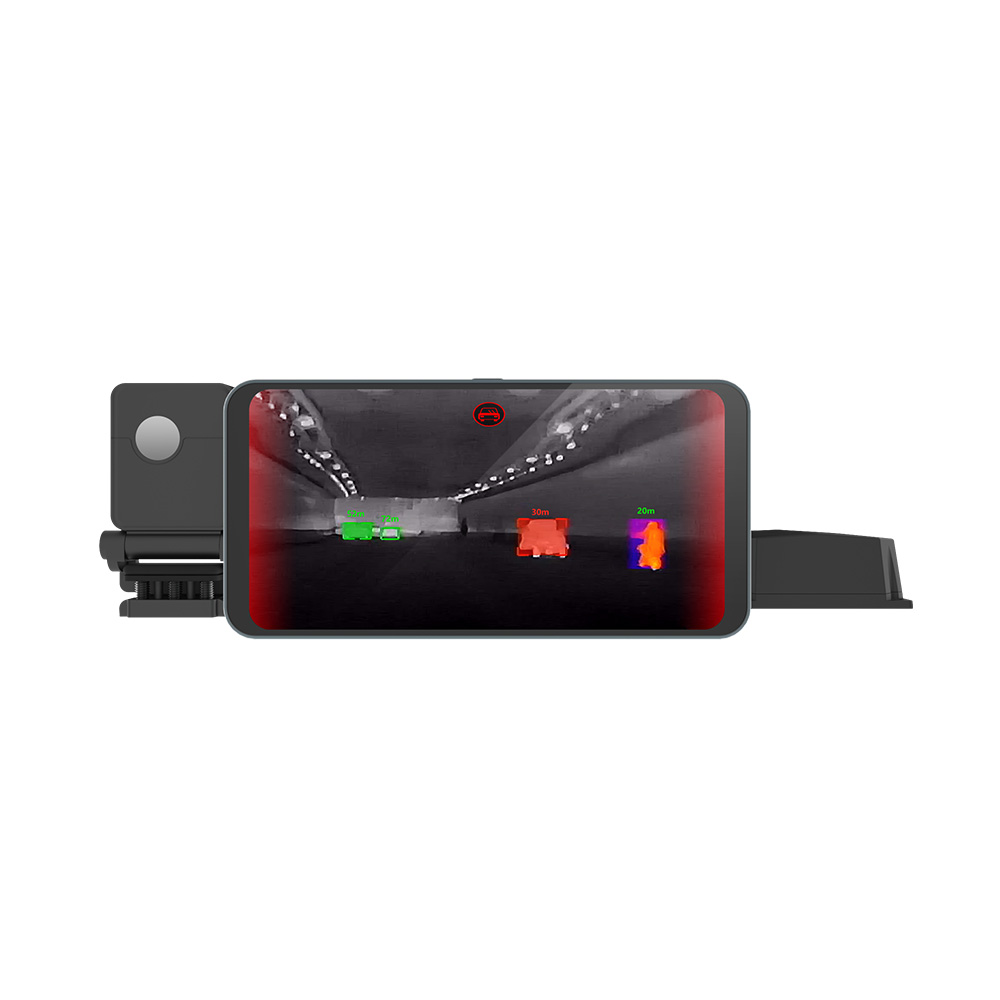

CMOS Sensor Thermal Camera Module: Integration Guide & OEM Solutions
2026年7月21日
640x512 Thermal Camera Module USB UVC: Premium Plug-and-Play LWIR for UAV & Robotics Integration
2026年7月22日

Look, if you are designing autonomous aerial vehicles, border surveillance grids, search-and-rescue UAVs, or high-security perimeter rigs, you already know the brutal reality: standard visible-light electro-optical (EO) glass breaks down fast when real-world weather hits. Total darkness, thick coastal fog, heavy industrial smoke, atmospheric haze, and dense foliage will blind standard visual cameras every single time. Integrating an industrial-grade long range thermal camera module into autonomous drone gimbals, robotic pan-tilt-zoom (PTZ) units, and edge compute vision systems isn't just an upgrade—it's the only practical way to pull heat signatures for long-distance target recognition, automated tracking, and threat detection when conditions turn ugly.
Here's the deal: system integrators and hardware engineers run into a brick wall of complex design trade-offs when picking an infrared sensor core. Balancing Size, Weight, Power, and Cost (SWaP-C) constraints without tanking your thermal sensitivity, Noise Equivalent Temperature Difference (NETD), frame rate stability, hardware bus throughput, or radiometric accuracy requires a deep grip on thermal physics, optical glass characteristics, and digital signal processing. Hitting solid target detection from 1 kilometer out to well past 5 kilometers demands tight integration between uncooled Vanadium Oxide (VOx) microbolometer focal plane arrays (FPAs), high-transmission anti-reflective (AR) germanium glass, direct digital output protocols (like MIPI CSI-2 or USB 3.0), and embedded AI acceleration pipelines running YOLOv8 or TensorRT.
Table of Contents
- 👉 1. Thermal Sensing Physics & SWaP-C Engine Optimization
- 👉 1.1 Uncooled VOx LWIR vs. Cooled MWIR Systems
- 👉 1.2 12μm Pixel Pitch & NETD (<40mK) Sensitivity Optics
- 👉 2. Edge AI & Drone Payload Integration Mechanics
- 👉 2.1 Interface Selection: MIPI CSI-2, USB 3.0, and CVBS Latency Profiles
- 👉 2.2 Embedded Edge AI: TensorRT, YOLO Mapping, and Radiometry
- 👉 3. OEM/ODM Product Comparison & Engineering Specs
- 👉 4. Custom OEM/ODM Optical & Hardware Engineering Services
- 👉 5. Technical Deep-Dive FAQ
1. Thermal Sensing Physics & SWaP-C Engine Optimization
When you sit down on the test bench to engineer long-range thermal monitoring systems, everything starts with atmospheric transmission windows and raw radiation physics. Long-Wave Infrared (LWIR) sensors pull light out of the 8μm to 14μm spectrum. Planck’s Law of Blackbody Radiation dictates that any object above absolute zero radiates electromagnetic energy matching its thermodynamic surface temp. Standard daylight cameras rely on reflected visible photons scattering off a target; a high-performance long range thermal camera module works directly off blackbody thermal emissions. That fundamental physical difference is why LWIR modules give you clear target imagery in pitch-black night, harsh glare backscatter, zero-light conditions, and heavy atmospheric particulate smoke.
If you need to dig further into core selection specs, lens calculations, and sensor assembly matching, check out our full engineering breakdown in the Thermal Imaging Camera Module Guide for Choosing the Right LWIR Core.
1.1 Uncooled VOx LWIR vs. Cooled MWIR Systems
When choosing an infrared sensor core for tactical UAV gimbals, unmanned ground platforms (UGVs), or fixed remote security towers, optical engineers face a tough architectural decision: uncooled Long-Wave Infrared (LWIR) microbolometers versus cooled Medium-Wave Infrared (MWIR) focal plane arrays.
- ⚙️ Uncooled Vanadium Oxide (VOx) LWIR Arrays: Uncooled VOx thermal camera modules do away with delicate, energy-hungry mechanical cryogenic pumps. Instead, they track incoming thermal energy by measuring pixel resistance changes across a micro-machined bridge layer. Skipping the cryocooler keeps power draw remarkably low (typically under 1.2 Watts), slashes total module mass (down into the 30–50 gram range), and gives you instant-on video output with zero cool-down wait time. Without mechanical moving pumps to wear out, your sensor's Mean Time Between Failures (MTBF) skyrockets—making uncooled LWIR cores the gold standard for airborne UAV payloads and field robotics. Get a refresher on foundational physics via Wikipedia Thermal Imaging.
- ⚙️ Cooled MWIR (3μm–5μm) Systems: Cooled infrared cores rely on active Stirling cryocoolers to drop their photon detectors down to cryogenic temperatures (-196°C / 77 Kelvin). Yes, cooled MWIR setups deliver exceptional sensitivity for extreme ranges past 10 to 15 kilometers, but that active cooling pump brings massive heavy iron to your design—adding 1.5+ kg of weight, drawing 10W to 30W+ of power, creating mechanical motor vibration, and requiring routine cooler rebuilds after a couple thousand hours of operation.
For modern autonomous systems where flight time and payload weight are everything, high-sensitivity uncooled VOx LWIR cores give you long-range target detection without thrashing your flight battery or ruining your overall platform weight budget.
1.2 12μm Pixel Pitch & NETD (<40mK) Sensitivity Optics
Modern microbolometer design centers around state-of-the-art 12μm pixel pitch fabrication. Stepping down from older 17μm pixels to tight 12μm geometries scales down the physical size of the Focal Plane Array (FPA) while preserving high native spatial resolution (such as 384×288 or 640×512 focal plane grids). In the shop, shrinking detector pitch opens up major optical and mechanical advantages:
- 🔬 Smaller, Lighter Front Optics: Spatial resolution and long-range Detection, Recognition, and Identification (DRI) distances are dictated by your focal length divided by pixel pitch. A dense 12μm pixel allows engineers to hit target recognition ranges using an objective lens assembly that is significantly smaller and lighter than what older 17μm sensors required.
- ⚡ Sub-40mK Thermal Sensitivity (NETD): Noise Equivalent Temperature Difference (NETD) defines the smallest temperature delta the detector can resolve clear of electronic background noise. Modern 12μm VOx microbolometers routinely hit sub-40mK (<0.04°C) sensitivity at f/1.0. That clean noise floor delivers crisp edge contrast across scenes with minimal temperature variance—like picking out a cold human target against cool ground cover or tracking a distant composite drone airframe against cloudy skies.
- ✅ Hard-Carbon Anti-Reflective Optics: Mating a 12μm microbolometer core with top-tier Germanium (Ge) or specialized Chalcogenide glass finished with Diamond-Like Carbon (DLC) AR coatings maximizes photon throughput across the 8μm–14μm spectrum, pulling every last bit of signal into the focal plane.
2. Edge AI & Drone Payload Integration Mechanics
Plugging an industrial long range thermal camera module into autonomous flight hardware, gimbal stabilization rigs, or edge compute boards demands low-latency data pipelines, clean host hardware drivers, and real-time radiometric access.
2.1 Interface Selection: MIPI CSI-2, USB 3.0, and CVBS Latency Profiles
Your choice of physical data bus directly impacts host CPU overhead, cable harness weight, signal range, and end-to-end video pipeline latency:
| Interface Standard | Throughput & Architecture | Latency Profile | Optimal Integration Target |
|---|---|---|---|
| MIPI CSI-2 | High-speed differential serial bus (up to 2.5 Gbps per lane); zero-copy memory access bypassing host OS driver bloat. | Ultra-Low (<5 milliseconds) | Embedded Edge AI modules (NVIDIA Jetson Orin, Rockchip RK3588, NXP i.MX8) inside drone payloads. |
| USB 3.0 / Type-C | Standard UVC video class protocol; broad out-of-the-box driver compatibility across Linux and Windows. | Low to Moderate (15 to 30 ms buffer) | Rapid prototyping systems, ground station telemetry consoles, and SBC platforms like Raspberry Pi. |
| CVBS (Analog) | Legacy NTSC/PAL composite analog signal over simple two-wire twist or coax lines. | Low Analog (<10 ms conversion) | Direct analog long-range wireless video transmitters, simplified gimbals, and legacy retrofits. |
2.2 Embedded Edge AI: TensorRT, YOLO Mapping, and Radiometry
Running automated object detection, identification, and tracking models (like YOLOv8, MobileNet, or custom CNN architectures) on live thermal streams requires clean 14-bit radiometric digital pipelines. VOx microbolometers capture raw infrared intensity levels and convert them through built-in 14-bit Analog-to-Digital Converters (ADCs).
Modern thermal camera modules take that raw 14-bit ADC stream and dynamically map it into normalized 8-bit grayscale images or color palettes using dedicated on-board DSP routines:
- 🧠 Automatic Gain Control (AGC) & DDE: Smart Digital Detail Enhancement (DDE) and dynamic histogram compression prevent scene clipping when viewing high-dynamic-range scenes (for instance, cold atmospheric backgrounds behind hot engine exhausts).
- 📊 Contrast Limited Adaptive Histogram Equalization (CLAHE): On-chip CLAHE algorithms boost local edge contrast on faint target boundaries, making it drastically easier for computer vision models to identify structural shapes without blowing out ambient regions.
- 🎯 Full 14-Bit Radiometric Streaming: For critical inspection or search ops, streaming raw 14-bit radiometric pixel values over MIPI or USB allows local edge computers to compute exact temperature readings for every pixel in real time. TensorRT acceleration pipelines can evaluate these pixel values directly to auto-trigger immediate alerts for hot-spots, equipment failure, or search-and-rescue target locks.
3. OEM/ODM Product Comparison & Engineering Specs
Here is how uncooled thermal camera modules stack up for target acquisition, UAV payloads, and system customization.
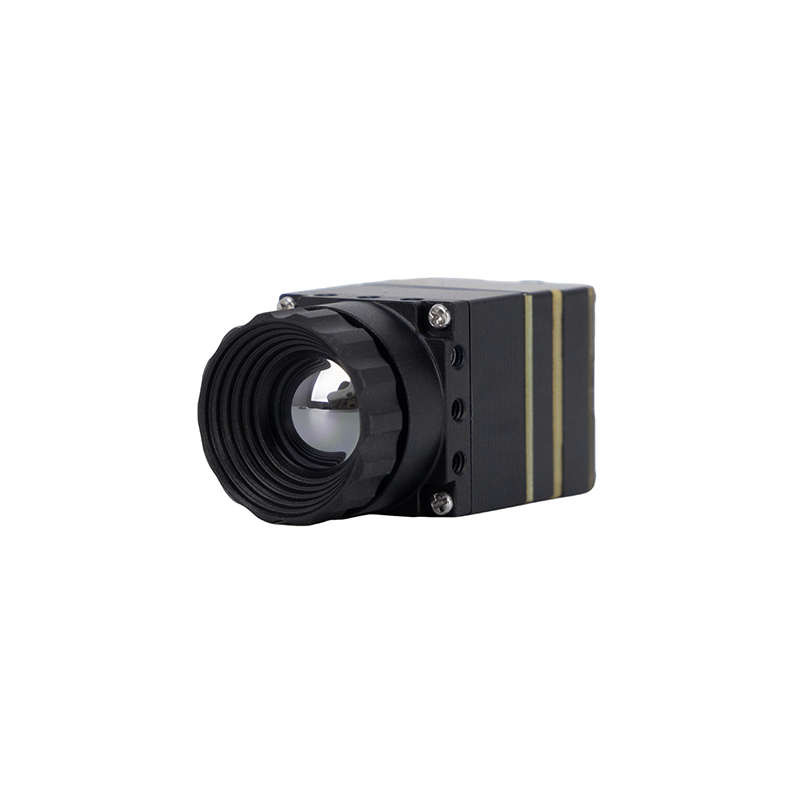
MD Series 384x288 Uncooled Infrared Thermal Camera Module
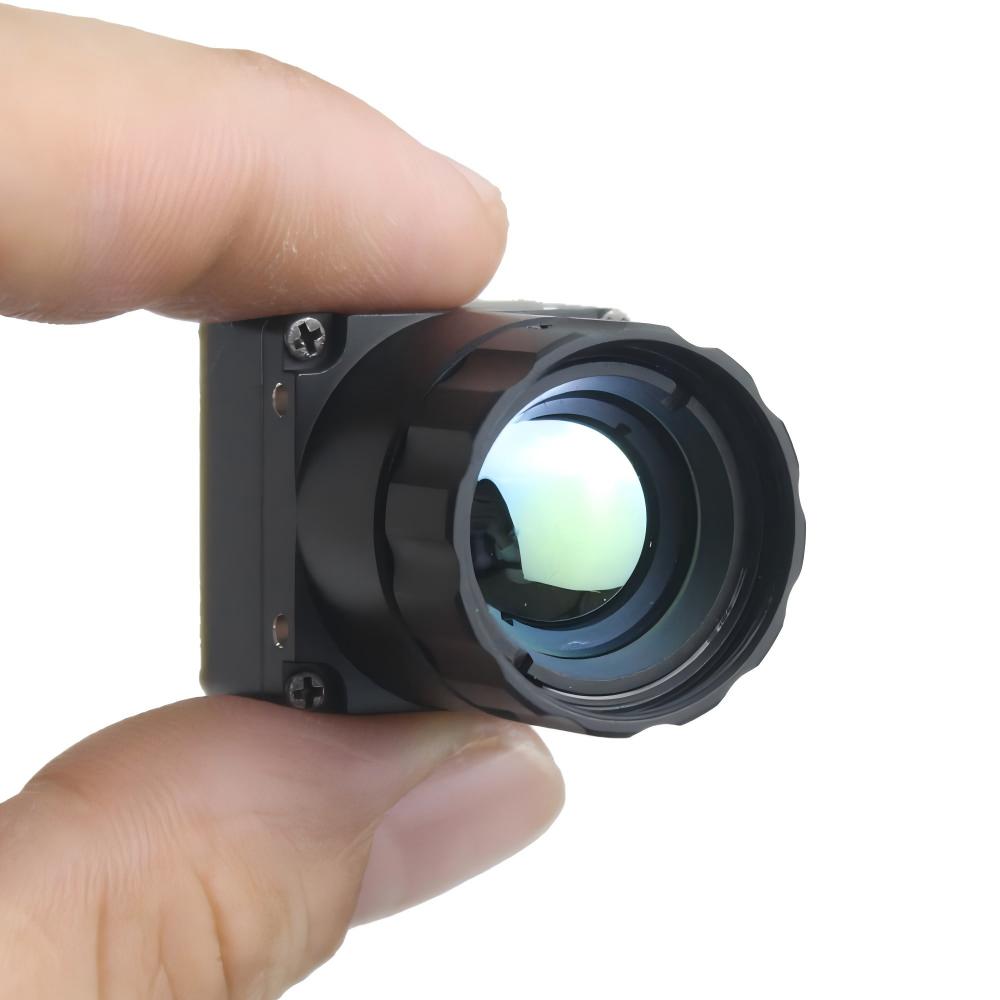
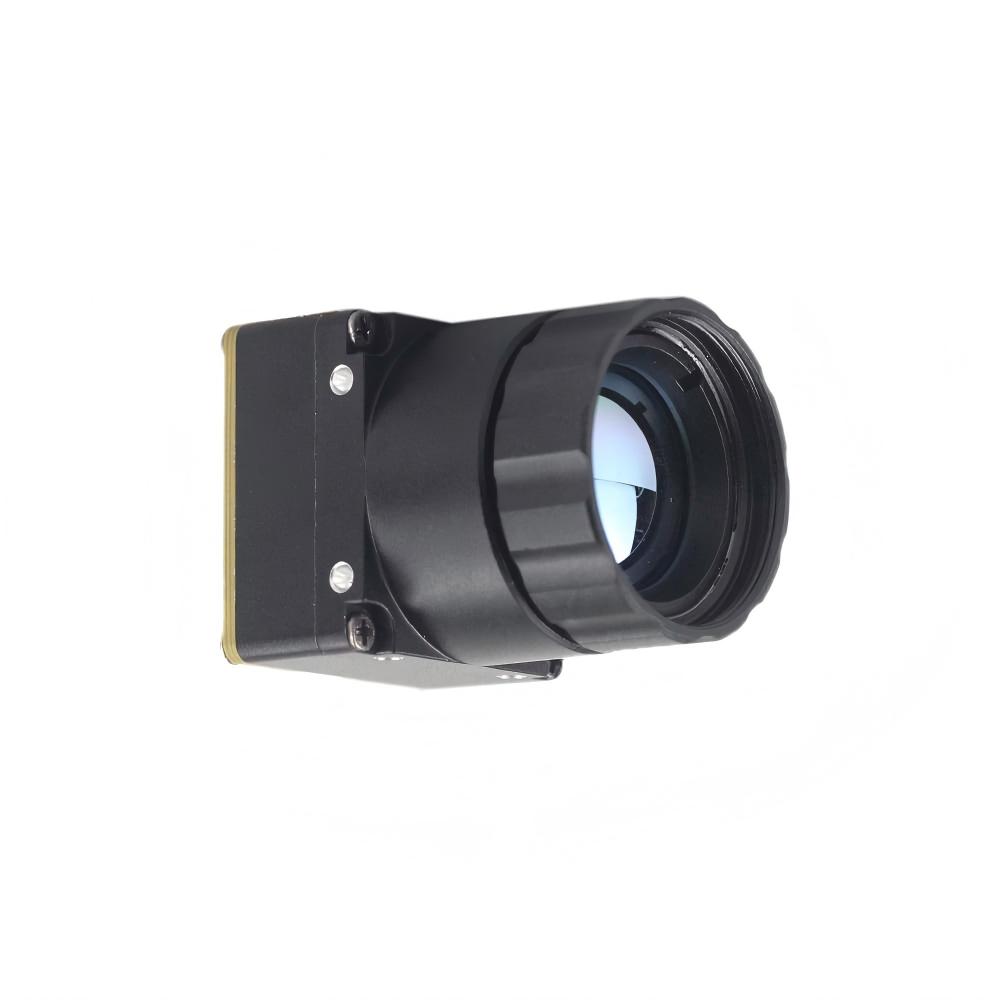
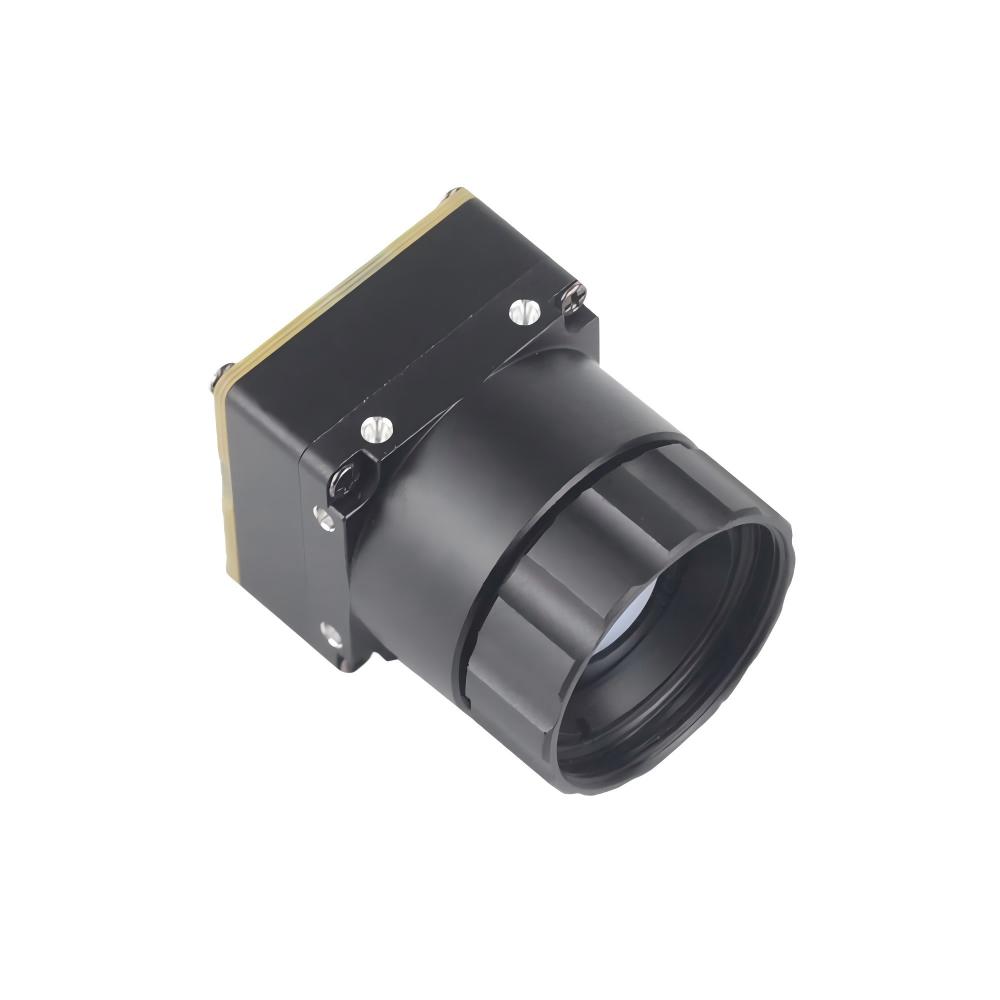
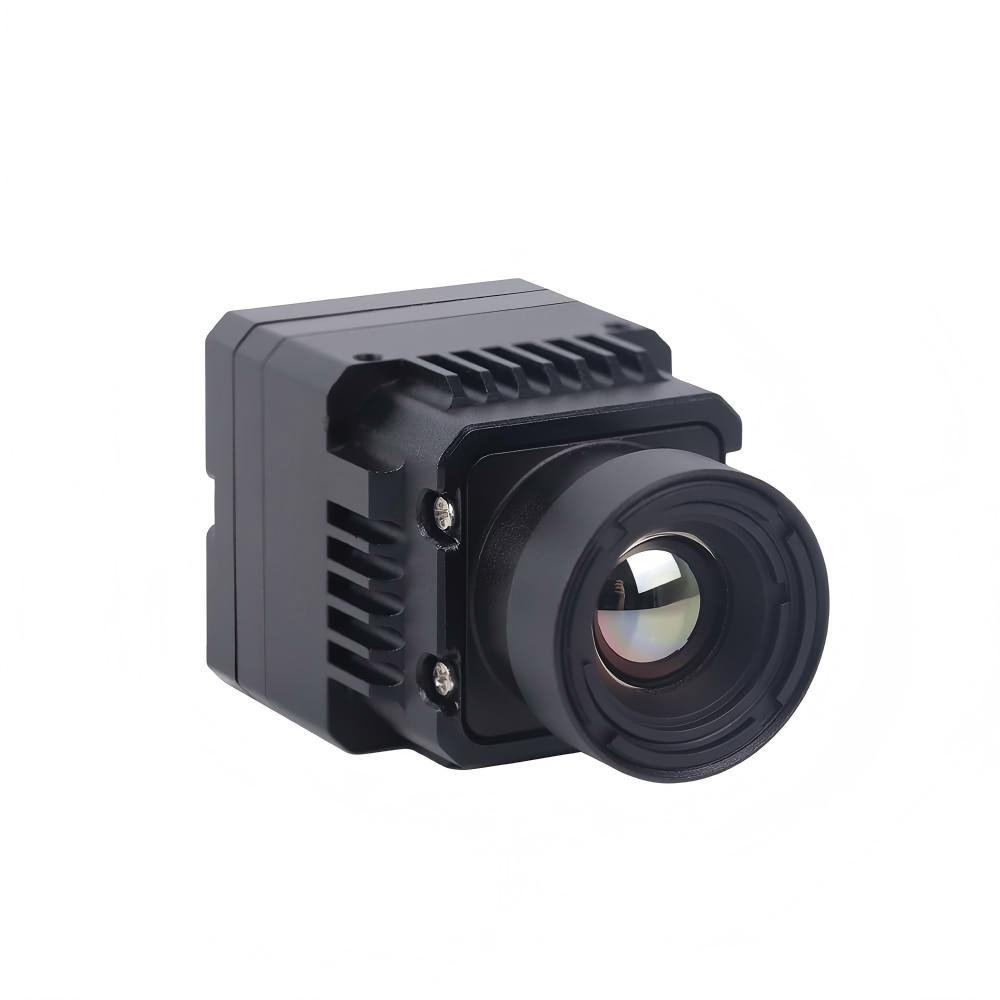
The MD Series 384x288 uncooled thermal camera module delivers industrial-grade thermal imaging precision designed for high-density systems integration. Built around a 12μm pixel pitch uncooled VOx microbolometer detector, it delivers high thermal sensitivity and sharp imagery across the 8μm–14μm LWIR spectral band. Featuring a compact form factor, immediate plug-and-play SDK initialization, and multi-interface connectivity options (MIPI CSI-2, USB, and CVBS), the MD Series integrates seamlessly into lightweight UAV gimbals, multi-sensor PTZ turrets, and edge AI vision platforms.
| Resolution: | 384×288 VOx Microbolometer |
| Pixel Pitch: | 12μm High-Density Architecture |
| Sensitivity (NETD): | <40mK at f/1.0 |
| Interfaces: | MIPI CSI-2 / USB / CVBS Analog |
| Engineering Background: | HKUST & Huawei HiSilicon Expertise |
| Target Use Cases: | Long-Range UAV Gimbals, Perimeter Security, Industrial Monitoring |
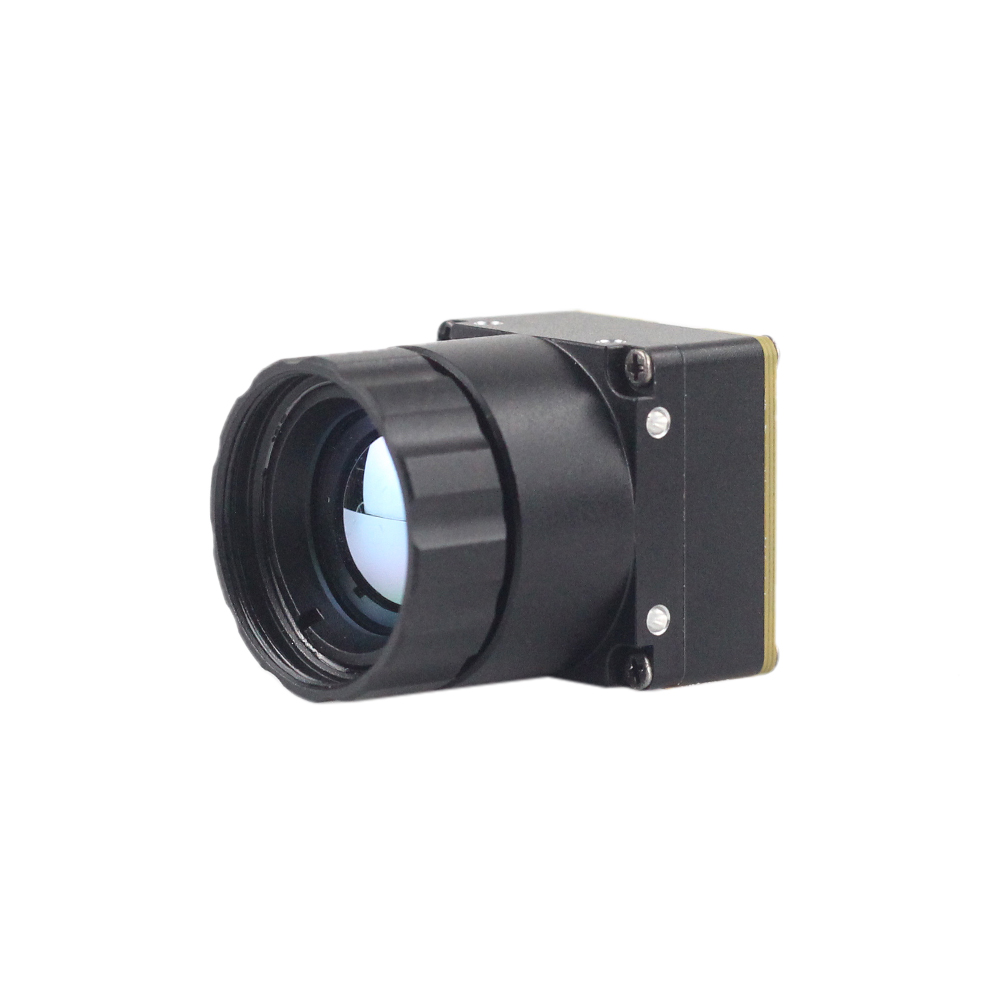
Uncooled LWIR Mini 256×192 Thermal Imaging Camera Module
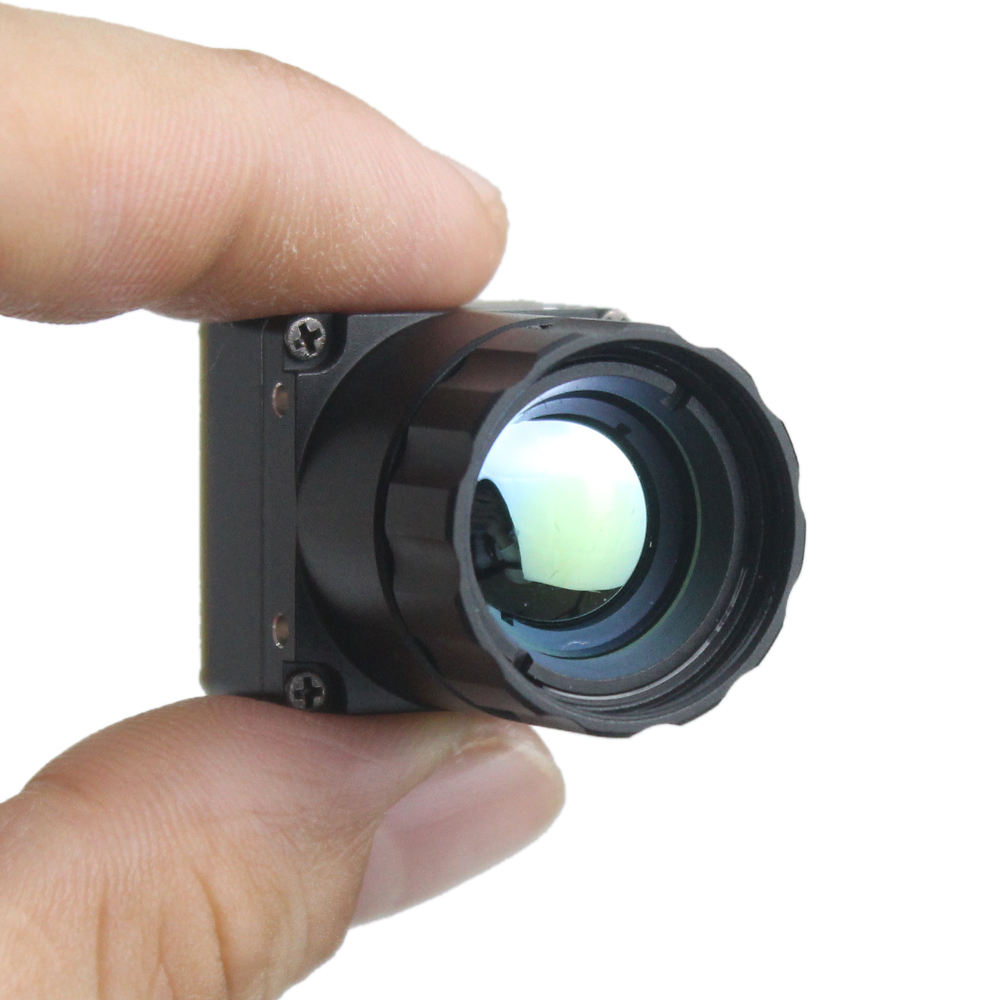
Engineered specifically for low-SWaP micro-drone integration and handheld detection systems, the Mini 256 Uncooled LWIR thermal module combines high-performance infrared sensing with extreme mechanical miniaturization. Utilizing advanced microbolometer detector technology, it captures infrared energy to output uniform, high-contrast thermal video with radiometric accuracy. Its compact, DJI-compatible form factor makes it ideal for specialized sub-kilogram drone payloads, mine and UXO detection operations, search-and-rescue systems, and compact field equipment.
| Resolution: | 256×192 LWIR Array |
| Form Factor: | Ultra-Miniature Lightweight Modular Housing |
| Radiometric Output: | Uniform Radiometry with Precise Temperature Measurement |
| Platform Matching: | DJI Drone Mechanics & Micro-Gimbals |
| Target Use Cases: | Mine/UXO Detection, Tactical Search & Rescue, Handheld Units |
4. Custom OEM/ODM Optical & Hardware Engineering Services
Standard off-the-shelf camera cores rarely fit custom operational demands out of the box. When you are shoehorning a sensor into tight mounting envelopes, specifying exact focal lengths, or adapting pinouts to match custom carrier boards, stock hardware won't cut it. Purpleriver brings full OEM/ODM customization services to tailor core thermal hardware directly to your platform specs.
Led by engineering teams with deep academic roots at the Hong Kong University of Science and Technology (HKUST) and heavy industry experience from Huawei HiSilicon, we handle specialized hardware modifications across three core layers:
- 🔍 Custom Lens & Optical Assemblies: Custom multi-element Germanium glass stacks, dual Field-of-View (FOV) switching optics, motorized continuous zoom systems, and specialized Diamond-Like Carbon (DLC) lens coatings built for rough marine or desert environments.
- ⚙️ Tailored Carrier & Interface PCBA Design: Ground-up circuit board layout delivering direct Ethernet/RTSP streaming, HDMI conversion, flexible micro-FPC ribbon routings for ultra-compact drone gimbals, and high-efficiency onboard power regulation.
- 💻 Firmware & Algorithmic Tuning: Custom Non-Uniformity Correction (NUC) tables, shutterless thermal calibration for uninterrupted streaming without image freeze, custom color palette algorithms, and tailored SDK wrappers for Linux, ROS (Robot Operating System), and embedded Windows environments.
Ready to kick off a custom optical design or order engineering samples? Log into your hardware build dashboard at our Customer Portal or complete your component configuration directly inside the Procurement Cart.
5. Technical Deep-Dive FAQ
Q1: What is the best long range thermal camera module for real-time high-res streaming to Raspberry Pi or Arduino?
When you're trying to push live high-resolution thermal video into single-board computers like a Raspberry Pi or high-performance microcontrollers (like ARM Cortex-M7 Arduinos or Teensy boards), your best bet is a low-SWaP uncooled 12μm VOx microbolometer core—such as the MD Series 384x288 Thermal Camera Module.
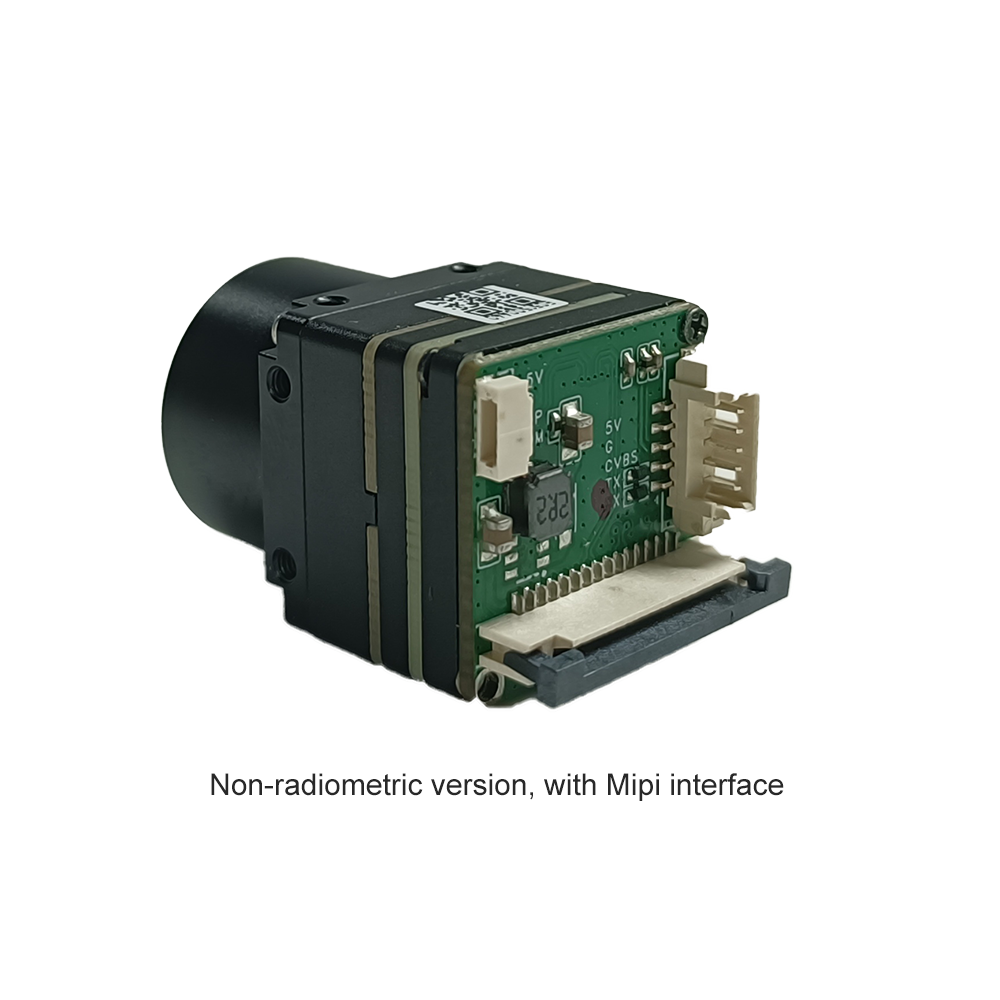
Here's how to handle the hardware interface: basic microcontrollers like 8-bit or standard 32-bit Arduinos lack the RAM and bus speed to ingest full uncompressed 14-bit thermal video at 30Hz. For basic MCUs, you'll want to tap the CVBS analog output via a digitizer chip or pull low-framerate register data over SPI. But if you step up to a Raspberry Pi 4 or Pi 5, you can run direct USB 3.0 UVC mode or interface via MIPI CSI-2. That gives you full uncompressed frame acquisition straight into system RAM without slamming the host CPU.
The high-density 12μm pixel pitch keeps physical lens sizing compact while giving you crisp spatial detail. That extra resolution gives your Python or C++ OpenCV scripts enough clean pixel data to run real-time target recognition models or automated temperature triggers right on the Pi board without dropping frames.
Q2: Can I integrate a long range thermal camera module into a multi-sensor PTZ system for security and surveillance?
Absolutely. Dropping a long range uncooled LWIR thermal module alongside a daylight visual sensor inside a Pan-Tilt-Zoom (PTZ) enclosure is standard practice across military border control, industrial perimeter defense, and maritime surveillance setups.
In a typical dual-sensor PTZ setup, you pair a continuous optical zoom visual camera with a long-range LWIR thermal core mounted on a motorized gimbal chassis. Daylight visual cameras give you rich color details during clear daytime hours, but they become totally useless when darkness hits or heavy fog rolls in. The uncooled LWIR module steps up by picking up blackbody thermal signatures across complete darkness, industrial smog, atmospheric haze, and dense coastal fog from 1 km to over 5 km away depending on your Germanium lens selection.
On the hardware side, engineers use custom carrier boards to route MIPI CSI-2 or digital thermal video straight into dual-channel H.265 video encoders. That lets you output fully synchronized ONVIF/RTSP IP streams directly to video management software (VMS) for automated boundary line cross detection and target tracking.
Q3: Are automotive/drone thermal camera modules effective at night and in foggy conditions?
Yes, long-wave infrared thermal camera modules thrive in total night-time darkness and cut right through environmental conditions like thick fog, heavy smoke, and blowing dust where NIR night-vision and standard visual RGB cameras hit a wall.
The physics behind this comes down to wavelength scale. Visible cameras need reflected ambient photons bouncing off surfaces to build an image. Tiny suspended water droplets in heavy fog scatter short visible wavelengths (Mie scattering), turning your camera output into a useless white glare. LWIR thermal camera modules operate way higher in the 8μm–14μm spectrum, capturing direct thermal energy emitted by the scene itself rather than relying on reflected light.
Because LWIR infrared wavelengths are much larger than airborne fog particles and micro-droplets, thermal photons pass right through atmospheric haze layers with minimal scattering loss. That is why autonomous vehicles, search-and-rescue UAVs, and nighttime navigation systems rely heavily on LWIR thermal cores to spot pedestrians, wildlife, downed aircraft, and structural hazards in pitch-black night and zero-visibility weather.
📚 References & Further Reading
- Industry Standard: Wikipedia Thermal Imaging Principles & Technology
- Host Integration Platform: Raspberry Pi Embedded Computing Systems
- Related Guide: Thermal Imaging Camera Module Guide for Choosing the Right LWIR Core
- Customer Portal: Purpleriver Engineering Account Access
- Procurement Cart: Purpleriver Custom Component Order Checkout