

Thermal Imaging Camera Module Guide: Choosing the Right LWIR Core for Drones, DIY & Real-Time Streaming
2026年6月4日
Best Thermal Camera Modules for Raspberry Pi: High-Res LWIR Streaming Guide (2024)
2026年6月5日
Infrared Thermal Camera Module: The Complete Engineering Guide to Uncooled LWIR Cores
For years, thermal imaging lived behind a velvet rope. Five-figure price tags, ITAR export restrictions, and proprietary ecosystems kept genuine infrared capability out of the hands of the very people who could actually do something interesting with it — drone builders, Raspberry Pi tinkerers, embedded vision engineers, and DIY thermal scope enthusiasts. Today the rope has loosened, but here's the deal: a new wall has gone up in its place. Walk through any maker forum and you'll hear the same gripe over and over: cheap 256×192 sensors spitting out blurry, pixelated frames that are flat-out useless for serious inspection, search-and-rescue, or precision scope work. The real tension isn't just price anymore — it's the painful balancing act between resolution, latency, lens flexibility, and the integration headaches that come with marrying a thermal core to a host platform.
This guide exists to knock that wall down. We'll break down uncooled LWIR (Long-Wave Infrared) core technology from the microbolometer up, walk through the resolution math that actually matters, decode lens selection across the full 5mm–150mm range, and map out concrete integration pathways for embedded platforms like the Raspberry Pi, Arduino, and weight-sensitive drone gimbals. By the time you're done reading, you'll have a clear decision framework — one that tells you exactly which module spec matches your drone payload, your Pi streaming rig, or your handheld scope, without overpaying for DJI-tier branding. This is the depth that separates a casual purchase from an engineered one.
Table of Contents
- 👉 What Is an Infrared Thermal Camera Module? — Cores vs. complete cameras.
- 👉 How Uncooled LWIR Cores Actually Work — The full signal chain explained.
- 👉 Resolution Decoded: 640×512 vs 256×192 — Why pixels on target matter.
- 👉 Lens Selection & Field of View Guide — Matching focal length to range.
- 👉 Integration: Raspberry Pi, Arduino & Drones — Plug-and-play workflows.
- 👉 Featured Product & Real Specs — The Mini 640×512 core.
- 👉 Key Buying Criteria Checklist — What to insist on.
- 👉 Real-World Applications — From SAR to scopes.
- 👉 Frequently Asked Questions — Direct answers to common queries.
What Is an Infrared Thermal Camera Module?
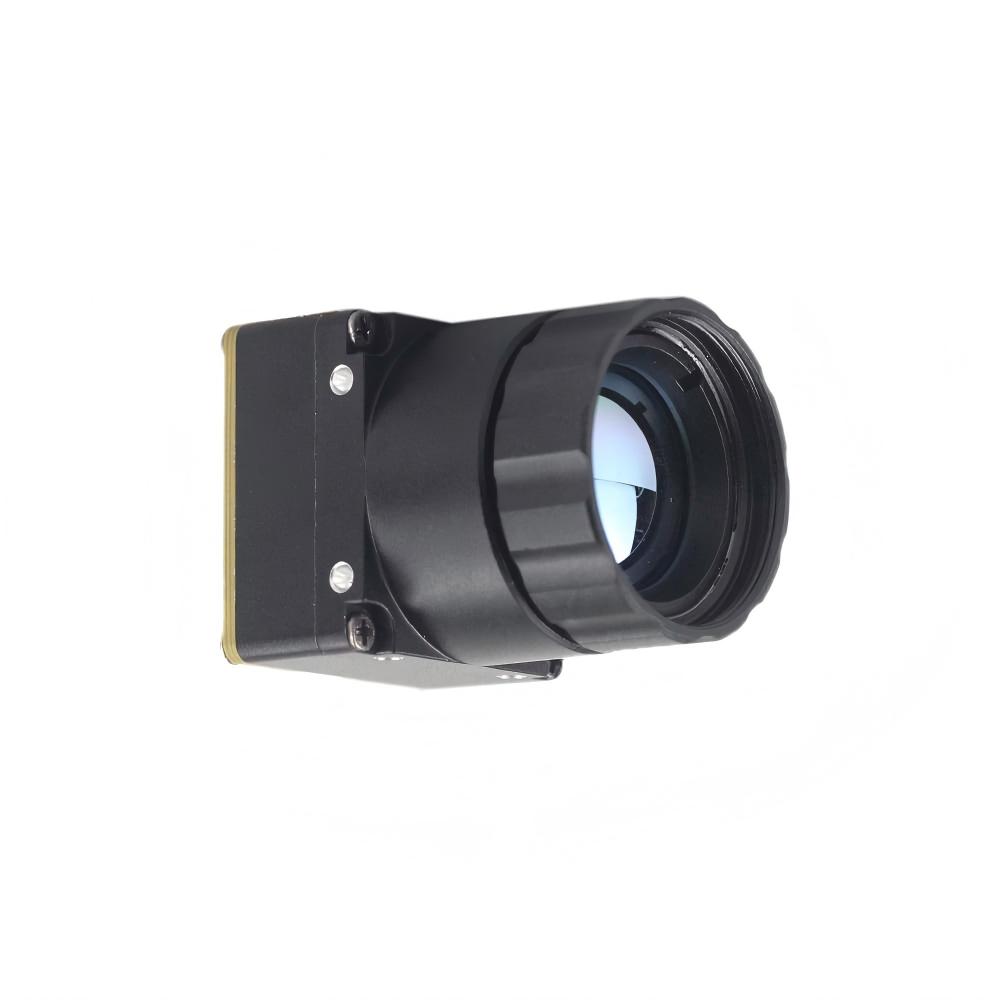
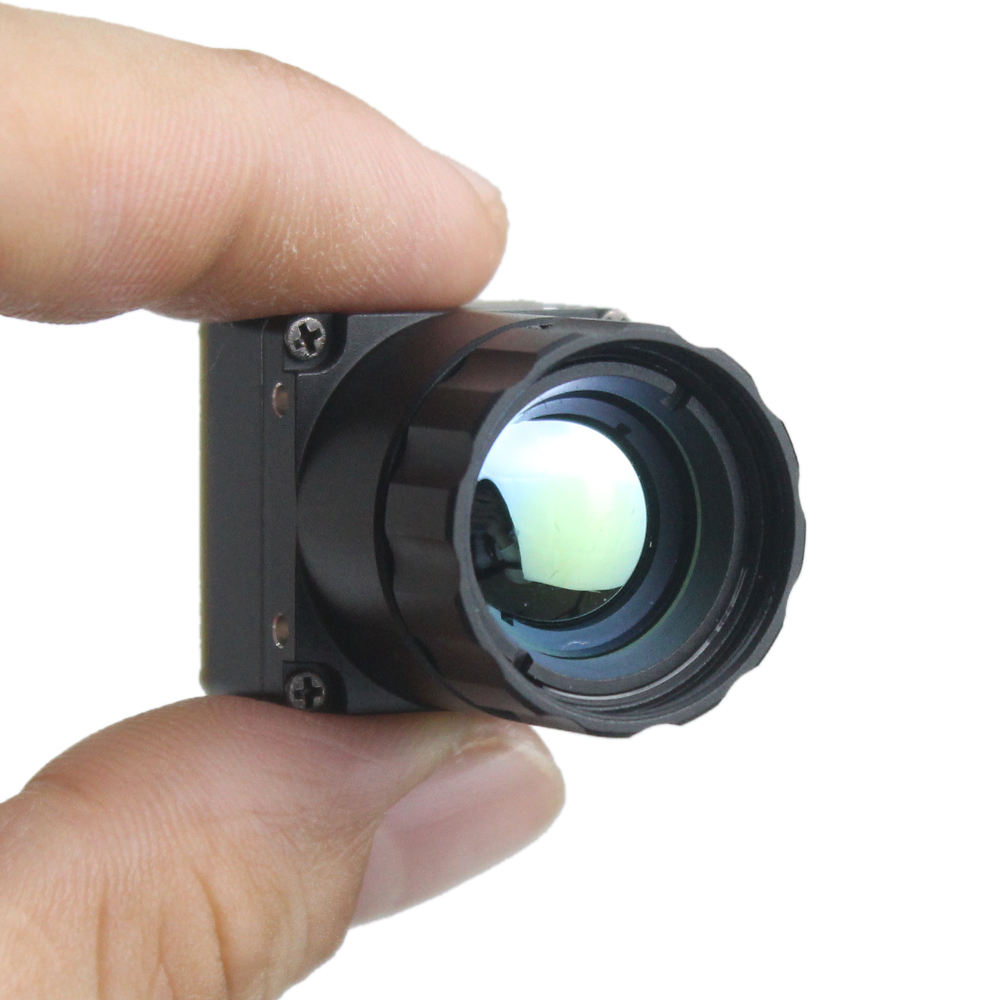
An infrared thermal camera module — what we call a "core" in the shop — is the bare imaging engine that sits at the heart of every thermal device. It typically boils down to three tightly coupled pieces: the infrared sensor (a microbolometer focal plane array), the lens that focuses long-wave radiation onto that sensor, and a processing board that turns raw detector signals into a usable video stream or radiometric data. Here's the key thing to understand: a module is not a finished product. It has no rugged housing, no battery, no display, and no consumer packaging. It's an OEM building block, designed to live inside something bigger that you build around it.
Core Module vs. Complete Thermal Camera
This distinction matters more than most buyers realize. A complete thermal camera is a sealed consumer or industrial end product — a handheld inspection device, a finished drone payload, a security camera. You buy it, you use it, and you live with whatever optics, interface, and firmware the manufacturer picked for you. A core module, on the other hand, hands you the engineering freedom to define the system yourself. You pick the lens for your exact field of view, you decide how the video gets captured and processed, and you design the mounting and power architecture around your application. That's exactly why drone integrators, scope builders, and embedded developers gravitate toward modules: they want control, weight savings, and cost efficiency that a sealed retail camera can never give them.
Why LWIR Dominates Drone & DIY Applications
Thermal imaging operates in the infrared portion of the electromagnetic spectrum, well past anything the human eye can pick up. The long-wave infrared band, running roughly 8 to 14 microns, is the sweet spot for imaging objects at everyday ambient temperatures — people, animals, machinery, electrical faults, and terrain. Objects around room temperature emit their peak thermal radiation right in that band, which makes LWIR the natural choice for passive, all-weather, day-and-night imaging that needs zero illumination. At the heart of an LWIR core sits the Focal Plane Array (FPA), a grid of microscopic microbolometer pixels that each react to incoming heat. For a deeper dive into how thermal radiation gets captured and turned into an image, take a look at our breakdown of thermal imaging principles, which lays out the underlying physics in detail.
How Uncooled LWIR Cores Actually Work
Look, understanding how an uncooled core turns invisible heat into a crisp image is the single most valuable thing a buyer can know. It demystifies pricing, it explains spec sheets, and it shows you why certain modules absolutely smoke others. The trip from photon to pixel is an elegant chain of physics and electronics, and once you get it, you'll never read a spec sheet the same way again.
The Microbolometer Sensor Explained
The microbolometer is the beating heart of every uncooled thermal module. Picture a dense grid of microscopic detector elements, each one suspended on tiny thermally isolated legs. When long-wave infrared radiation hits a pixel, that pixel soaks up the energy and warms ever so slightly. That minute temperature change shifts the electrical resistance of the detector material, and the readout circuit measures that resistance shift, pixel by pixel, to build a complete thermal map of the scene many times per second. Simple in concept, brutally precise in execution.
Two detector materials run the industry. Vanadium oxide (VOx) offers excellent sensitivity and is the workhorse of high-performance cores, while amorphous silicon (a-Si) earns its keep on manufacturing scalability. Just as important is pixel pitch — the physical spacing between detector elements, commonly 12µm or 17µm. A smaller 12µm pitch crams more resolution into a more compact, lighter sensor, which is a decisive win for drone payloads where every millimeter and gram counts. The germanium optics that focus IR onto this array are a specialized discipline all their own; precision infrared optics suppliers such as Jinde show just how exacting this branch of lens manufacturing has become.
Uncooled vs. Cooled: The Critical Trade-Off
Thermal cores come in two fundamental families, and the choice shapes everything about your system's cost, weight, and behavior. The table below lays out the decisive contrasts side by side.
| Attribute | Uncooled LWIR | Cooled Thermal |
|---|---|---|
| Cost | Low to moderate | Very high (often 5–10×) |
| SWaP (Size/Weight/Power) | Compact, light, low power | Large, heavy, power-hungry cryocooler |
| Startup Time | Instant-on (seconds) | Several minutes (cooldown required) |
| NETD Sensitivity | Excellent (sub-50mK achievable) | Superior (single-digit mK) |
| Lifecycle | Long, no moving parts | Limited by cryocooler wear |
| Best For | Drones, DIY, inspection, scopes | Long-range military, scientific research |
For the overwhelming majority of drone, maker, and inspection jobs, uncooled wins hands down. No cryocooler means no bulky refrigeration assembly, dramatically lower weight, instant readiness, and a price point that finally makes serious thermal imaging genuinely accessible. And don't sleep on the ruggedized board-to-board connectors that link these cores to host electronics — vibration-resistant interconnects from manufacturers like Amphenol are what keep your module alive through the harsh shake of drone flight.
NETD, Thermal Sensitivity & Image Clarity
NETD — Noise Equivalent Temperature Difference — is the spec that separates a crisp, readable image from a noisy, grainy mess. Measured in millikelvin (mK), NETD describes the smallest temperature difference the sensor can reliably tell apart from electronic noise. Lower is better, plain and simple. A core rated below 50mK can resolve subtle thermal contrasts — the faint warmth of a footprint, the early signature of an overheating connection — that a noisier sensor would just smear into the background. When you're scanning a field for survivors or hunting an electrical hotspot, that sensitivity is the difference between a confident finding and a missed one.
Resolution Decoded: Why 640×512 Beats 256×192
Resolution is the most misunderstood — and most marketing-abused — spec in the entire thermal industry. Let's settle it with simple math. A 640×512 sensor delivers 327,680 individual thermal pixels. A 256×192 sensor delivers a measly 49,152. That's not a modest bump; it's 6.6 times more thermal data describing the exact same scene. Every one of those extra pixels means more detail, sharper edges, and earlier detection of small heat signatures.
The DRI Range Formula for Drone Payloads
Engineers think in terms of "thermal pixels on target." The DRI model — Detection, Recognition, Identification — quantifies how many pixels need to land on an object before you can simply spot it (detection), tell what kind of object it is (recognition), or positively identify it (identification). Because higher resolution puts more pixels on every target at a given distance, a 640 core dramatically stretches your effective DRI range compared to a 256 core running the identical lens. For a drone sweeping a wide area at altitude, that translates directly into covering more ground per pass while still resolving a person or animal far below. The environmental stability of a high-resolution core under field stress matters just as much; our high and low temperature humidity testing shows how rigorous validation keeps imagery stable across punishing conditions.
When Lower Resolution Is Acceptable (and When It Isn't)
Beware the digital zoom trap. Plenty of budget modules advertise impressive-sounding figures pulled off through interpolation or upscaling — software that invents pixels rather than capturing them. Interpolation can never add genuine thermal information; it just smooths and stretches whatever little data is actually there. Only native sensor resolution improves real clarity. That said, a 256×192 core isn't worthless. For close-range hobby glances, simple presence detection, or budget learning projects, it'll do the job. But the moment your application demands positive identification, long detection range, or reliable inspection, the 640 class becomes the practical floor — no two ways about it.
Lens Selection & Field of View Guide
Once you've locked in your resolution, the lens decides how that resolution gets spread across the scene. Focal length governs the fundamental trade-off between field of view (how wide an area you see) and range (how far you can resolve detail). A short focal length gives you a wide, sweeping view that's perfect for scanning — but every object looks small. A long focal length zooms in, putting more pixels on distant targets at the cost of a narrow field. The featured Mini core supports a genuinely impressive spread of focal lengths: 5, 9, 13, 18, 35, 50, 75, 100, and 150mm, letting you tune the system precisely to your mission.
Focal Length vs. Field of View
| Focal Length | Field of View | Best Use Case | Effective Range |
|---|---|---|---|
| 5–9mm | Very wide | Indoor scanning, short-range drone surveys | Short |
| 13–18mm | Balanced / general | All-purpose inspection and observation | Medium-short |
| 35–50mm | Narrow | Medium-range inspection, spotting scopes | Medium-long |
| 75–150mm | Very narrow / telephoto | Long-range surveillance, perimeter security | Long |
Interchangeable Lenses for DIY Thermal Scopes
For scope builders and OEM integrators, lens interchangeability is a game-changer. The same compact core can serve as a wide-angle drone scanner one day and a high-magnification spotting scope the next, just by swapping optics. The lens material matters more than people think: infrared optics are crafted from germanium, which is transparent to long-wave radiation but exotic and fiddly to manufacture. Quality cores also build in athermalization — optical design that keeps the image in focus across wide temperature swings, so your scope stays sharp whether it's a freezing dawn or a baking afternoon. For deeper authority on this specialized optical discipline, infrared lens specialists such as Jinde offer a window into the engineering rigor behind germanium optics.
Integration: Raspberry Pi, Arduino & Drone Payloads
A brilliant sensor is dead weight if you can't get clean data out of it. This is where the featured Mini core really earns its keep, and where a lot of cheaper alternatives fall flat on their face with proprietary interfaces and missing documentation.
USB UVC Plug-and-Play with Raspberry Pi
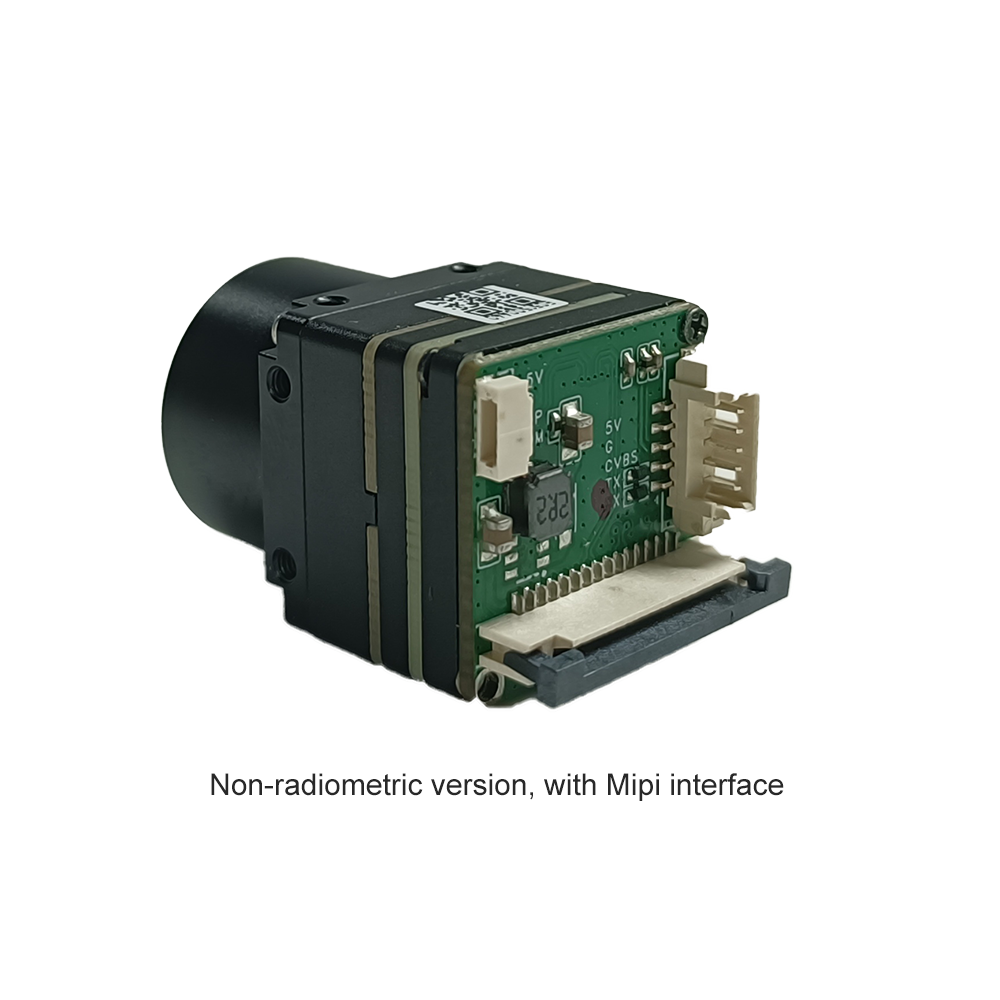
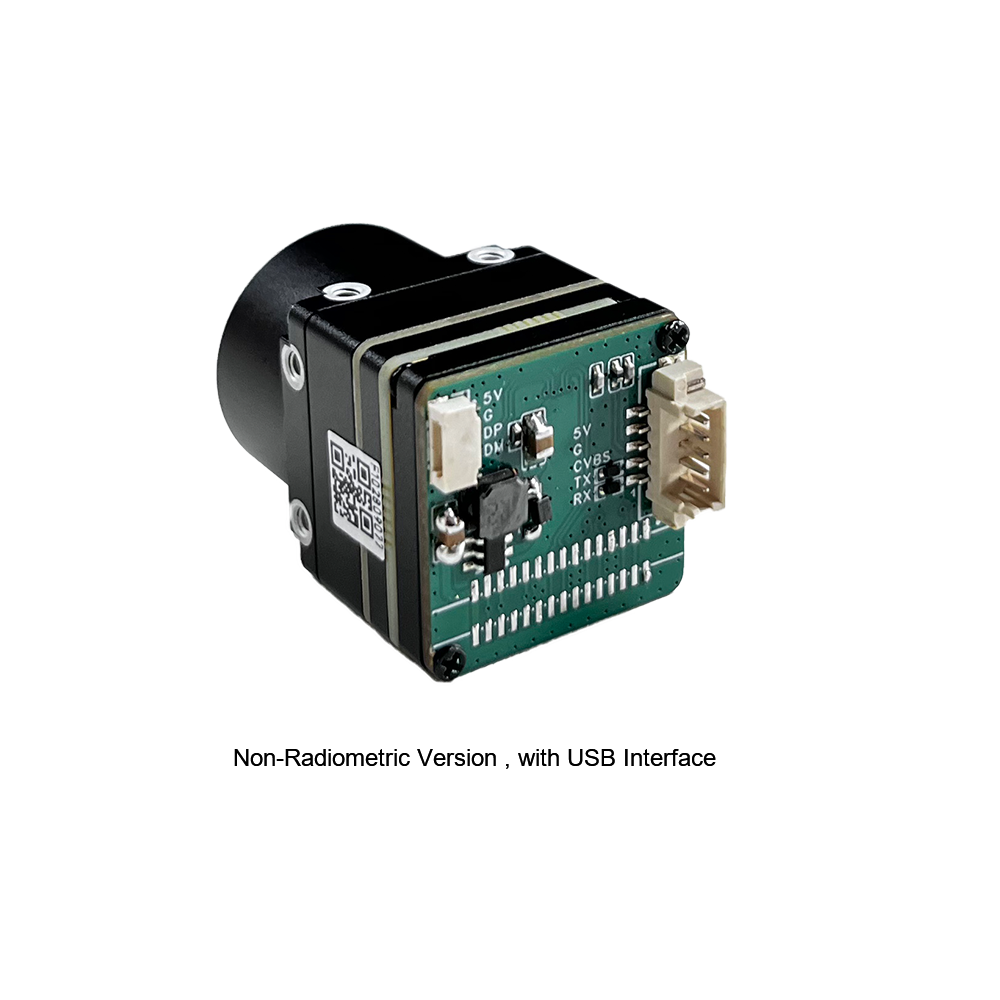
The single most important integration feature is the module's USB output conforming to the UVC (USB Video Class) standard. UVC is the same protocol your everyday webcam uses, and it means the thermal core shows up to a Linux host as a standard video device — no proprietary drivers to compile, no kernel patching, no vendor lock-in nonsense. On a Raspberry Pi, you literally just plug it in and the system recognizes it. From there you can grab frames using v4l2 at the system level, pull them into OpenCV for processing, or knock out a handful of lines of Python to throw a live thermal feed on screen within minutes. The uncooled core's low-latency architecture keeps that stream smooth — which is essential for robotics, real-time monitoring, and embedded vision pipelines where lag simply won't fly.
Arduino & SDK-Based Control
Arduino plays a different but complementary role. It's not built to crunch high-resolution video, so in a well-architected system the Arduino handles the control logic — triggering captures, relaying GPIO events, driving servos, or managing alert relays — while a Raspberry Pi or host PC handles the heavy video processing. Through the supported SDK, developers can go well beyond simple imagery to access genuine radiometric data: per-pixel temperature values that enable automated thresholds, hotspot alerts, and smart custom applications. That division of labor gives makers a robust, scalable foundation to build on.
Drone Payload Integration (DJI-Comparable)
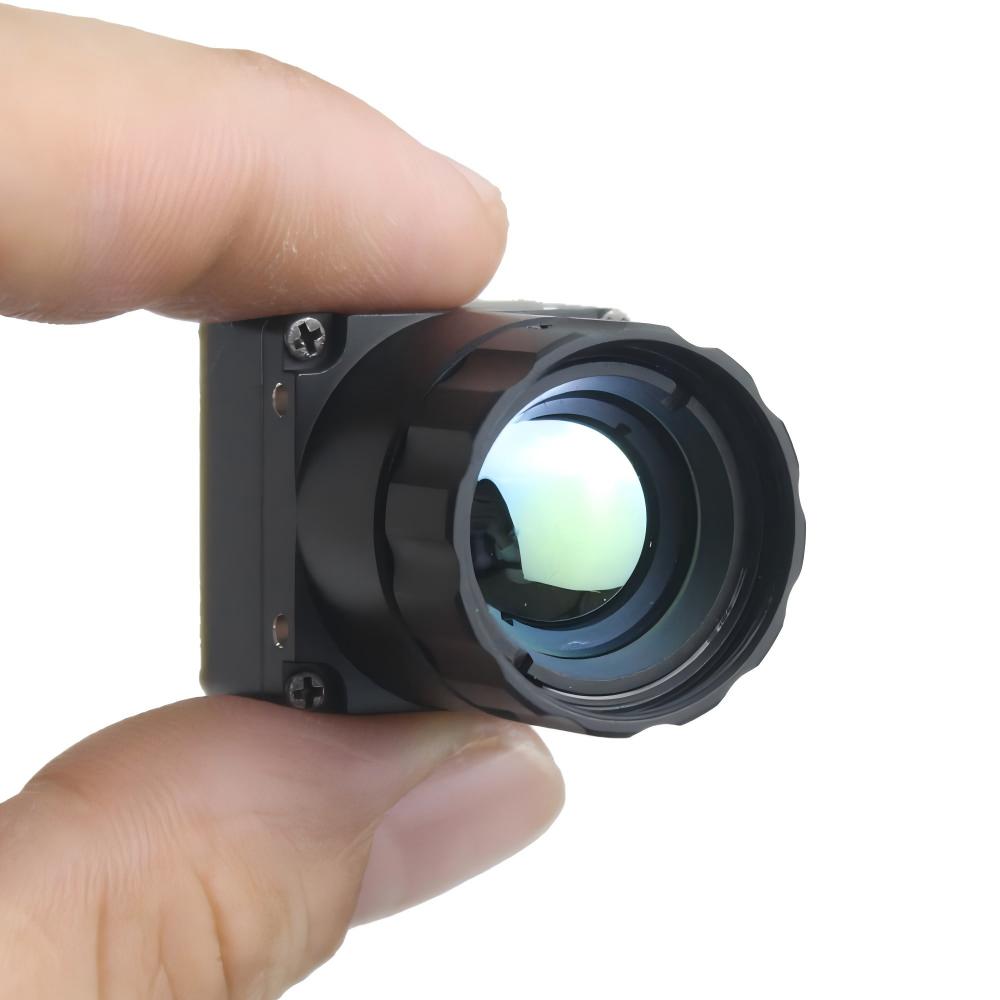
For aerial work, SWaP is everything. The Mini core's tiny 21mm × 21mm footprint is a decisive advantage — it slips into compact gimbals and tight payload bays where bulkier cameras just won't fit, and its low weight protects your precious flight time. A clean integration also demands attention to power draw, vibration isolation (a soft-mount or damped gimbal protects image stability), and secure, rattle-proof cabling. Robust connectors from suppliers like Amphenol earn their place here, surviving the constant vibration of flight. Ready to explore complete thermal solutions? Browse our full thermal imaging product range to see how cores fit into finished systems.
Featured Product: Mini 640×512 Uncooled LWIR Module
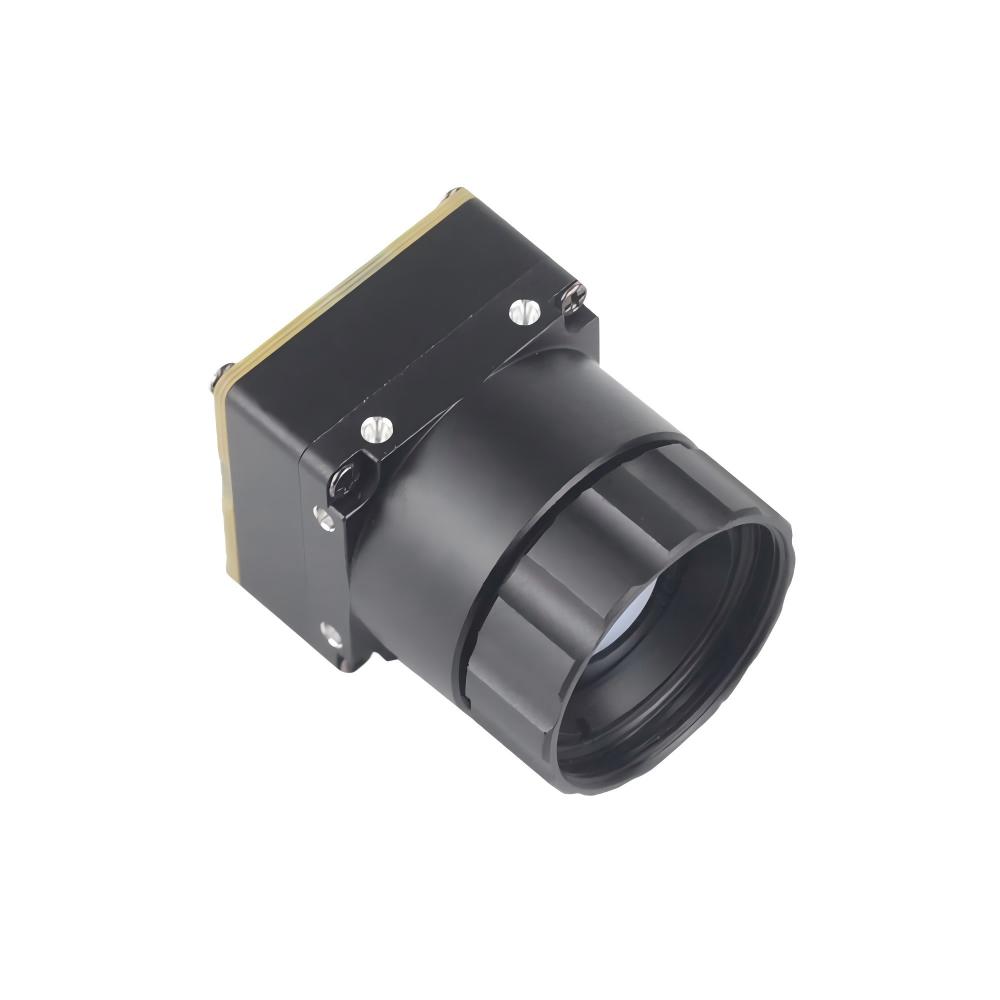
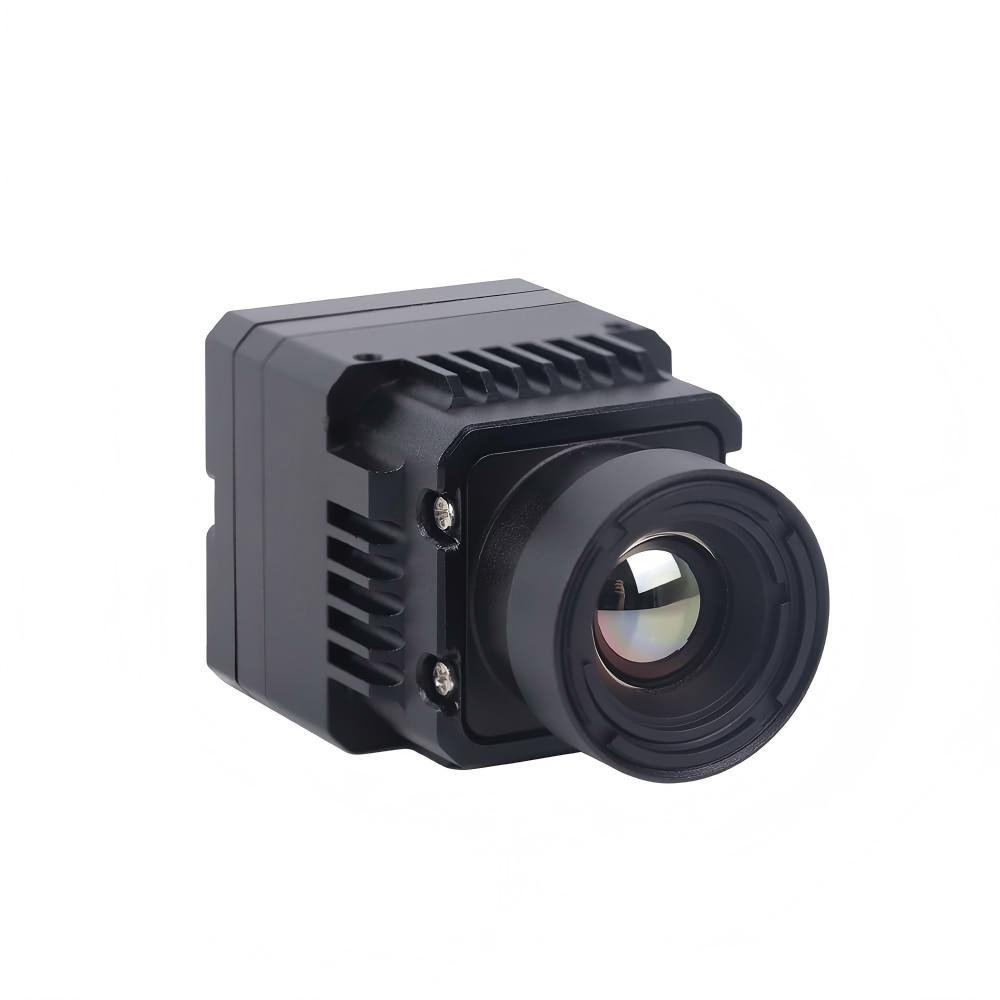
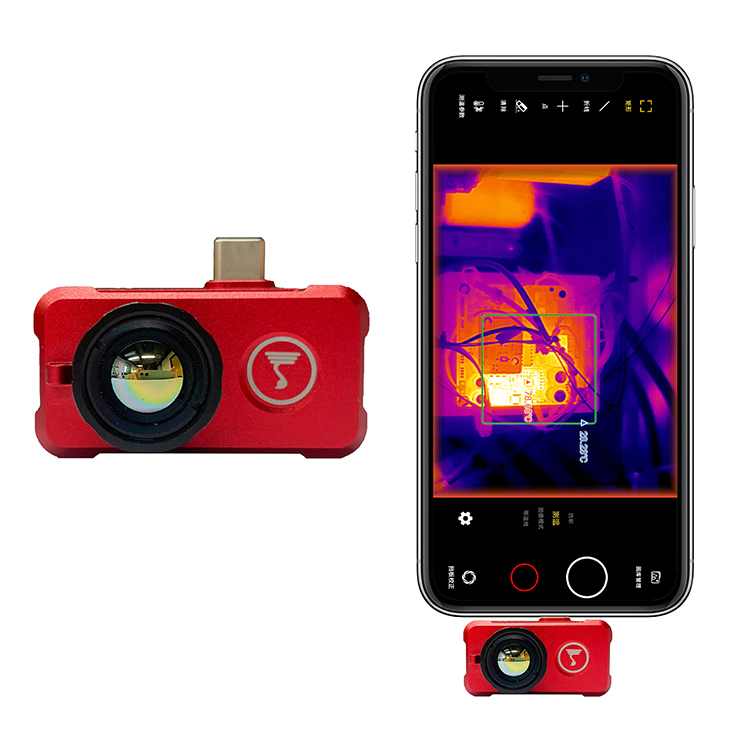
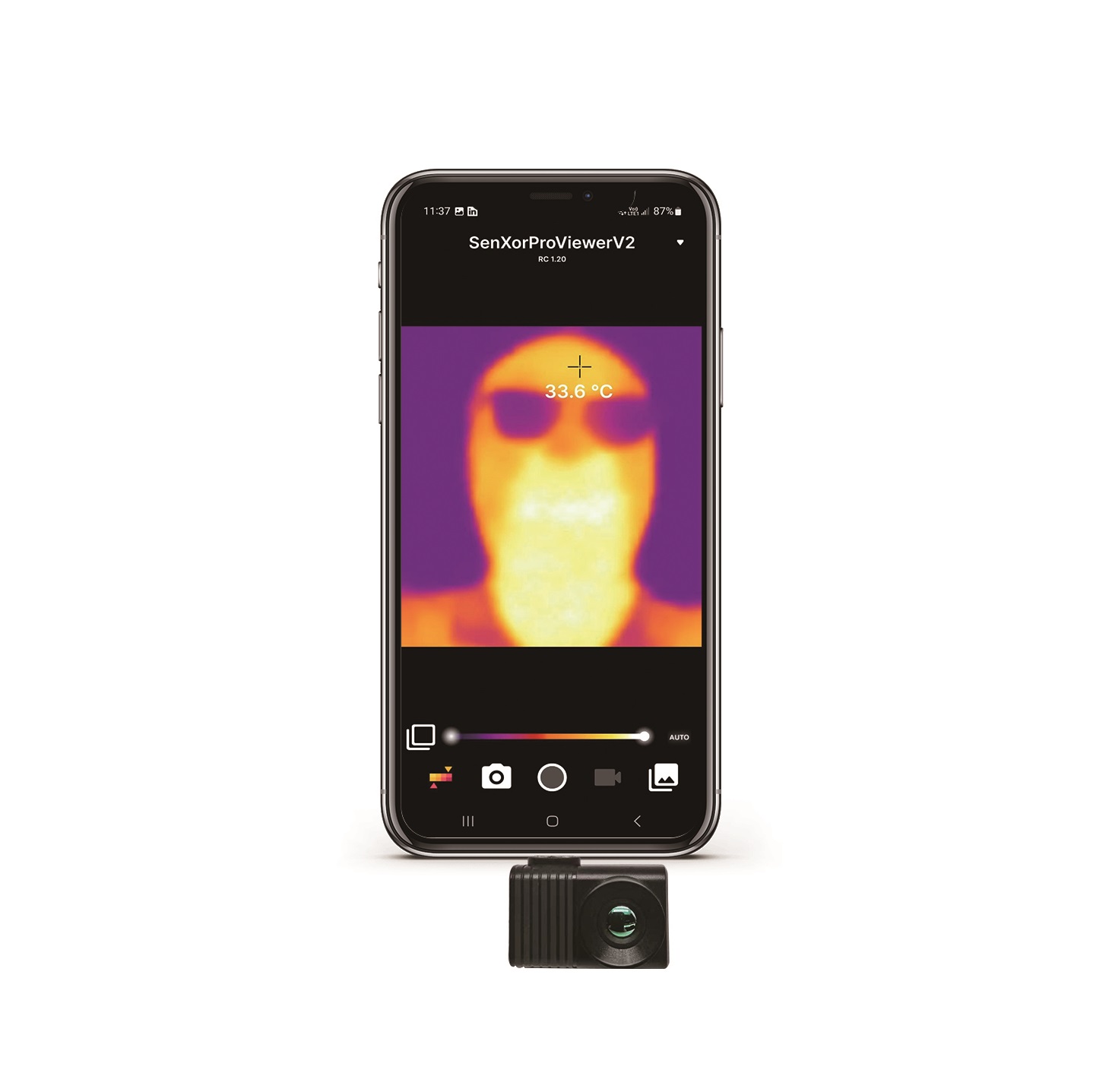
The standout pick for makers and OEM integrators chasing DJI-comparable performance without the premium branding is the Mini uncooled infrared thermal imaging module. It's engineered around three core strengths: sharp and crisp image presentation, an exceptionally compact form factor, and a genuinely low cost that opens serious thermal imaging up to a far wider audience. With its Mini-size of 21mm × 21mm, a deep bench of interchangeable lenses, optional 640-class resolution, and stable performance with strong environmental adaptability, it serves as a flexible, professional-grade foundation for everything from handheld scopes to lightweight aerial payloads.
| Specification | Detail |
|---|---|
| Product Name | Uncooled LWIR USB Mini 640×512 Thermal Imaging Camera Core Module |
| Detector Type | Uncooled LWIR Microbolometer |
| Resolution | 640×512 / 640×480 (optional) |
| Module Size | 21mm × 21mm (Mini-Size) |
| Lens Options | 5 / 9 / 13 / 18 / 35 / 50 / 75 / 100 / 150 mm |
| Output Interface | USB (UVC Plug-and-Play) |
| Best For | Drones, Raspberry Pi, Arduino, DIY Thermal Scopes |
| Image Quality | Sharp, crisp presentation |
| Environmental Adaptability | Strong, stable performance |
| Comparable To | DJI thermal payloads (at lower cost) |
View Product Details & Pricing ➔
Key Buying Criteria Checklist
Cutting through the marketing noise takes a disciplined checklist. Before you commit to any infrared thermal camera module, run it against the criteria below — every one of them rooted in real-world performance rather than spec-sheet theater.
- ✅ Resolution: Insist on 640×512 for any serious detection, recognition, or inspection work. Treat 256×192 as hobby-grade only.
- ✅ NETD Sensitivity: Look for sub-50mK to guarantee crisp, low-noise imagery that reveals subtle thermal contrasts.
- ✅ Output Interface: UVC over USB means driverless, plug-and-play integration on Raspberry Pi and standard hosts.
- ✅ Lens Flexibility: Interchangeable focal lengths (5mm–150mm) let one core serve many missions.
- ✅ Form Factor & Weight: A compact 21×21mm footprint is critical for drone SWaP and tight scope housings.
- ⚙️ SDK & Platform Support: Confirm radiometric access and documented software support for your platform.
- ⚙️ Environmental Ratings: Demand strong adaptability and validated stability across temperature and humidity extremes.
- ✅ Cost-vs-Performance Ratio: Seek DJI-comparable imagery without paying for a premium brand badge.
Red Flags to Avoid When Buying Cheap Modules
Be especially wary of three traps. First, interpolated resolution claims — numbers puffed up by software upscaling rather than native sensor pixels. Second, undocumented proprietary interfaces that lock you into a single vendor's tooling and leave you stranded without an SDK. Third, missing or vague NETD figures, which almost always signal a noisy sensor the manufacturer would rather not put a number on. A reputable core publishes honest native resolution, a clear NETD value, and a documented, standards-based output path. If they're hiding any of those, walk away.
Real-World Applications
The versatility of a compact 640-class LWIR core shows up across an astonishing range of fields. In drone-based search and rescue, a wide-FOV lens lets a UAV sweep huge swaths of terrain, the warm signature of a missing person standing out sharply against cool ground even in pitch darkness — and that same airframe is equally at home running agricultural surveys mapping crop stress and irrigation patterns.
For DIY thermal rifle and spotting scopes, the tiny module paired with a long 75–150mm lens delivers high-magnification target identification that hobbyists used to only dream about. In building and electrical inspection, the core's sub-50mK sensitivity surfaces overheating breakers, loose connections, and hidden moisture intrusion long before they turn into failures, turning routine maintenance into genuine prevention.
The maker community has embraced these modules for Raspberry Pi projects and embedded vision — autonomous robots that navigate by heat, smart monitoring rigs, and experimental computer-vision pipelines all benefit from clean UVC streaming. And in perimeter security, a fixed telephoto core gives you reliable, all-weather intrusion detection across fences and boundaries where visible cameras go blind in the dark. In every one of these scenarios, the same underlying specs — resolution, lens choice, sensitivity, and form factor — quietly decide the outcome.
Frequently Asked Questions
Can I integrate a thermal camera module with a Raspberry Pi or Arduino for real-time high-res streaming?
v4l2, OpenCV, or a few lines of Python and have a live thermal feed running within minutes. The uncooled core's low-latency architecture keeps the stream smooth, which matters for real-time monitoring, robotics, and embedded vision pipelines. For Arduino-based systems, the workflow is slightly different — Arduino typically handles control logic, triggering, or relaying GPIO events, while a Pi or host PC manages the heavy video processing. Through our supported SDKs you can also access radiometric temperature data, enabling automated alerts and custom maker projects with genuine high-resolution thermal output.Cheap 256×192 modules offer poor image quality. What resolution should I choose for clear thermal images?
I want to build a custom DIY thermal scope or drone payload similar to DJI but at lower cost. Is a compact module available?
📚 References & Further Reading
- Industry Standard (Connectors): Amphenol — Ruggedized Interconnect Solutions
- Industry Standard (IR Optics): Jinde — Infrared & Germanium Optics
- Related Guide: Thermal Imaging Principles Explained
- Related Guide: High & Low Temperature Humidity Testing
- Product Catalog: Full Thermal Imaging Product Range