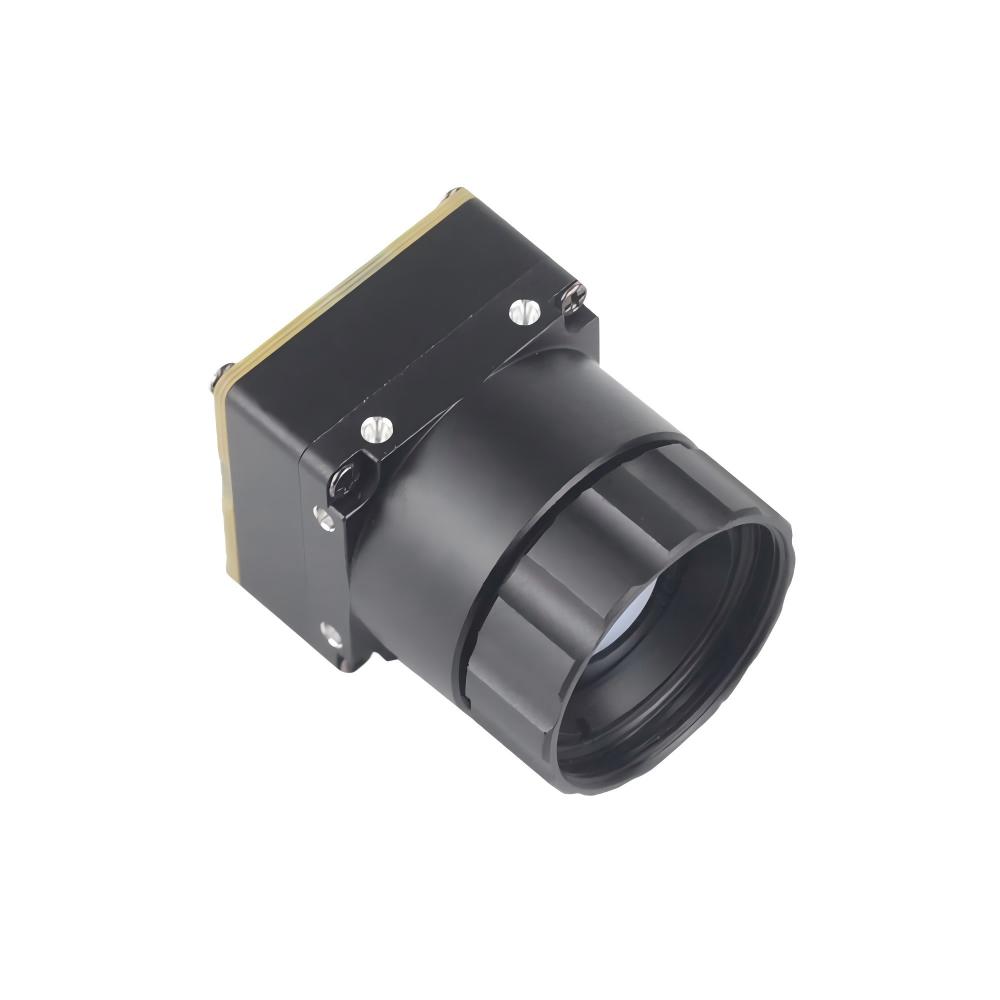
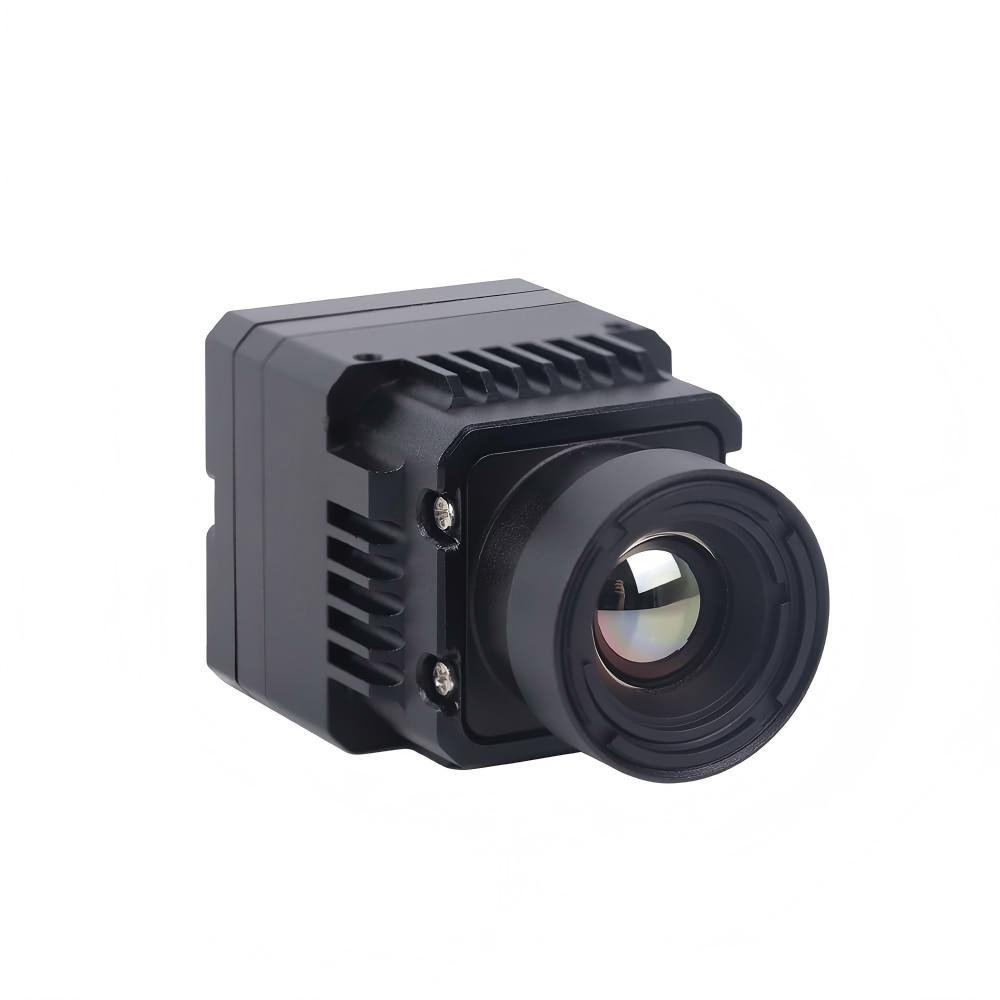
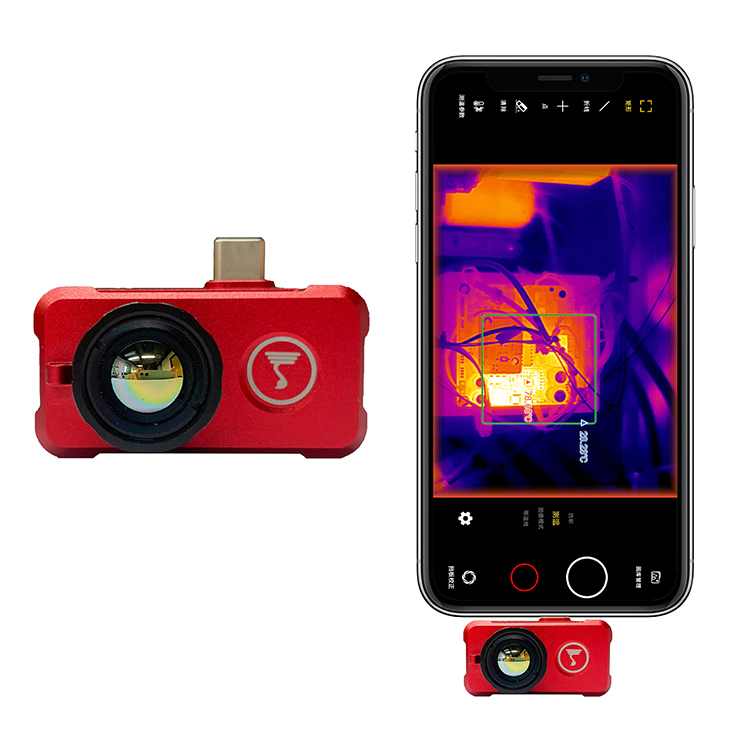
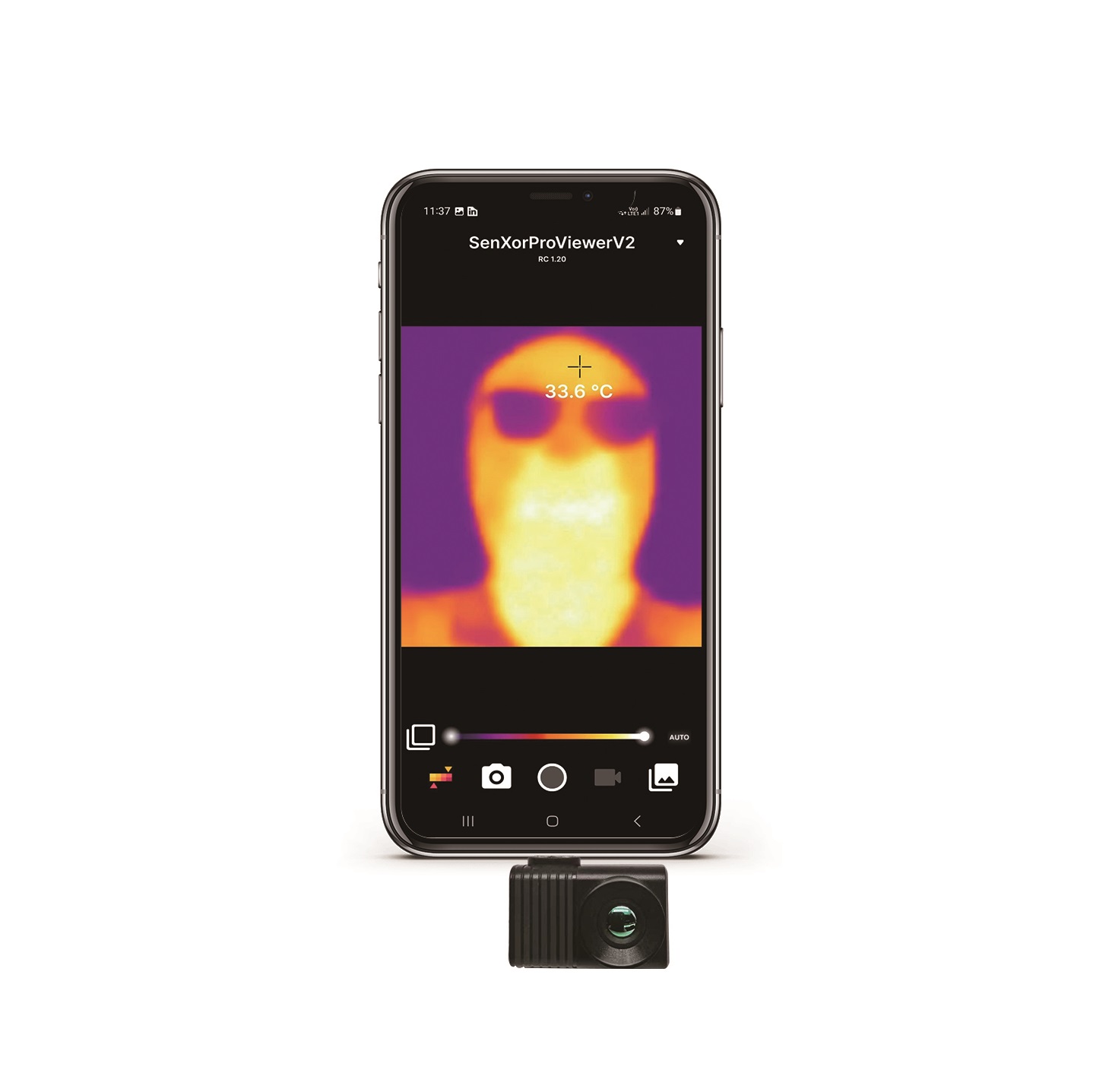
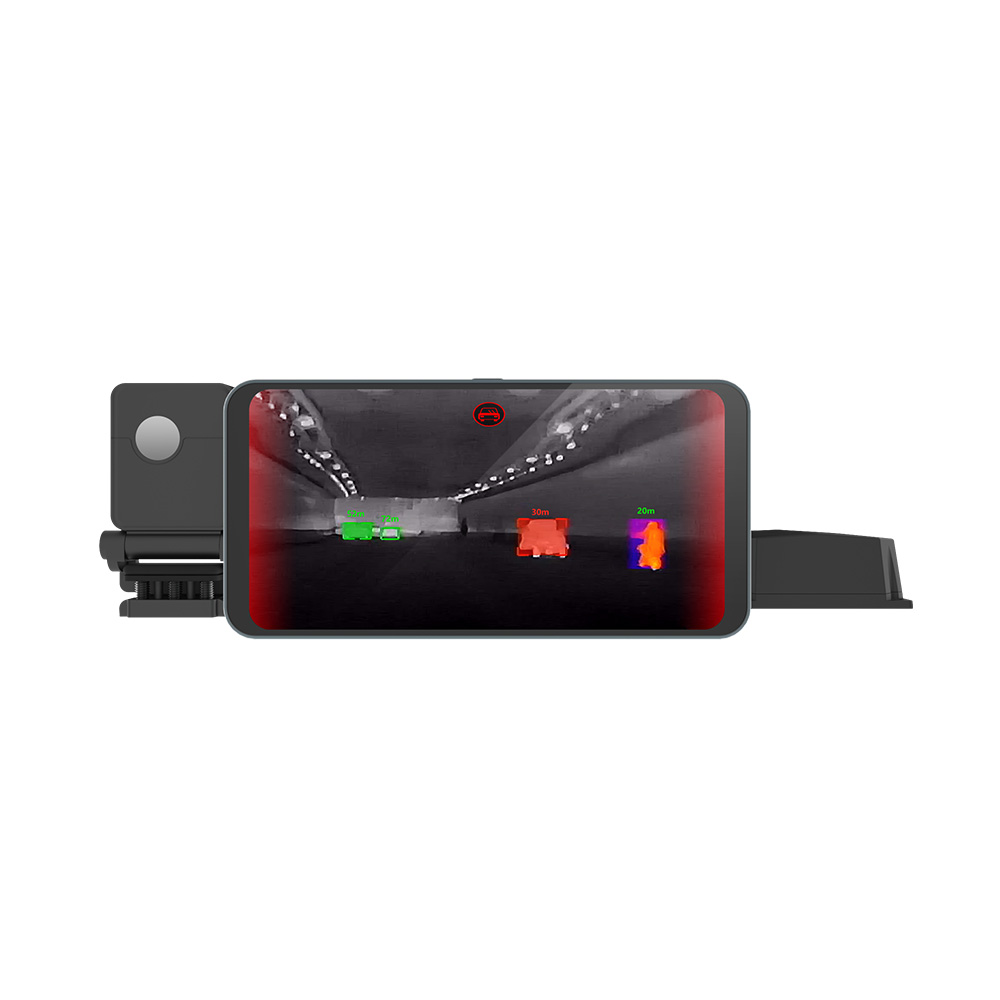

12um Thermal Camera Module Guide: High-Res OEM Cores for Drones & Vision Systems
2026年9月24日
UAV Infrared Thermal Camera Core Guide: OEM Integration, SWaP & Protocols
2026年9月29日
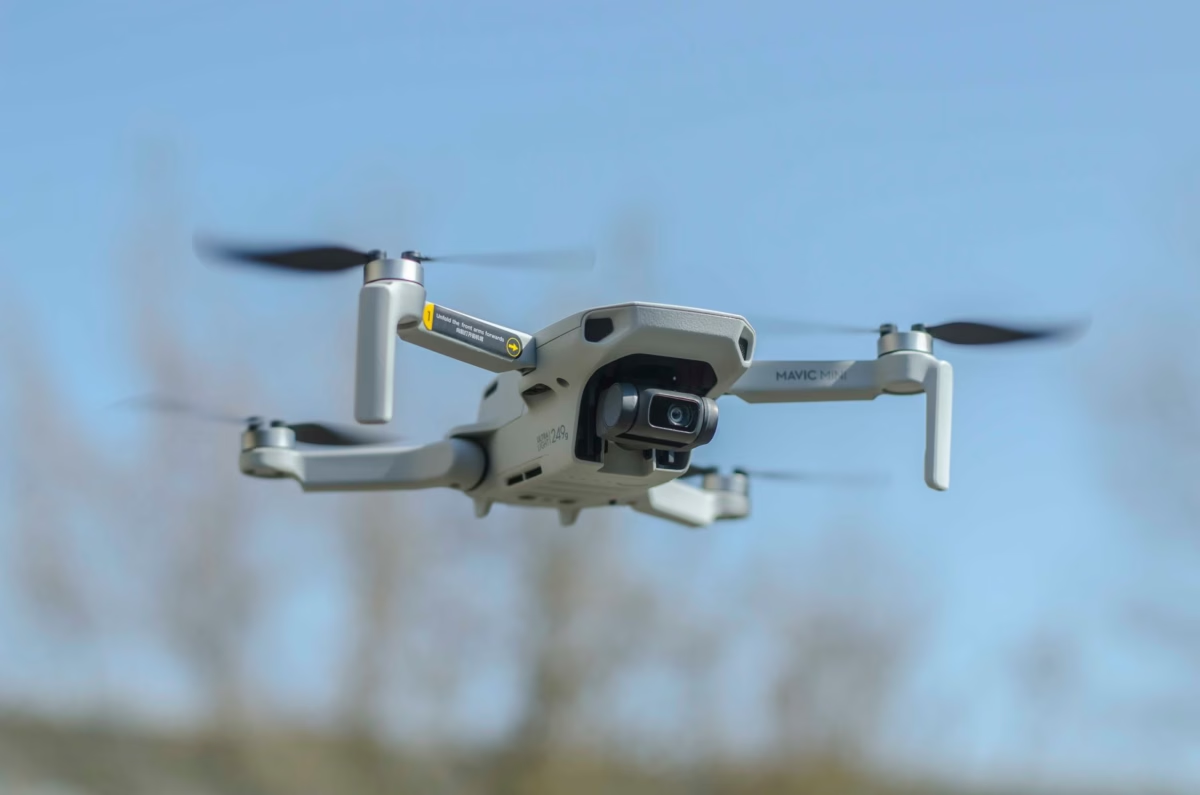
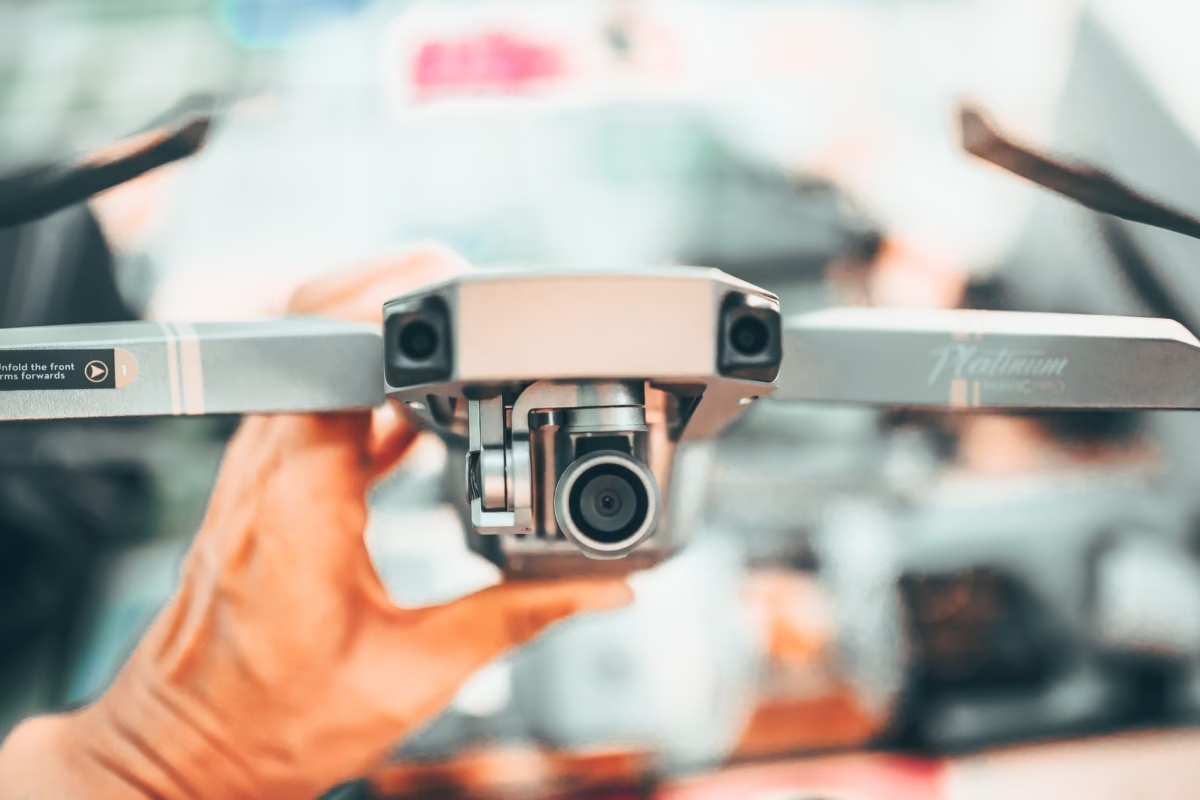
Lightweight Drone Thermal Imaging Module: OEM Solutions for Sub-250g Builds
Integrating high-performance radiometric infrared vision into micro unmanned aerial vehicles (UAVs) has historically forced a brutal compromise between thermal resolution and strict airframe mass limits. Commercial drone engineers and defense original equipment manufacturers (OEMs) designing for the Federal Aviation Administration (FAA) Category 1 and European Union Aviation Safety Agency (EASA) Open A1 sub-250g regulatory thresholds face severe Size, Weight, and Power (SWaP) constraints. A standard thermal payload that pushes an aircraft over 249.9 grams triggers burdensome operator licensing requirements, operational flight ceilings, and prohibitive commercial airspace certifications. Consequently, the demand for a true sub-20g, high-resolution lightweight drone thermal imaging module has shifted from a niche request to an imperative design specification.
Modern Long-Wave Infrared (LWIR) engineering solves this operational bottleneck by pairing sub-micron Vanadium Oxide (VOx) focal plane arrays (FPAs) with ultra-compact circuit boards, native MIPI CSI-2/USB-C connectivity, and low-profile germanium optics. By stripping away heavy metal enclosures and utilizing bare-chassis architectures as small as 21×21mm, avionics architects can mount high-fidelity 640×512 radiometric cores onto compact multirotors and fixed-wing micro-drones. This architectural blueprint explores the physics, mechanical integration, optical tradeoffs, and companion-computer communication pipelines necessary to deploy production-ready, sub-250g thermal inspection and tactical recon platforms.
Spis treści
- 👉 1. Physics & Core Architecture of Sub-Miniature LWIR Modules
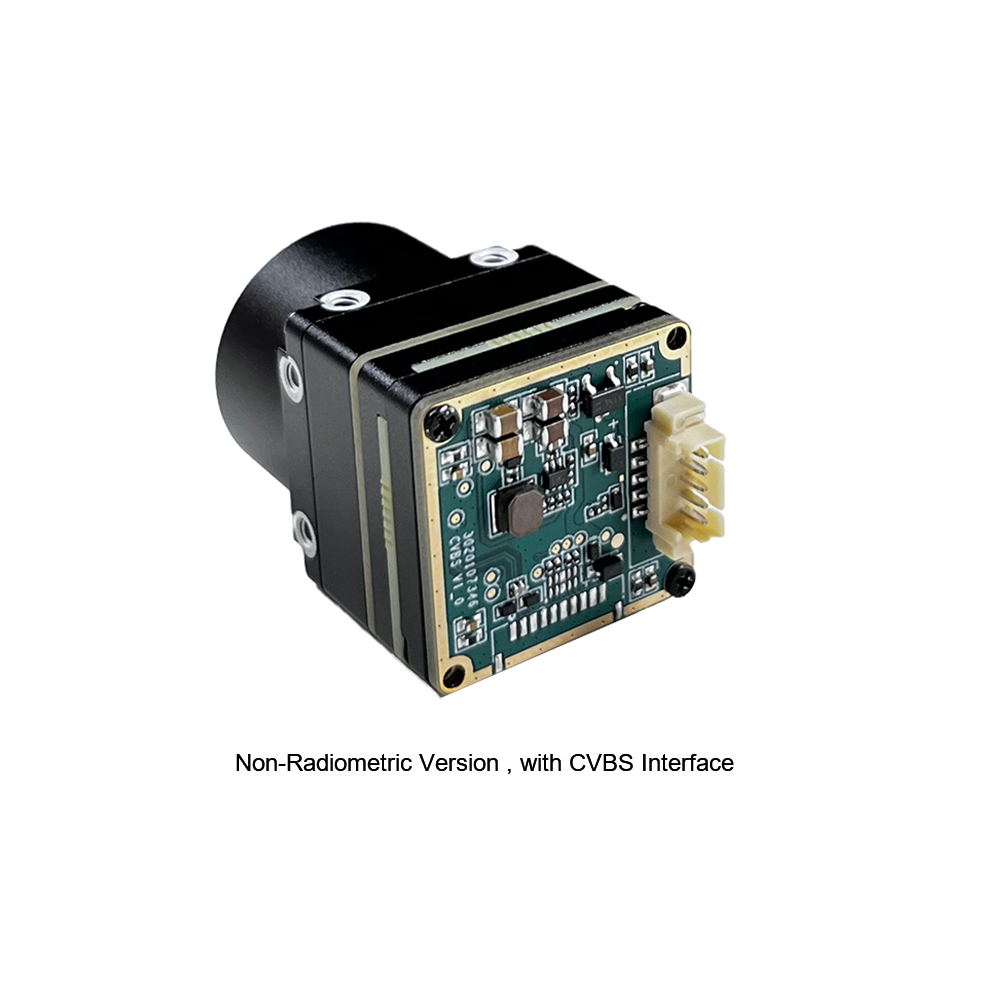
- 👉 2. Hardware Interfaces: MIPI CSI-2 vs. USB vs. Analog CVBS
- 👉 3. Optics, Thermal Range, and Johnson's Criteria (DRI)
- 👉 4. Mechanical & Thermal Engineering for Sub-250g Drone Platforms
- 👉 5. Edge AI Pipelines & Companion Computer Synergy
- 👉 6. OEM Core Comparative Analysis: Real Product Specifications
- 👉 7. Industrial Implementation Case Studies
- 👉 Często zadawane pytania (FAQ)
1. Physics & Core Architecture of Sub-Miniature LWIR Modules
Miniature drone thermography relies on the detection of emitted blackbody radiation within the Long-Wave Infrared atmospheric transmission window, spanning nominal wavelengths between 8 μm and 14 μm. Unlike active near-infrared (NIR) sensors that require illuminators, passive LWIR sensors register electromagnetic radiation emitted directly by target materials based on their surface emissivity and thermodynamic temperature, as governed by the Planck radiation law and the Stefan-Boltzmann law. To learn more about the fundamentals of thermal radiation across industrial workflows, review the comprehensive guide on do czego służy kamera termowizyjna.
The core energy pipeline functions through a precise thermodynamic sequence: target blackbody emission traverses germanium or chalcogenide lens elements, passes through an antireflective vacuum package window, and strikes the suspended microbolometer membrane. The absorbed thermal flux alters the electrical resistance of an active semiconductor thin film. This resistance variance is captured by an underlying Readout Integrated Circuit (ROIC), digitized into raw 14-bit or 16-bit counts, and transmitted to the host architecture for processing.
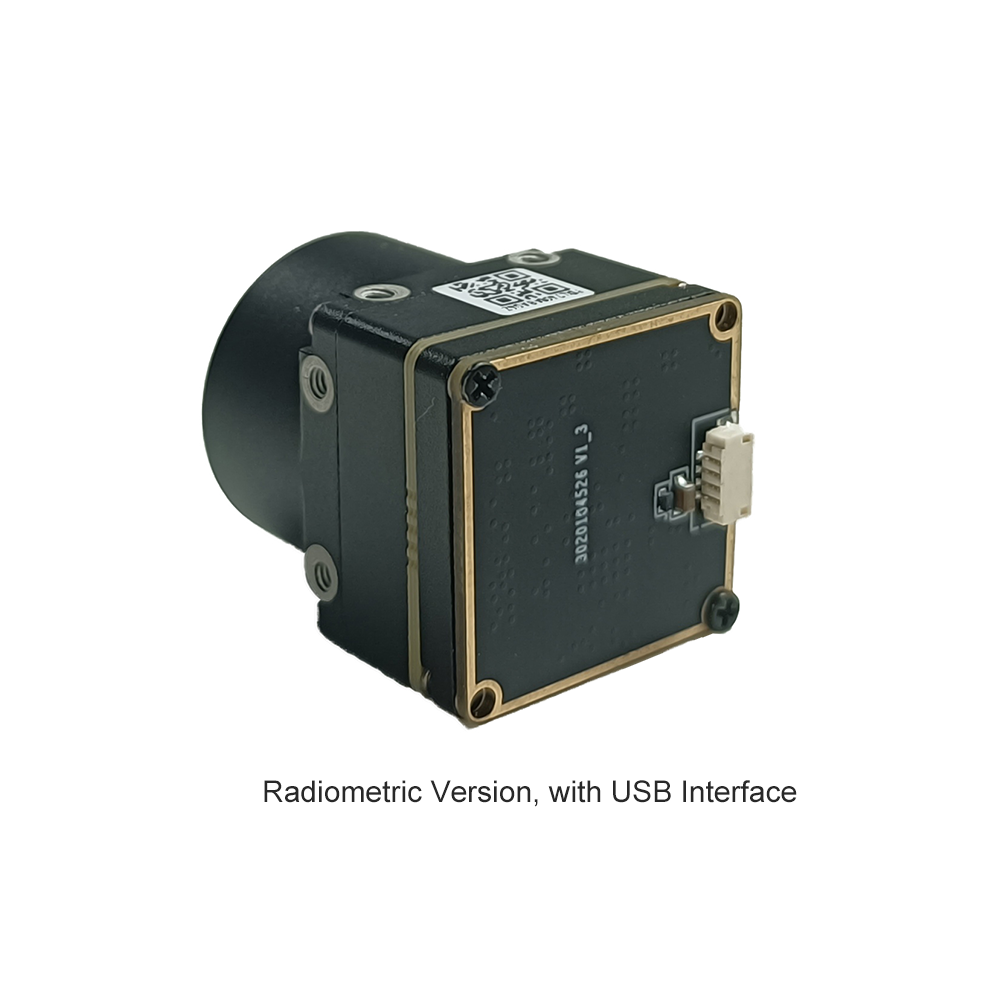
To achieve this inside an envelope weighing under 20 grams, uncooled LWIR designs discard the bulky, power-hungry mechanical cryocoolers found in Mid-Wave Infrared (MWIR) assemblies. Instead, each individual microbolometer pixel consists of an ultra-thin absorbing bridge thermally isolated from the silicon substrate by micro-machined silicon nitride legs. Because thermal conductance through these legs must be minimized to maximize sensitivity, the entire focal plane array is permanently sealed within an ultra-high vacuum wafer-level package (WLP). The integrity of this micro-cavity vacuum directly determines the module's signal-to-noise ratio over its operational lifespan.
Tlenek wanadu (VOx) kontra amorficzny krzem (a-Si)
The microbolometer Focal Plane Array (FPA) serves as the primary sensor substrate. In aerial applications where thermal contrast must be acquired at significant standoff distances, the material composition of the thermistor layer dictates overall system signal-to-noise ratio (SNR):
- ✅ Tlenek wanadu (VOx): Demonstrates a notably high Temperature Coefficient of Resistance (TCR), typically ranging from -2% to -3% per Kelvin. VOx microbolometers achieve lower 1/f flicker noise floors and faster thermal response time constants (typically between 8 ms and 12 ms). This high baseline sensitivity permits rapid target acquisition and reliable identification of minor heat anomalies, making a VOx uncooled thermal core module the industry benchmark for dynamic aerial operations.
- ⚙️ Krzem amorficzny (a-Si): While fully compatible with standard commercial CMOS fabrication facilities—which meaningfully reduces raw wafer production costs—a-Si FPAs suffer from elevated electrical flicker noise and lower TCR (typically -1.5% to -2% per Kelvin). Consequently, a-Si arrays require longer integration windows or heavier temporal noise-filtering algorithms. On a micro-quadrotor operating in wind shear, that algorithmic lag frequently manifests as disruptive motion smear and degraded radiometric accuracy during high-speed yaw adjustments.
Pixel Pitch and Focal Plane Area
Modern microbolometer design has aggressively migrated from older 17 μm architectures down to a 12 μm pixel pitch, with state-of-the-art research prototyping 10 μm nodes. Compressing pixel pitch yields substantial cascade advantages for sub-250g airframes. Sensor diagonal length is governed by:
Sensor Diagonal = √((Width × Pitch)² + (Height × Pitch)²)
A 640×512 resolution sensor fabricated on a 17 μm pitch features an active array footprint of 10.88 mm × 8.70 mm (diagonal 13.93 mm). Compressing the pitch to 12 μm shrinks the active array to 7.68 mm × 6.14 mm (diagonal 9.83 mm). This 29.4% dimensional reduction directly cuts the required clear optical aperture by roughly 40% for an identical field of view.
Because the optical mass of an infrared lens assembly scales cubically with aperture diameter, transitioning to a 12 μm focal plane drops the mass of the heavy optical-grade germanium element from 35–50 grams down to less than 10–15 grams. This dimensional cascade is the single most decisive factor enabling engineers to install a true 640×512 radiometric core on an ultralight drone without exceeding the 249.9-gram regulatory ceiling.
Równoważna szumowi różnica temperatury (NETD)
Thermal sensitivity is quantified by the Noise Equivalent Temperature Difference (NETD), expressed in millikelvins (mK). NETD represents the target temperature differential that produces a signal-to-noise ratio of unity within the microbolometer readout circuitry:
NETD = (4 · F² · V_n) / (τ_o · A_d · (ΔV / ΔT) · (ΔL / ΔT))
Gdzie F represents the optical f-number, V_n is the root-mean-square noise voltage, τ_o is optical transmittance, A_d is detector pixel area, and (ΔL / ΔT) is the differential blackbody radiance over the 8–14 μm spectral band. In dynamic aerial environments, downwash thermal turbulence, motor vibration, and atmospheric moisture scatter emitted photons. Operating with a sensor offering an NETD ≤ 40 mK (at f/1.0, 300K) ensures that minute temperature variations—such as subsurface delamination in aerospace composites or high-resistance electrical connections—remain distinct above the noise floor.
2. Hardware Interfaces: MIPI CSI-2 vs. USB vs. Analog CVBS
The communication interface bridging the uncooled thermal core to the drone avionics architecture dictates embedded computing capacity, latency performance, thermal dissipation, and PCB layout complexity. Choosing an interface involves balancing raw digital throughput against mechanical footprint and integration simplicity.
| Protocol Interface | Data Depth & Format | Latency (End-to-End) | Power Overhead | Best Drone Application |
|---|---|---|---|---|
| MIPI CSI-2 | Raw 14-bit / 16-bit Radiometric | < 5 ms (Ultra-Low) | Lowest (< 100 mW) | Direct Edge-AI Vision, Target Tracking, Companion SoC |
| USB 2.0 / 3.0 (UVC) | YUV / 8-bit AGC or Packed 14-bit | 30 – 60 ms (Driver Bound) | Moderate (~350–500 mW) | Modular Gimbals, Rapid Prototyping, DJI Retrofits |
| Analogowe CVBS | NTSC / PAL (8-bit Visual Only) | < 1 ms (Near-Zero) | Low (~150 mW) | Direct 5.8 GHz FPV Pilot Navigation, Zero Compute Nodes |
MIPI CSI-2 (Camera Serial Interface 2)
MIPI CSI-2 represents the gold standard for deep autonomous integration. By utilizing point-to-point, unidirectional differential signaling over D-PHY physical lanes, MIPI CSI-2 feeds raw, uncompressed 14-bit digital radiometric streams directly into the internal Image Signal Processor (ISP) or direct memory access (DMA) subsystem of an onboard System-on-Chip (SoC).
- ✅ Low-Latency Bandwidth: Yields near-zero transport latency (< 5 ms), bypassing operating system USB driver stacks entirely. This enables tight synchronization with flight stabilization algorithms and object tracking engines.
- ✅ Efektywność energetyczna: Operates with minuscule electrical overhead (< 100 mW for transceiver logic), maximizing battery conservation on platforms with tight power budgets.
- ⚙️ Layout Constraints: High-frequency differential pairs require strict 100-ohm differential impedance matching and length-matching within ±0.15 mm. Traces are sensitive to electromagnetic radiation generated by high-current ESC switching lines and 5.8 GHz telemetry hardware; trace lengths should not exceed 150 mm on standard FR4 without active redriver components.
USB (Universal Serial Bus - UVC / CDC)
USB-enabled modules deploy standard USB Video Class (UVC) protocols for uncompressed or MJPEG video frames, accompanied by a virtual Communication Device Class (CDC) UART interface for camera command controls, palette adjustments, and digital calibration parameter updates.
- ✅ Plug-and-Play Modularity: Works out of the box across Linux distributions, Android platforms, ROS2 architectures, and Windows environments without custom kernel patches or external serializer boards.
- ✅ Harness Simplicity: Four-wire USB cabling simplifies routing through miniature slip rings inside continuous-rotation pan-tilt gimbals.
- ⚙️ Driver Latency Overhead: Host-side USB scheduling and kernel ring buffers introduce variable latencies between 30 ms and 60 ms. This overhead can complicate closed-loop object pursuit maneuvers at high flight velocities.
Analog CVBS (Composite Video Blanking and Sync)
Legacy analog outputs convert internal thermal digital arrays directly into standard NTSC or PAL baseband analog waveforms via an onboard DAC.
- ✅ Zero Frame Buffer Lag: Provides real-time analog video with latency below 1 ms, routing directly to lightweight 5.8 GHz analog video transmitters for responsive manual piloting.
- ⚙️ Loss of Radiometric Data: Compresses thermal information into an 8-bit standard dynamic range visual output, stripping away individual pixel temperature counts and preventing onboard computational temperature analysis.
3. Optics, Thermal Range, and Johnson's Criteria (DRI)
Choosing thermal optics for an aerial vehicle requires balancing spatial resolution, operational field of view, and overall weight. Target spatial resolution at a given altitude is measured by the Ground Sampling Distance (GSD):
GSD = (p · H) / f
Gdzie p is the pixel pitch (0.012 mm for a 12 μm sensor), H is flight altitude Above Ground Level (AGL), and f represents optical focal length in millimeters. A wider field of view provides broad situational awareness at the cost of spatial resolution, while narrow telephoto optics demand larger, heavier germanium elements that can push micro-drones past the 250-gram limit.
Applying Johnson's Criteria (DRI)
Thermal camera detection capabilities are standardized under the NATO STANAG 4347 Johnson’s Criteria framework, which defines the mathematical line pairs (cycles) required across a target's critical dimension for a 50% probability of success:
- ⚙️ Detection (1.5 cycles): The operator or automated system can discern that a distinct thermal anomaly is present against the background.
- ⚙️ Recognition (6.0 cycles): The operator can classify the target category (e.g., distinguishing a person from a four-legged animal or a passenger car from a delivery van).
- ⚙️ Identification (12.0 cycles): The operator can identify specific attributes (e.g., determining whether an individual is carrying equipment or distinguishing vehicle body styles).
| Ogniskowa | FOV (640×512, 12μm) | Human Detection (0.75m) | Human Recognition | Human Identification | Max AGL for 5cm GSD |
|---|---|---|---|---|---|
| 5,0 mm | 92.5° × 73.6° | 156 m | 39 m | 20 m | 20.8 m |
| 9,0 mm | 50.0° × 37.5° | 281 m | 70 m | 35 m | 37.5 m |
| 13,0 mm | 33.8° × 27.0° | 406 m | 102 m | 51 m | 54.2 m |
| 18,0 mm | 24.6° × 19.7° | 563 m | 141 m | 70 m | 75.0 m |
| 35,0 mm | 12.6° × 10.1° | 1094 m | 273 m | 137 m | 145.8 m |
For low-altitude industrial inspections (such as solar farms and roofing envelopes), a 9.0mm lens offers an optimal balance between broad scene coverage and sufficient spatial detail. For tactical reconnaissance missions requiring aircraft operation above the acoustic detection threshold (typically > 60m AGL), an 18mm or 35mm lens is necessary to preserve target identification cycles while remaining lightweight.
4. Mechanical & Thermal Engineering for Sub-250g Drone Platforms
Designing an aerial platform under the 249.9-gram threshold requires strict mass-budget accounting across every structural and electrical sub-assembly. Avionics engineers must optimize every gram of payload to preserve flight endurance while integrating a fully functional thermal core.
Sub-250g All-Up-Weight (AUW) Mass Allocation Budget
- ⚙️ Structural Frame: Custom unibody Toray T700 carbon fiber plate (1.5mm thickness) + titanium fasteners — 42.0g
- ⚙️ Propulsion Group: 4× 1204 brushless motors (5000KV) + 3018 polycarbonate props — 58.0g
- ⚙️ Core Electronics: 20×20mm All-in-One (AIO) Flight Controller + 20A 4-in-1 BLHeli_S ESC — 14.5g
- ⚙️ Energy Storage: 2S 18650 Li-ion battery pack (3000mAh, 15A continuous discharge) — 85.0g
- ⚙️ Telemetry & RF: ExpressLRS 2.4GHz receiver + micro 5.8GHz 400mW VTX + linear antenna — 12.0g
- ⚙️ Navigation: Micro M10 GPS + compass module — 6.5g
- ⚙️ Thermal Imaging Core: 640×512 Bare Module + 9mm Germanium Optical Lens — 18.5g
- ⚙️ Mechanical Integration: Vibration-damped carbon mount bracket + silicon dampeners + wiring — 13.4g
- TOTAL ALL-UP-WEIGHT: 249.9g (Compliant with FAA Category 1 / EASA Open A1)
Thermal Management in Confined Enclosures
While uncooled microbolometers eliminate heavy cryogenic stirling cooling engines, their internal Readout Integrated Circuits (ROIC) generate between 0.8W and 1.5W of continuous thermal dissipation. In a sealed fuselage or small gimbal nacelle, this trapped heat causes local structural temperature increases:
- ⚙️ Non-Uniformity Correction (NUC) Drift: Ambient temperature shifts cause uneven thermal expansion across the core assembly, shifting the sensor's Fixed Pattern Noise (FPN) baseline. The system must compensate using a micro-solenoid shutter flag or advanced shutterless algorithmic calibration. Excessive internal heating forces frequent shutter cycles, briefly freezing video feeds during inspection passes.
- ⚙️ Thermal Conduction Sinks: Bare modules should be bonded directly to the carbon fiber base plate via high-conductivity phase-change pads or soft, low-outgassing gap fillers rated at ≥ 6.0 W/m-K. The structural carbon fiber chassis functions as an efficient passive heat sink, utilizing propeller downwash to dissipate heat.
- ⚙️ Optical Defocusing: Germanium possesses an exceptionally high thermo-optic coefficient (dn/dT = 4.0 × 10⁻⁴ K⁻¹ at 10.6 μm), roughly an order of magnitude higher than standard optical glasses. Uncompensated temperature swings within a drone shell can defocus a fixed-focus lens barrel. Housing optics in an athermalized mechanical barrel—pairing aluminum and Delrin sleeves with calibrated differential thermal expansion—stabilizes the focal point across a -20°C to +60°C operational flight envelope.
5. Edge AI Pipelines & Companion Computer Synergy
Modern micro-drones rely on real-time spatial analytics rather than simple analog video downlinks. Deploying lightweight drone thermal imaging modules alongside low-power companion compute engines transforms small UAVs into autonomous inspection and tracking platforms.
Companion computers—such as those developed by embedded hardware providers like Seeed Studio—deliver multi-TOPS neural compute architectures within sub-30g module constraints. When paired with a bare-chassis thermal core, the embedded processing pipeline processes raw sensor data through four critical stages:
- 14-Bit Direct Pixel Capture: The sensor streams linear, uncompressed digital numbers (DN) representing radiometric energy over MIPI CSI-2 directly into host memory via DMA, bypassing intermediate color conversion steps.
- Hardware Radiometric Calibration: The host companion processor maps digital numbers to calibrated surface temperatures using onboard calibration polynomial lookup tables (LUTs):
T_scene = LUT(DN_pixel) = (DN_pixel - Offset) / Gain
- Dynamic Range Compression (AGC): Because scene temperatures can range from -20°C to +150°C while human targets occupy a narrow 2°C window, linear 8-bit downscaling leads to loss of target contrast. The ISP applies Contrast Limited Adaptive Histogram Equalization (CLAHE) and bilateral filtering to generate high-contrast 8-bit visual streams optimized for computer vision inference without losing edge fidelity.
- Edge Neural Network Inference: The 8-bit enhanced stream passes to an INT8-quantized object detection network (such as YOLOv8-nano). Target bounding boxes and class probabilities are calculated in under 15 ms, allowing the companion computer to send MAVLink tracking vectors directly to the flight controller over UART to enable autonomous gimbal tracking and target following.
6. OEM Core Comparative Analysis: Real Product Specifications
When selecting a core module for sub-250g drone builds, avionics integrators must balance physical dimensions, weight, interface flexibility, and optical options. Below is an engineering evaluation of two production-ready uncooled LWIR modules designed specifically for lightweight drone platforms.
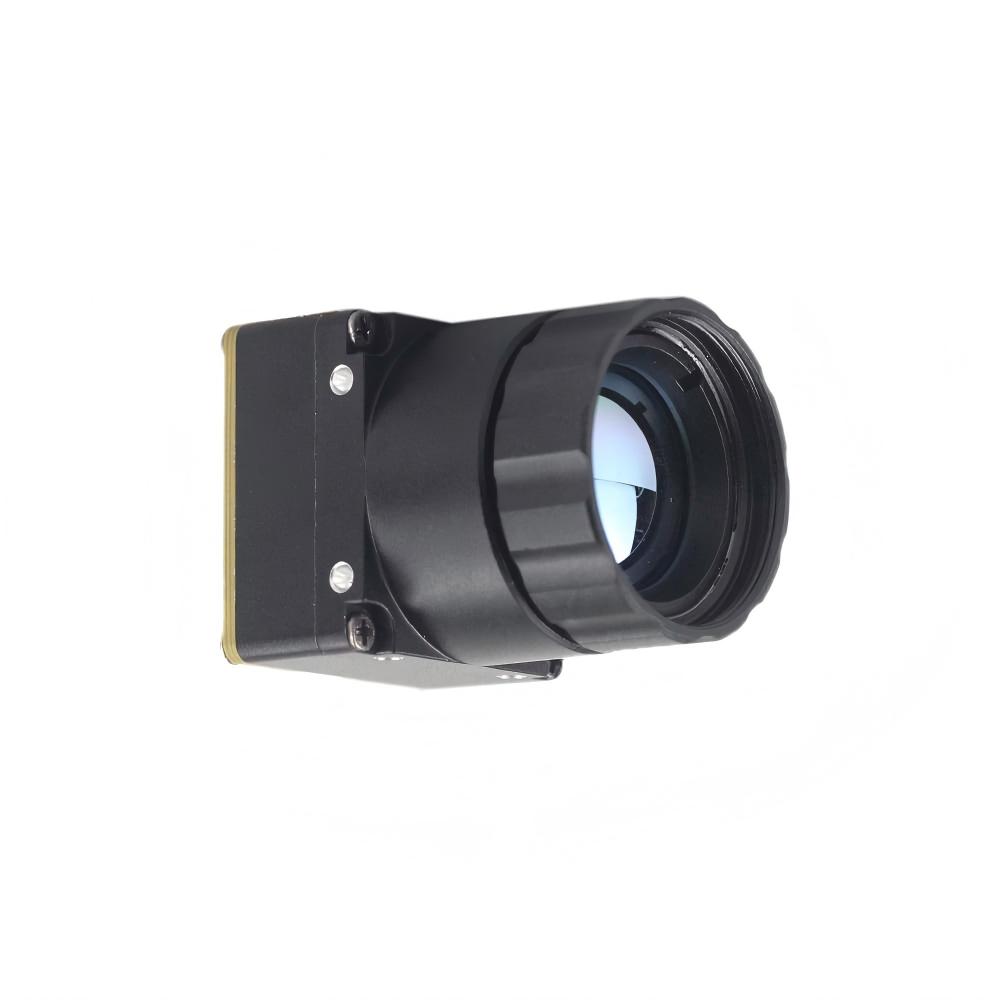
Niechłodzony moduł kamery termowizyjnej na podczerwień MIPI 640 384 256 9mm do dronów
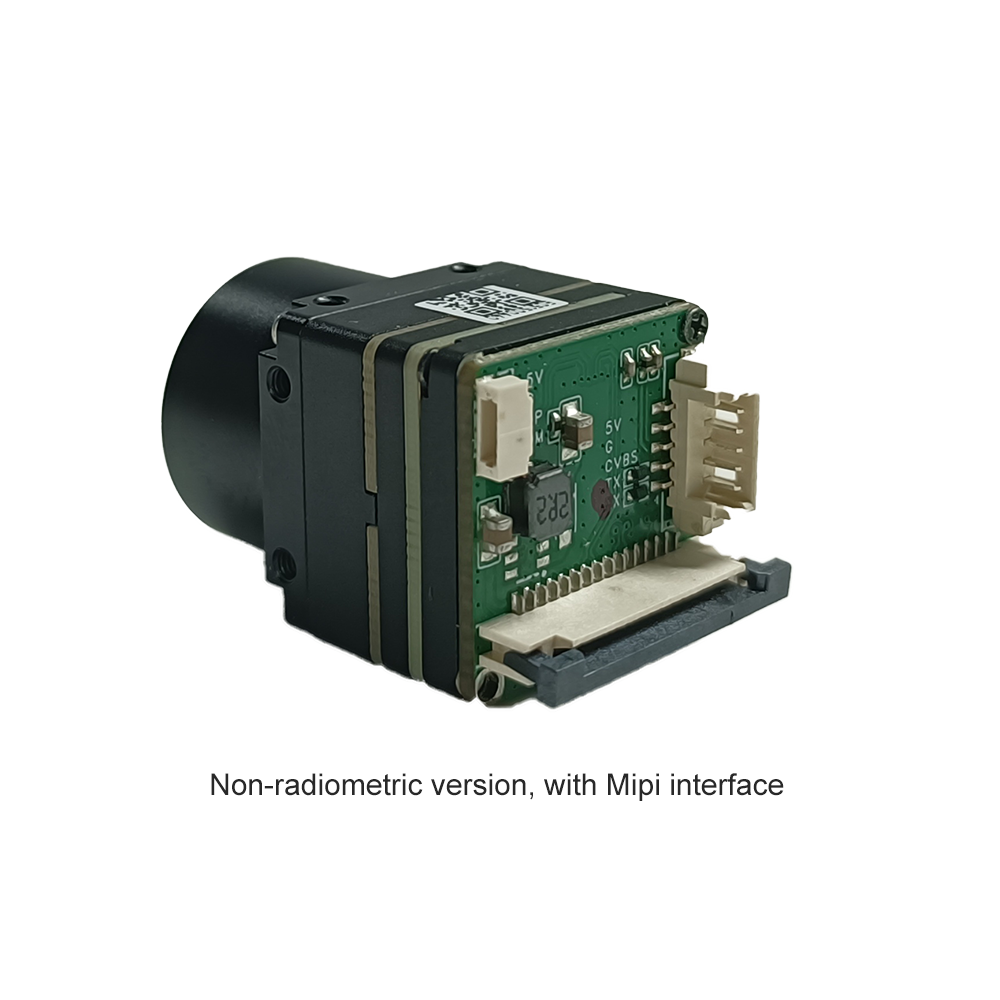
The Mini2 uncooled infrared thermal imaging module is engineered for embedded drone architectures requiring direct host SoC integration, high frame fidelity, and minimal interface mass. Delivering sharp and crisp image presentation, compact dimensions, and low manufacturing cost, this module targets autonomous UAV designs that process radiometric video on edge processors.
| Opcje rozdzielczości | 640×512, 384×288, or 256×192 |
| Architektura sensora | Uncooled VOx Microbolometer (8–14 μm spectral band) |
| Standardowa optyka | 9mm fixed focal length lens |
| Interfejs sprzętowy | Native MIPI CSI-2 (Direct FPA-to-SoC data plane) |
| Mass Profile | Sub-15g bare core architecture |
| Primary Strengths | Direct edge-AI processing, ultra-low communication latency (< 5 ms), sharp dynamic visual rendering |
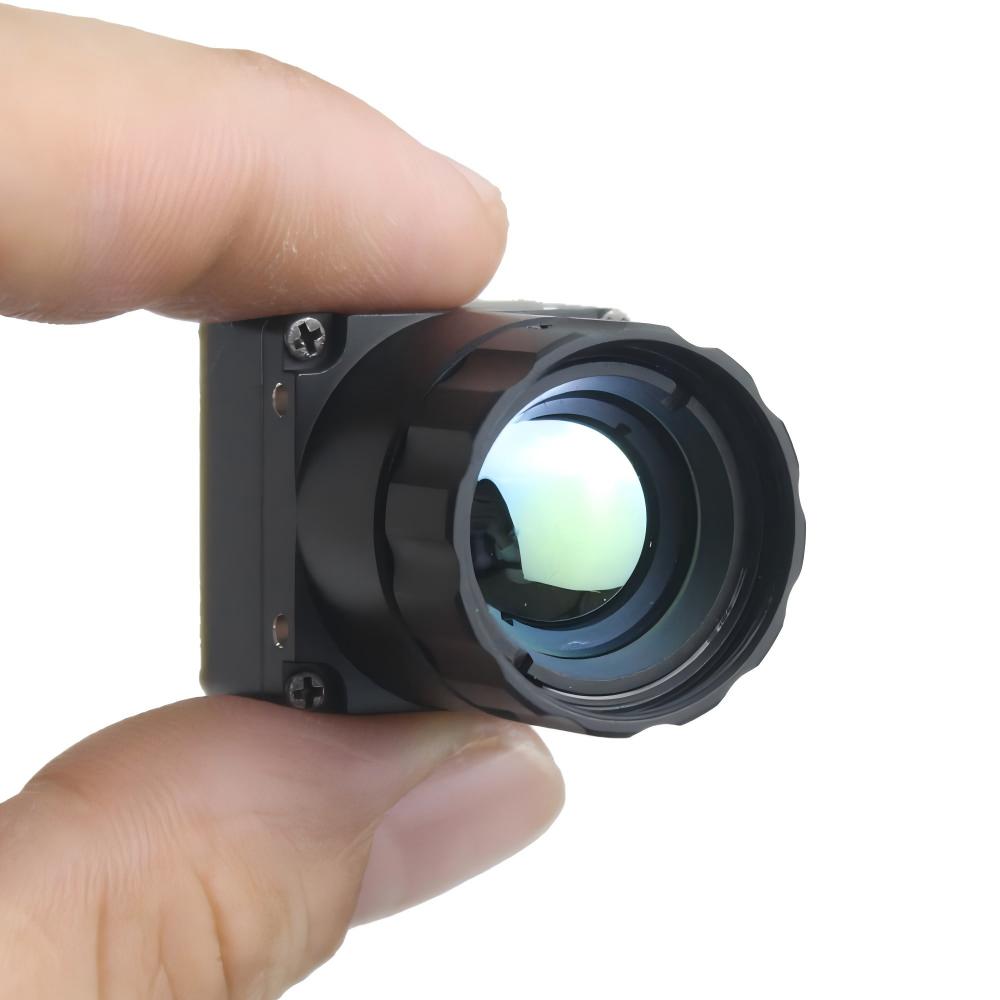
Niekolowana miniaturowa kamera termowizyjna LWIR USB 640*512, moduł rdzenia do dronów, podobna do DJI
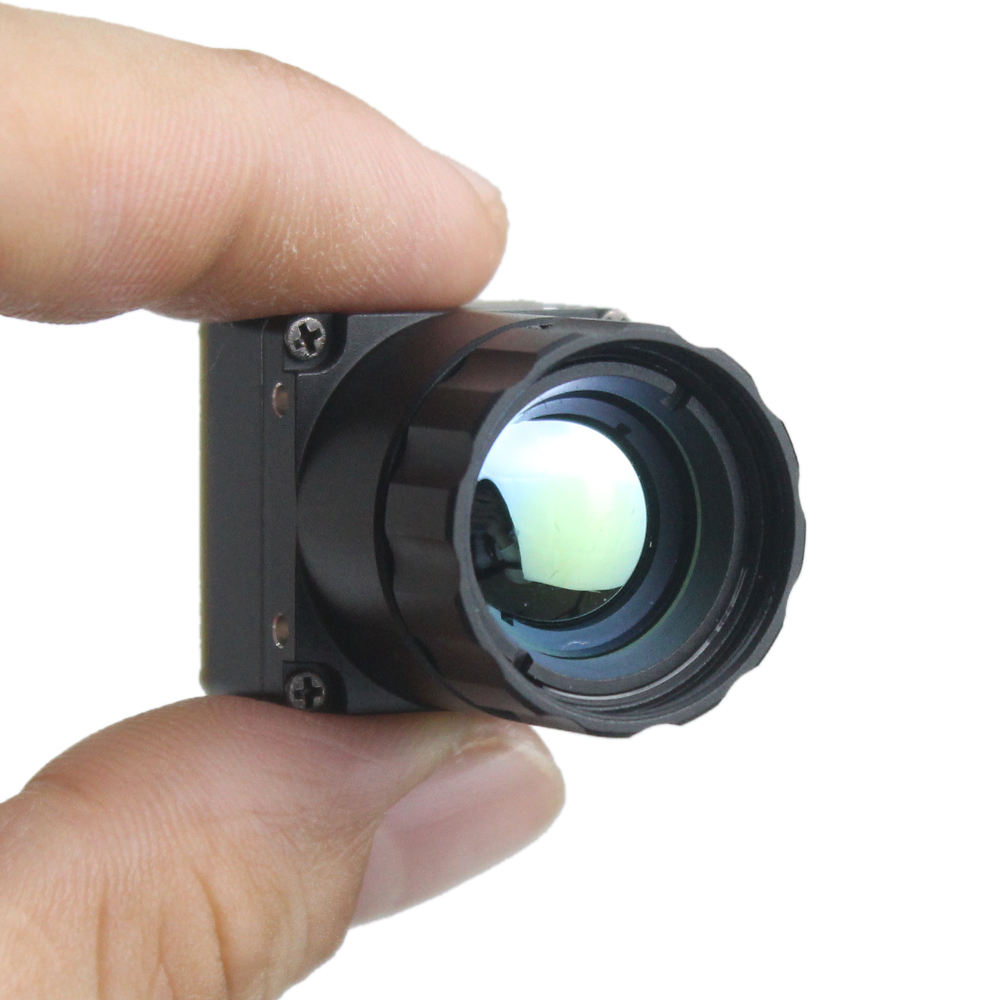
The Mini 640 uncooled LWIR core module offers an ultra-compact 21mm × 21mm cross-section with high environmental adaptability, stable operational performance, and versatile optical configurations. Designed for plug-and-play integration similar to commercial DJI payloads, this module is suited for rapid system prototyping and multi-mission field retrofits.
| Opcje rozdzielczości | 640×512 (opcjonalnie 640×480) |
| Sensor Footprint | Mini-Size cross-section: 21mm × 21mm |
| Available Optics | 5mm, 9mm, 13mm, 18mm, 35mm, 50mm, 75mm, 100mm, and 150mm lenses |
| Interfejs sprzętowy | Standard USB 2.0 (UVC video + CDC communication control) |
| Environmental Tolerance | High environmental adaptability across industrial temperature swings |
| Primary Strengths | Broad optical options, simple USB plug-and-play architecture, compact 21×21mm form factor |
7. Industrial Implementation Case Studies
Deploying compact thermal cores into sub-250g airframes enables specialized applications across industrial and public safety sectors. For international implementations, engineering teams frequently rely on proven thermography methodologies—ranging from Polish field deployments (termowizja w praktycznych zastosowaniach) to established scientific protocols documented on Wikipedia Obrazowanie termowizyjne.
Case Study A: Photovoltaic Solar Farm Defect Mapping
Utility-scale solar inspection requires high spatial resolution paired with rapid aerial mapping. Operators integrated the Uncooled Infrared MIPI 640×512 Module with a 9mm lens into a 238-gram carbon-frame quadcopter. The module interfaced directly with an onboard carrier running an embedded Linux image.
- ⚙️ Operational Profile: Cruising altitude maintained at 25 meters AGL at a ground speed of 5 m/s.
- ⚙️ Resolution Performance: Achieved a nadir Ground Sampling Distance of 3.3 cm/pixel. This enabled the edge AI pipeline to detect bypass diode failures, localized junction box overheating, and micro-cracks with temperature differentials as small as 0.8°C.
- ⚙️ Telemetry & Integration: Radiometric anomaly coordinates were tagged with GPS metadata and sent to the ground control station via MAVLink over ExpressLRS telemetry, allowing inspection teams to map 50 megawatts of panels daily without requiring heavy enterprise-class drones.
Case Study B: Tactical Reconnaissance and Night Patrol Micro-UAV
A defense OEM developed a rapidly deployable, silent night-reconnaissance micro-drone utilizing the Uncooled LWIR USB Mini 640×512 Module equipped with an 18mm narrow-FOV lens. The design utilized an inverted pusher-motor layout with a 2S Li-ion battery, yielding an All-Up-Weight of 244.5 grams.
- ⚙️ Operational Profile: Patrol flights conducted at 65 meters AGL to ensure total acoustic silence from ground positions.
- ⚙️ Detection Range: Leveraging the 18mm optic and 12μm pixel pitch, the system provided human detection out to 560 meters and recognition at 140 meters.
- ⚙️ Avionics Architecture: The USB module streamed through an ultra-compact single-axis mechanical tilt mount directly to a 5.8 GHz video transmitter, delivering 18 minutes of continuous night patrol without triggering civil micro-UAV flight restrictions.
Często zadawane pytania (FAQ)
Can I integrate a 640x512 thermal camera module without exceeding the sub-250g drone weight limit?
Modern bare-chassis cores—such as the 21×21mm and sub-15g MIPI units featured above—weigh less than 20 grams with a 9mm lens installed. When paired with an ultra-light carbon fiber frame (40–45g), a compact 20×20mm All-in-One (AIO) flight controller/ESC board (14g), lightweight 1204 brushless motors (58g), and an optimized 2S Li-ion power plant (80–85g), the total platform weight sits comfortably between 230 and 245 grams. This leaves sufficient mass budget for radio links, GPS modules, and single-axis micro gimbals while staying fully compliant with FAA Category 1 and EASA Open A1 regulations.
How do I select the right interface (MIPI CSI-2 vs. USB) for my drone platform?
Choose a USB interface if your design emphasizes modularity, rapid prototyping, or multi-platform payloads. USB utilizes standard UVC drivers, functioning natively across Linux, Windows, and ROS2 without custom kernel development. It is simpler to route through multi-axis gimbal slip rings using standard twisted-pair wiring. The trade-offs are slightly higher transmission latency (30–60 ms) and modest additional power consumption from USB transceiver controllers.
Is a budget 256x192 sensor sufficient, or should I invest in a 384x288 or 640x512 module for field use?
Przejście na 640×512 resolution module provides over 6.6 times more active pixels than a 256×192 sensor. This higher resolution delivers crisp edge definition, enables accurate radiometric spot measurements at long standoff distances, and gives onboard AI detection models sufficient pixel density to classify targets reliably. If budget constraints prevent using a 640×512 core, a 384×288 module serves as a balanced mid-tier option, but a 640×512 array remains the industry standard for professional enterprise inspection and security missions.
📚 Piśmiennictwo i dalsze lektury
- Standard branżowy: Microbolometer Carrier Solutions & Compute Nodes — Seeed Studio Embedded Ecosystem
- Standard branżowy: Principles of Thermographic Science & Radiation Physics — Wikipedia Thermography Guide
- Powiązany przewodnik: Comprehensive Technical Overview — Do czego służy kamera termowizyjna?
- Powiązany przewodnik: Uncooled Core Architectural Comparison — VOx Uncooled Thermal Module Integration (Russian Guide)
- Powiązany przewodnik: Modern Real-World Implementations — Practical Uses of Modern Thermal Imaging (Polish Guide)